Positives
- Very Good Pop For Such A Mellow Camber
- Solid Base
- Competent Grip
- Forgiving But Not Boring
- Great All Condition Ride
Negatives
- Not A Lot of Sizes
- Reference Stance Is Wide
Summary
It’s been a while since I got on the Borealis Tundra, and while the shape and overall design are very similar, this now comes from a new factory with a slightly different camber profile and much different construction than the past model I tried. I liked the older model a lot. In fact, it was a favorite here at The Good Ride for a few years. But I will say this new model is even better, and it brings it back into that favorites world, especially for a one-board quiver with a more mountain freestyle focus. It has mini-disc-compatible setback inserts to allow you a little more directional float on those deeper powder days. It’s got a good base and very competent grip. This is a great one-board quiver with a forgiving yet dynamic, poppy flex that also handles uneven snow much better than you might think.Where To Buy
No obligation, but these links support the site.
No Results Found
SnowCountry

No Results Found
| Riding Style | All Mountain |
| Riding Level | Beginner - Expert |
| Fits Boot size (US) | 8-10, 10-12 |
| Manufactured in | GP87 In China |
| Shape | Directional Twin |
| Camber Profile | Hybrid Camber |
| Stance | Setback -12.5mm |
| Approx. Weight | Feels Normal |
| Split | No |


|
|
|
|
|

|
|
|
|
|
|
|
|
|
|
|
|
|
|
|
|
|
|
|
| On Snow Feel |

|
| Turn Initiation |

|
| Skidded Turns |

|
| Flex |
|
| Buttering |
|
| Edge Hold |
|
Where To Buy
No obligation, but these links support the site.
No Results Found
Borealis
SnowCountry
No Results Found
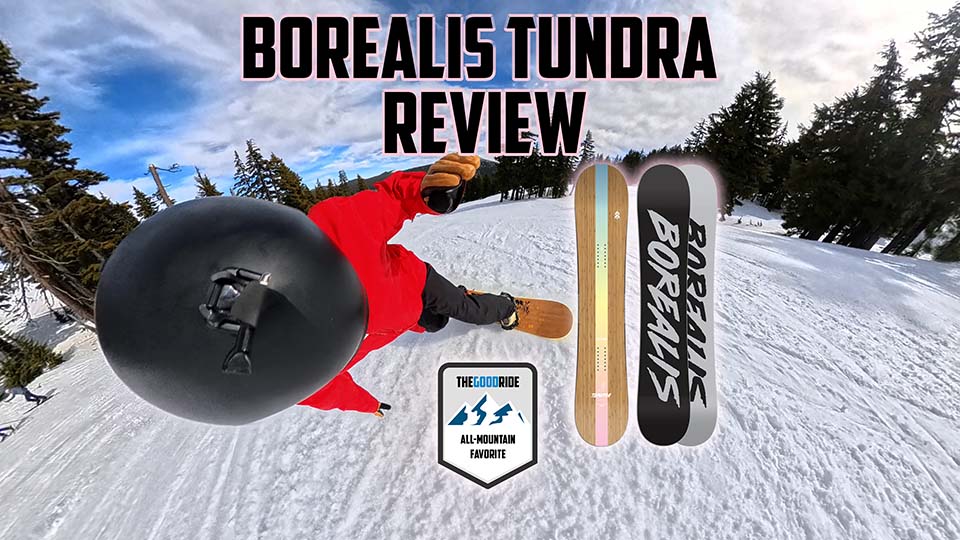
An In Depth Breakdown of how the 2026-2027 Borealis Tundra Rides Review by The Good Ride
How The Borealis Tundra Was Tested
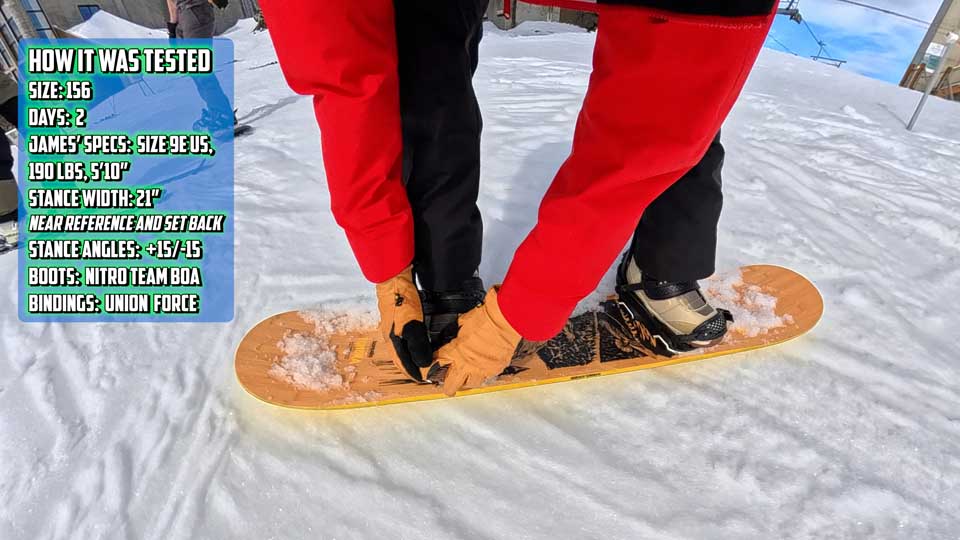
I rode this with my Union Force bindings and Nitro Team BOA boots.
This season sucked, and it ended way too early, so I didn’t have the time and conditions that I would normally like to test a board like this. Luckily, I got a lot of time on the older model in the same exact size.
All I really needed to do with this review was see what the new flex personality was doing, and that was accomplished. So I think this review will be very helpful regardless of our shitty season.
I also compared this against the Auriga One and a lot of mountain freestyle to all-mountain boards, which you can see if you’re a Patreon paid member or a YouTube Early Access or higher member.
I borrowed the Borealis Tundra for an extended demo and sent it back. 1-day demo. A few laps at a demo. I liked it so much I asked to keep it (only do this with favorites). I liked it so much we bought it. Precious Good Ride dollars were spent buying and reviewing this.
Size: 156
Days: 2
Conditions: Varied Spring conditions but mostly slightly firm to soft.
Riders: James (Size 9 E, 5’10”, 185-190lbs). I’ve tested and compared 850+ boards, 200+ bindings, and 120+ boots
Boots: Nitro Team BOA, Nitro Team TLS
Insoles: F.I.T. Gamechangers
Bindings: Union Force, Union Atlas Step On
Redundancy: Strapins in case boots or bindings break.
Jacket: Skyline Fuse Jacket, Jones Mtn Surf Anorak
Pant: Skyline Fase 3L Bib Pant, Skyline Faze Pant, Jones Mountain Surf Pant
Helmet: Smith Method, Smith Scout
Goggle: Smith 4D Mag Low Bridge Fit
Gloves: Burton AK Clutch Mitt, Burton AK Tech Leather Glove
James’s Set Up: 21.5” Wide. Stance Angles +15/-15. Close to Reference
Similar Boards I Like (but not the same):
Jones Rally Cat, Cardiff Crane, Never Summer Proto Type 3, Gnu Antigravity, United Shapes Horizon, Lib Tech DPR
Ethics Statement
I was not paid to write this review, and it reflects an honest, objective perspective with no brand oversight. If this review helped, we’d appreciate it if you support objective content by:
- Buying Through Our Sponsor, Blauer Board Shop
- Buying through our other Where To Buy Links, we get paid a small commission if you do. Please make sure we are the last click and don’t use a coupon or discount provider. They take our commission if you do.
- Become a Patron and get early access to reviews well before publication. https://www.patreon.com/thegoodride
- Donate to https://venmo.com/TheGoodRide (@TheGoodRide) or https://paypal.me/thegoodride
- Follow Us: https://www.instagram.com/thegoodride
- Like & Subscribe on YouTube https://www.youtube.com/@thegoodridesnow
Sizing
How it Fits Me
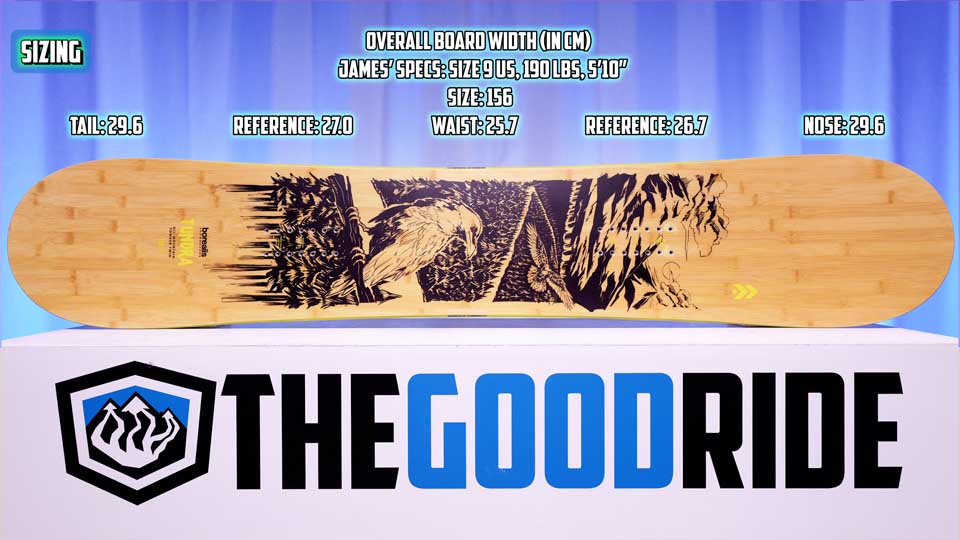
For me personally, I really enjoyed the 156. It fit my boot size really well, and I had no problem turning it from the morning into the afternoon.
I was really surprised at how well it fit my 190 pounds. I never felt like I was overflexing this board, and I feel it can handle a lot more than the suggested weight range.
This is just the kind of length I want for my height and a more mountain-freestyle-friendly ride. But again, sizing is all personal preference, so go to our actual review and follow the detailed breakdown of how you can pick a board.
How It Might Fit You
Sizing is very subjective and personal. Never assume your way is the right way, and there is no right answer.
Here is the best way to figure out what board will work for you. I rarely use “all caps to emphasize something, but this is really important. NEVER TRUST ANYONE who doesn’t ask or reference boot size, weight, and height.
Boots
You should always start with your boot size first. If your boot is too wide, you can’t turn it; if it’s too narrow, you get the dreaded Toe & Heel Drag. This is the most important part of sizing a board, which is why so many snowboards come in various widths, such as Narrow, Normal, Mid-Wide, Wide, and Ultra-Wide.
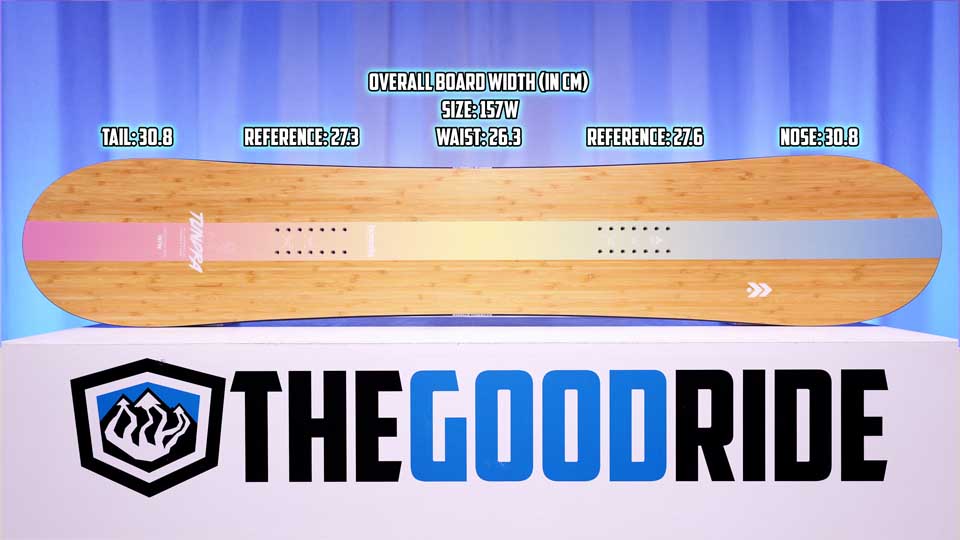
Most brands don’t include a recommended boot size because it’s very complicated and time-consuming. This brand includes the width over each insert, so it’s easy to determine whether your boot’s footprint will have too much overhang, so reference that against your boot.
Here is more or less the sweet spot to turn easily and not boot out. You can go wider if you carve really hard.
153: 8.5-9.5
156: 9-10
157w:10-11
160w: 10.5-11.5
Weight
Your weight determines how the board will flex underfoot. Give you more or less pop, speed, etc.
Height
Next, check the length in relation to what you want from this board. The length of the board determines the swing weight/control or longer effective edge, depending on what you want from a board.
Stance Width
Also, check your Stance width against their reference stance to see how well it will work for you on reference and set all the way back.
Boots and Bindings Response
Next, factor in your boot and binding’s responsiveness to determine how well you will be able to turn/control a board.
Personal Preference
Lastly, you need to factor in how you like to ride. Some prefer control, so matching the boot size first for easiest turn initiation is the priority, with weight second. Others prefer dampness over control, want to charge, and like to size up in width and length. Others like to ride wider boards with very responsive boots/bindings to carve harder.
Design
Construction / Durability
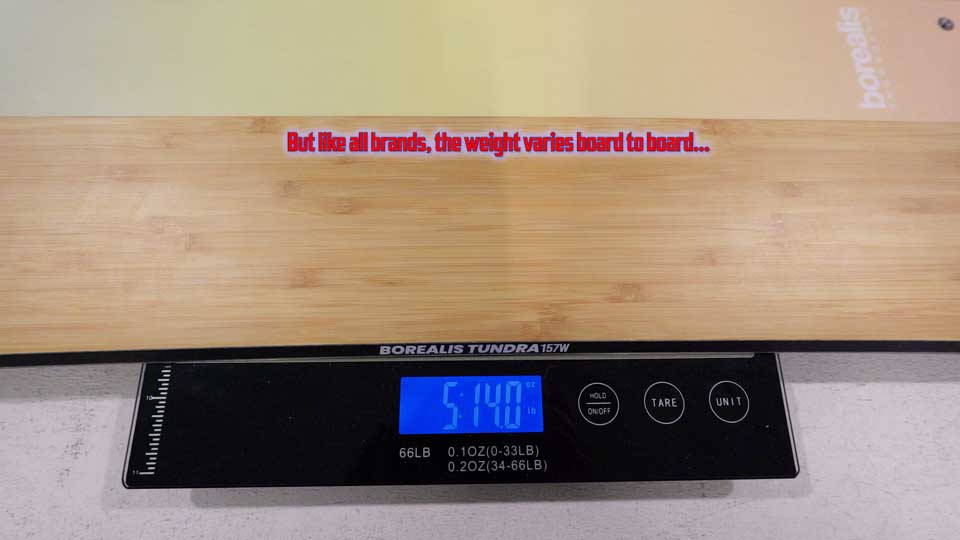
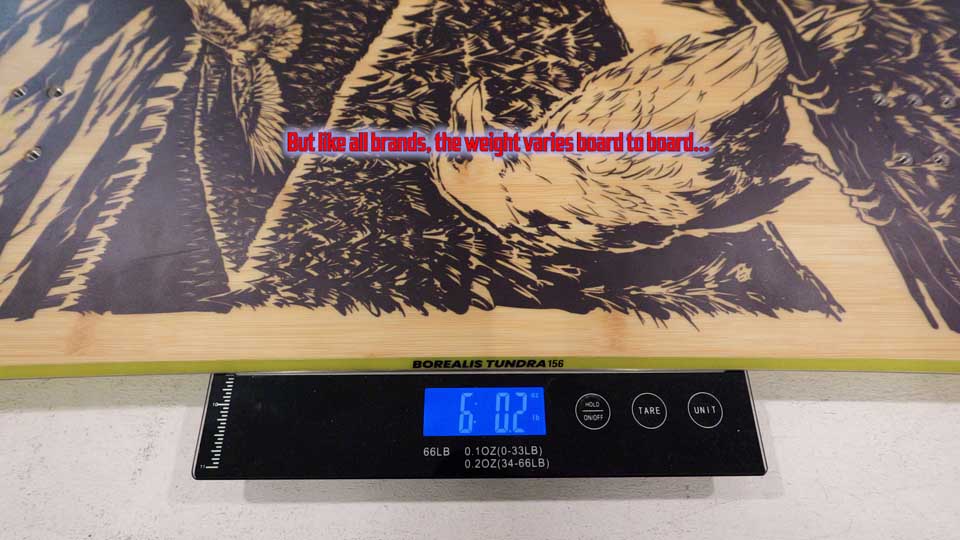
Let’s talk construction here. I’m going to bring out the 156 that I tested.
This was a demo that had been ridden a lot before I got it, and I was really impressed with how good the topsheet looked after so many people had been on it.
It has minimal scuffing where the bindings were mounted around the inserts. This is a very well-made, reliable board without being too heavy.
Shape & Setback
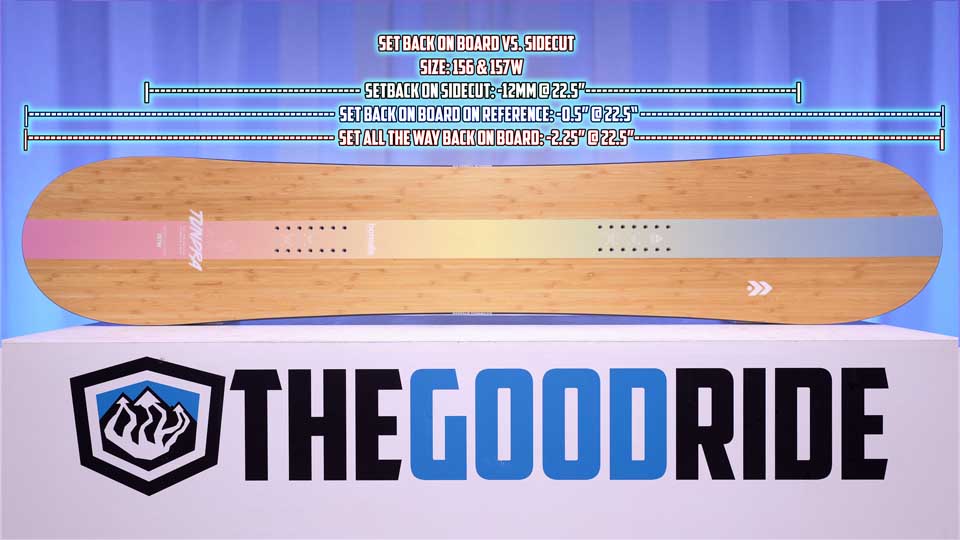
When it comes to shape, this is a directional twin with a nose that’s a little longer than the tail and has a little more surface area.
On groomers, between the feet, this feels almost like a true twin. It has a very mountain freestyle vibe to it.
What I really like is that they include an extra mini-disc-compatible setback insert for those deeper powder days that a lot of all-mountain boards don’t offer.
Camber/On Snow Feel
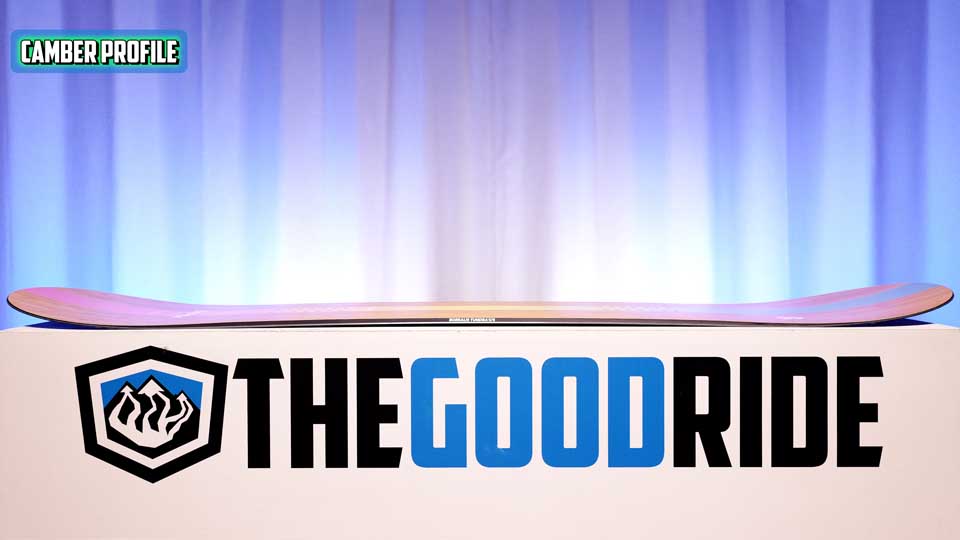
When it comes to the camber profile, the Borealis Tundra has a decent camber height in the middle. That then goes just a little bit past the inserts and comes down rather abruptly, but it has a pretty sizable rocker area before the nose and tail.
It makes for a ride that feels more camber dominant than you would think. This one-foots off a chair super well and flat bases really well down a long, flat run. It also skids a turn super easily when you get off your game.
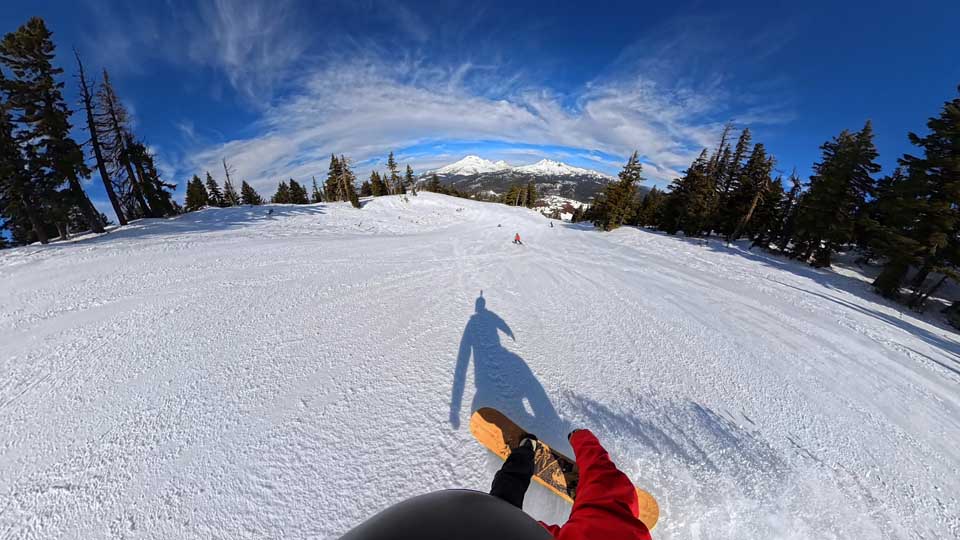
This is the kind of board that works for riders of all ability levels. Committed beginners could get this board and not take that many lumps. Intermediates could have a great time on the board, and it will really help them progress.
Advanced and expert riders won’t find this camber profile or this board’s pop boring. It works for everybody really well, and I’m really impressed with what they did with this new camber profile.
Edge Hold
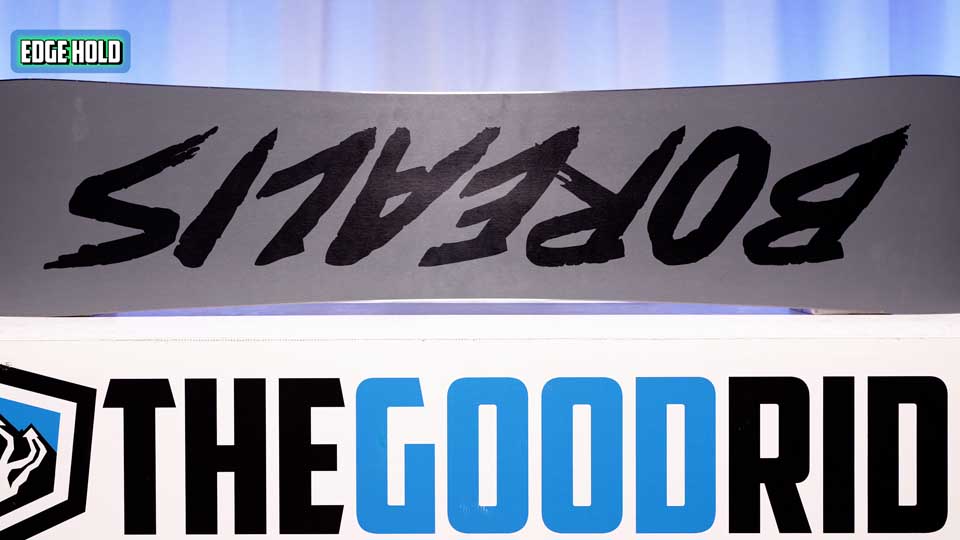
When it comes to edge hold, the Borealis Tundra does a very good job.
It has a very subtle disruption in the sidecut that’s very hard to pick up, but it seems to work very well with this camber profile to give you very comfortable, confident grip.
It’s not an icy snow specialist, but it’s very good for those who ride all the time and want to have a board that’s competent in every condition without grabbing at all in soft snow.
Flex Personality
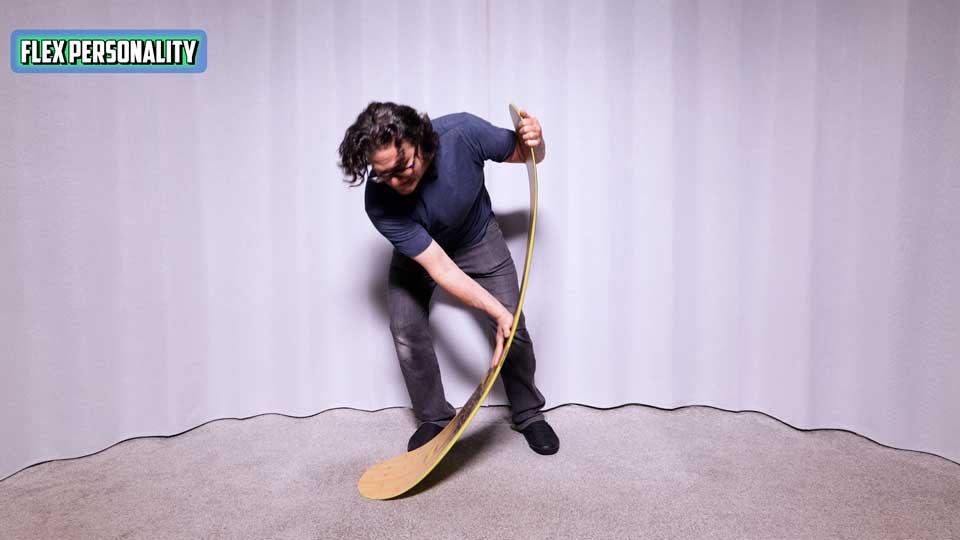
Let’s talk Tundra flex. It’s changed a lot since I last rode it.
It has such a more dynamic, poppier flex personality that I really like. Down in the tail, it’s a little stiffer. The nose is a little softer. If you go more between the feet, it seems to be a little more in line with the tail.
Overall, it’s such an easy board to butter. You have a lot of early rise, and along with this flex, the nose is super easy to butter.
The tail is a little more work, but it’s doable. The pop is considerably better than the previous years I’ve tried.
On Snow Performance
Uneven Snow
Usually, a board this poppy is going to be a mess in uneven snow, but the Borealis Tundra really impressed me in hard, micro-bumpy, uneven snow.
What they have going on with their liquid sidewall tech seems to allow this board to be damp, but it doesn’t seem like it interferes with the carbon and bamboo technology that allows this board to pop more either.
This was a champ in hard, uneven snow. The chatter never got past the board and up into my boots and bindings.
In soft, uneven snow, it’s a little bucky and bouncy, but way less than I expected. This is a very good all-day, all-conditions ride that I think a lot of people will appreciate, especially if you want a nice balance between pop and dampness.
Switch & Park
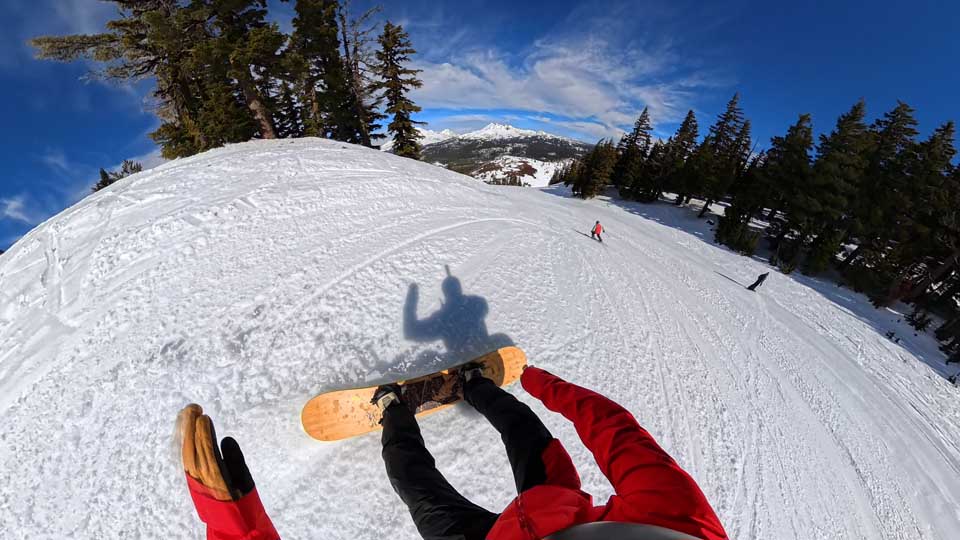
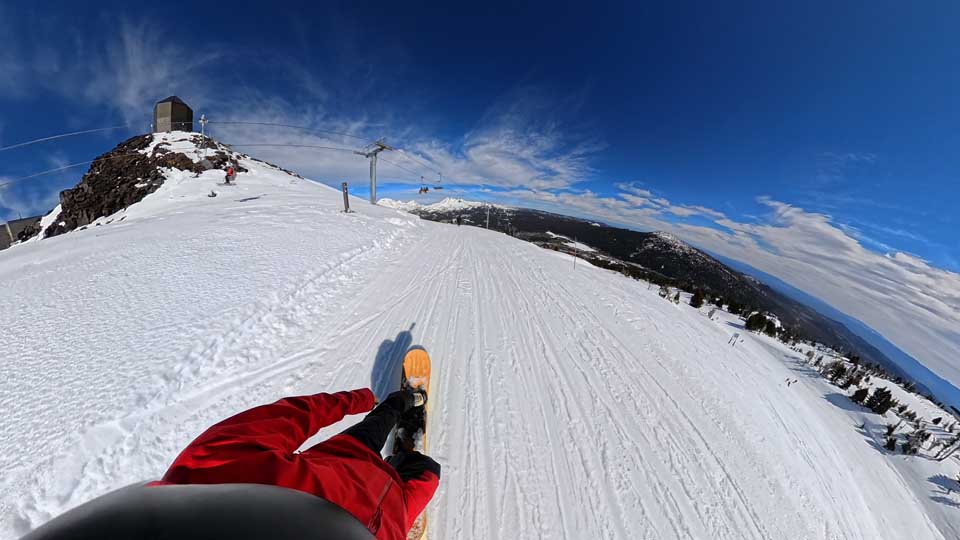
When it comes to riding switch, the Borealis Tundra is great. It’s almost a true twin.
When it comes to jumps, the Borealis Tundra is excellent. If you want to go to the park and lap the kickers, I think this shines more on a medium-sized kicker, but it’s still capable of going pretty big.
Conversely, if you’re like me and you live to go small and launch off little side hits around the mountain, it’s excellent for that. It tracks really well into jumps, pops off them much better than you would think and has a very stable, easy landing.
This is the kind of board I like to ride in the pipe because this sidecut turns up the pipe walls really well. If you’re somebody who likes to go big, this will boost out higher than you would think for this mellower camber profile.
While this isn’t the best jib board out there, and there are softer, more chill jib boards, you can dabble with this as well.
Turning/Carving
Turn Initiation
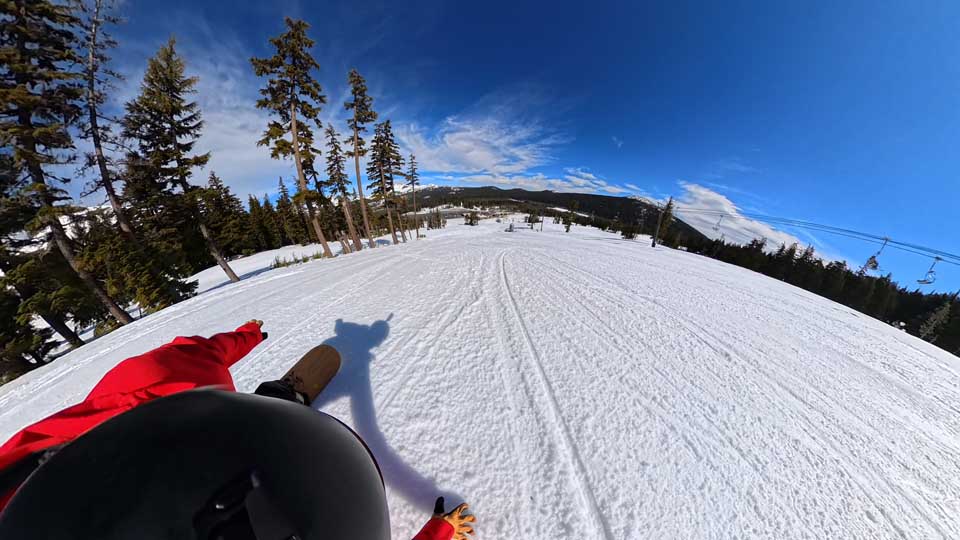
When it comes to turn initiation, if you size this correctly for your boot size, it’s going to initiate a turn pretty quickly and get you wherever you want to go when you want to get there.
Even when set all the way back and you’re trying to turn through a tight tree line or a steep, bumpy area, you’re going to feel a little tail behind you. But it’s not bad for a directional twin, especially when it’s set back.
Carving
When you really set the edge and commit to a harder turn, the spring out of the turn is really good.
Every time I got off this board, I went back and put it on the table to double-check the camber because it feels like there’s more camber underfoot than there is. I really like what they’ve done with this new construction to give this a more satisfying, springy turn.
This will perform equally well on a carve no matter how you weight your turns. Front-foot, center-foot or back-foot-weighted turns all respond equally well.
Turning Experience
When it comes to the turning experience, this 7.4-meter sidecut is definitely more on the turny side, but it still has a very balanced approach to all types of radius turns.
Circle carves are pretty good. They’re not amazing, but they’re good. Across-the-groomer kinds of turns are very good, and so are medium-radius turns.
As you get into those narrower, longer, drawn-out S-turns that like a little more speed, this sidecut does very well. In the sidecut area where the camber has true contact with the snow, it’s more mellow.
As long as you’re not in powder, it’s going to track really well. In powder, it’s going to be a little more turny, but it will never fight you in any condition if you want to go straight.
Speed
Speaking of really pointing it and going fast, this isn’t the best board out there. But I was really surprised at how little the nose and tail flopped and clown-shoed.
Usually, boards with this much rocker have a lot of vibration. It’s more of a straight-line-into-a-kicker kind of board versus a long, sustained straight line down the mountain, but it’s very good for what it is.
Base Glide
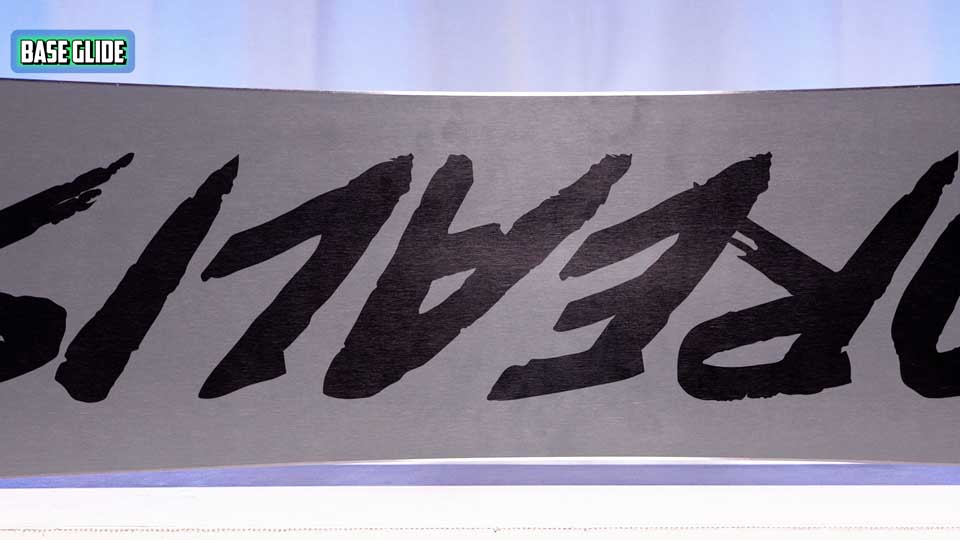
When it comes to base glide, I am not a fan of die-cut bases, but wow, I don’t feel a single place where this was cut and placed in.
GP87 does some amazing work. This base is pretty fast and holds wax really well, so you could do a hell of a lot worse at this price point.
Powder
When it comes to powder float, I keep getting stuffed every time I get this board.
The last time I got it, I didn’t have powder. The same goes this time around. It was even worse than last time.
But here’s the thing. I love the fact that there’s a lot of rocker before the nose and tail. You have a nose that’s longer, with more surface area than the tail. You can see the tail has less surface area near the tip.
It should have just a touch of a tapered feel in powder when this tail sinks down and engages. Then you have mini-disc-compatible setback inserts, so you can get a little bit of setback directional float.
Overall, I think this would be a very good powder board for those who want to ride centered and ride switch a lot in powder, but also set it back and get a little easier directional float.
Final Thoughts
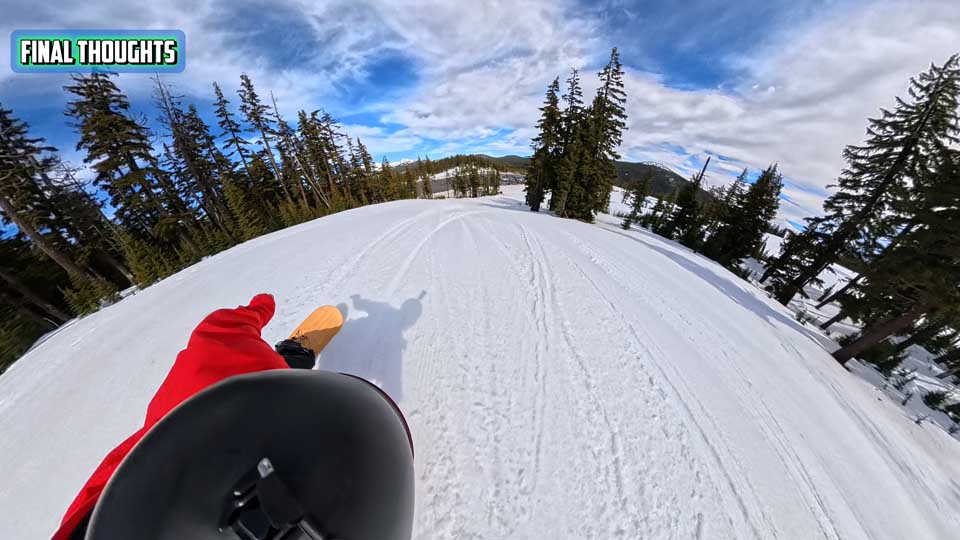
Overall, I love the new construction of the Borealis Tundra.
This is the kind of board for somebody who’s looking to do a little bit of everything and wants to compromise the least when they do it. This is the kind of board I’d like to have in my quiver.
My only real complaint with this board is that, over all these years, they’ve never added extra sizes. But if you’re in this sizing range and what I talked about appeals to you, this is a great option.
Borealis Tundra Specs
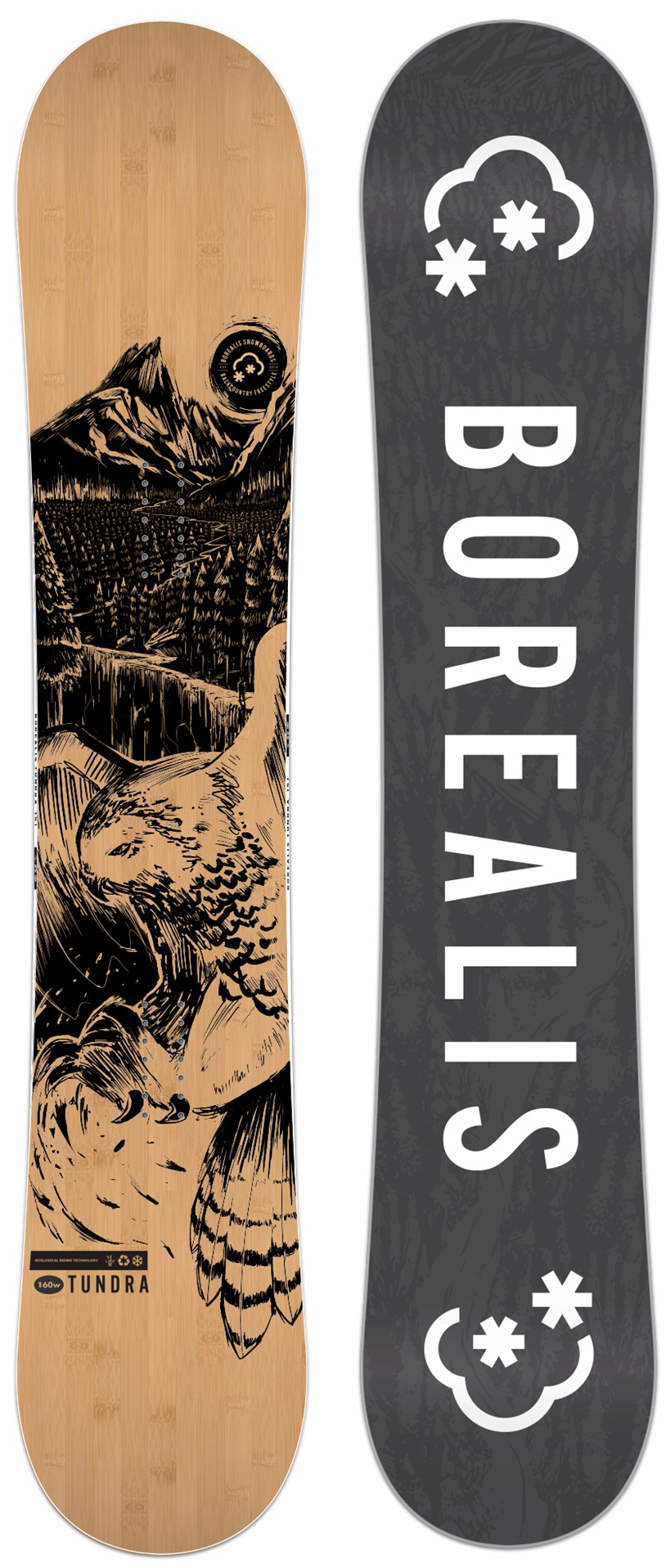
Borealis Tundra Images
We try to get as many images of the Borealis Tundra, but forgive us if they're not all there.
2027
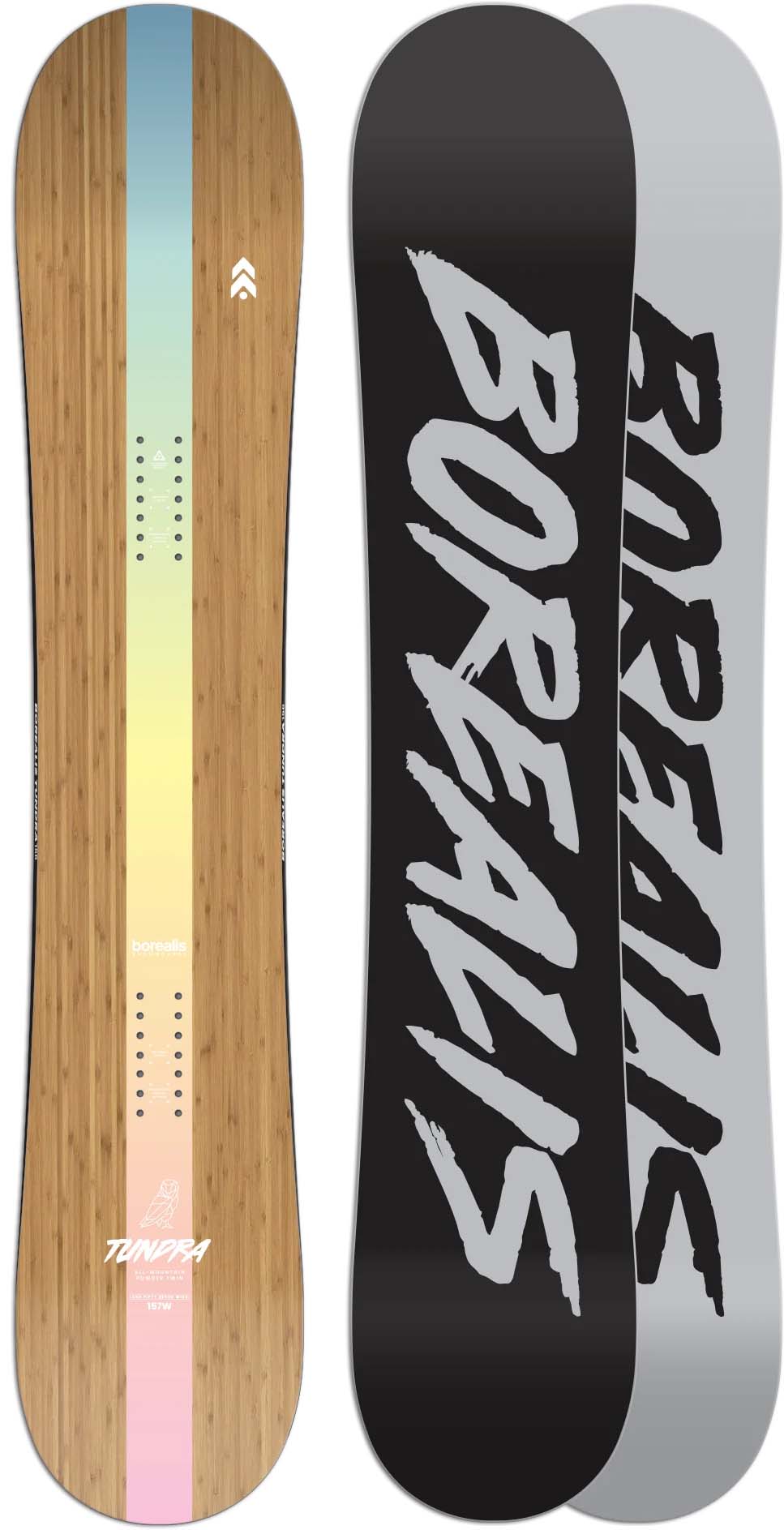
2026
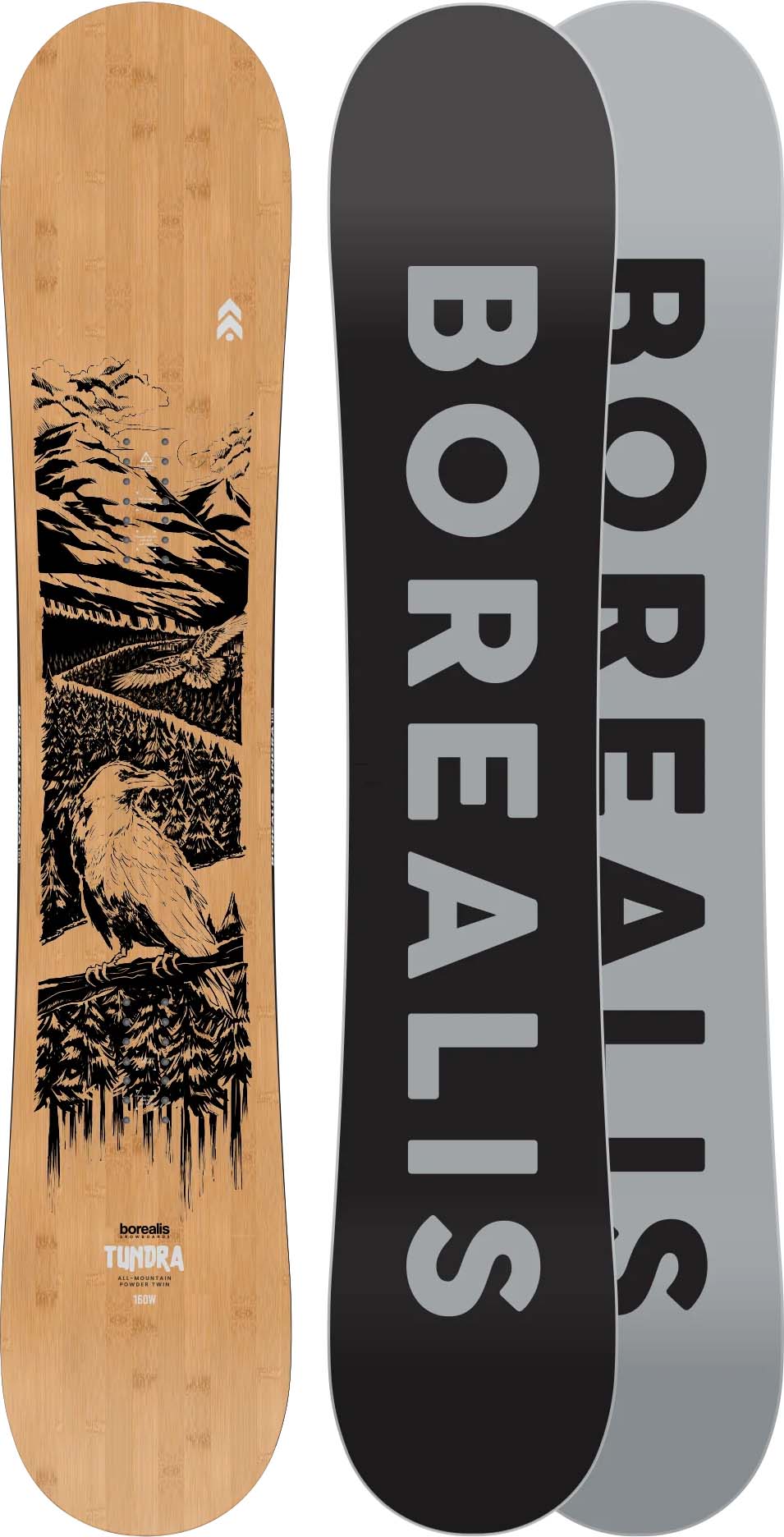
2021
Borealis Tundra User Reviews
Where To Buy
No obligation, but these links support the site.
No Results Found
Borealis
SnowCountry
No Results Found
SnowCountry
No Results Found
Where To Buy
No obligation, but these links support the site.
No Results Found
Borealis
SnowCountry
No Results Found