Positives
- Really Fun To Turn
- Great Pop
- Improved Pop With Similar Dampness
- Fast Base
- Great Grip
- Not Bad In Pow for this much camber
Negatives
- Technical and Catchy For Intermediates
Summary
The Stranda Biru 2027 has the same camber profile, etc., but it has some construction changes that make this board a little more poppy, while still being just as damp. It's a very fun, carve-friendly short wide that isn't just a dedicated carver and has a lot of versatility around the mountain.Where To Buy
No obligation, but these links support the site.
Stranda
No Results Found
Stranda
SnowCountry

Stranda
Stranda
PRFO Sports Canada
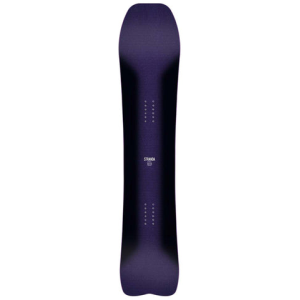
| Riding Style | Alternative Freeride |
| Riding Level | Advanced - Expert |
| Fits Boot size (US) | 8-10, 10-12 |
| Manufactured in | GP87 In China |
| Shape | Tapered Directional |
| Camber Profile | Mostly Camber |
| Stance | Setback -20mm |
| Approx. Weight | Feels Normal |
| Split | No |


|
|
|
|
|
|
|
|
|
|
|
|
|
|
|
|
|
|
|
|
|
|
|
|
|
| On Snow Feel |

|
| Turn Initiation |

|
| Skidded Turns |
|
| Flex |
|
| Buttering |
|
| Edge Hold |
|
Where To Buy
No obligation, but these links support the site.
No Results Found
SnowCountry
Stranda
PRFO Sports Canada
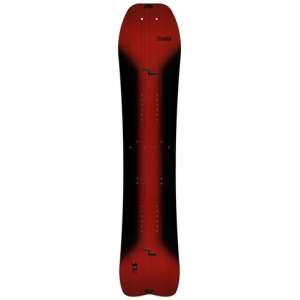
An In Depth Breakdown of the 2027 Stranda Biru vs. the Older Model Review by The Good Ride
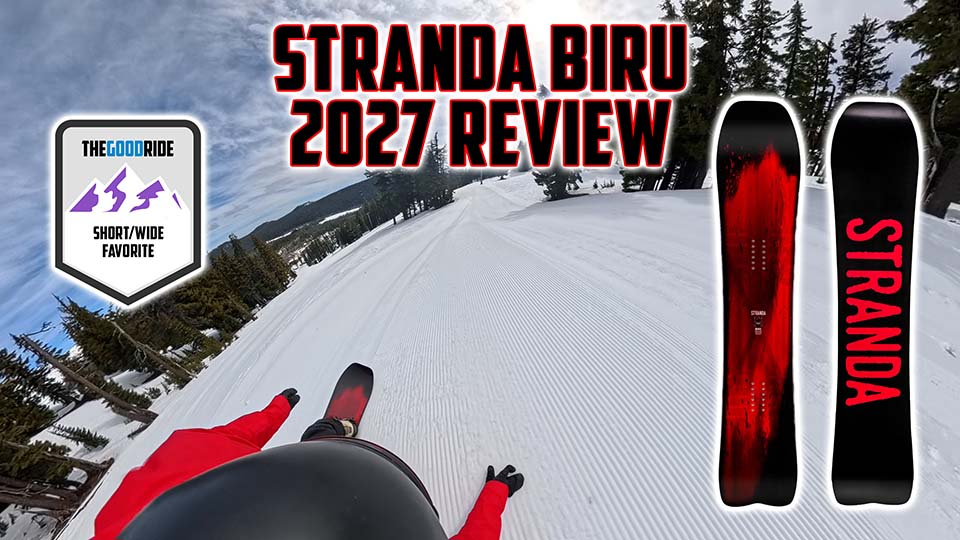
Overview
How It Was Tested
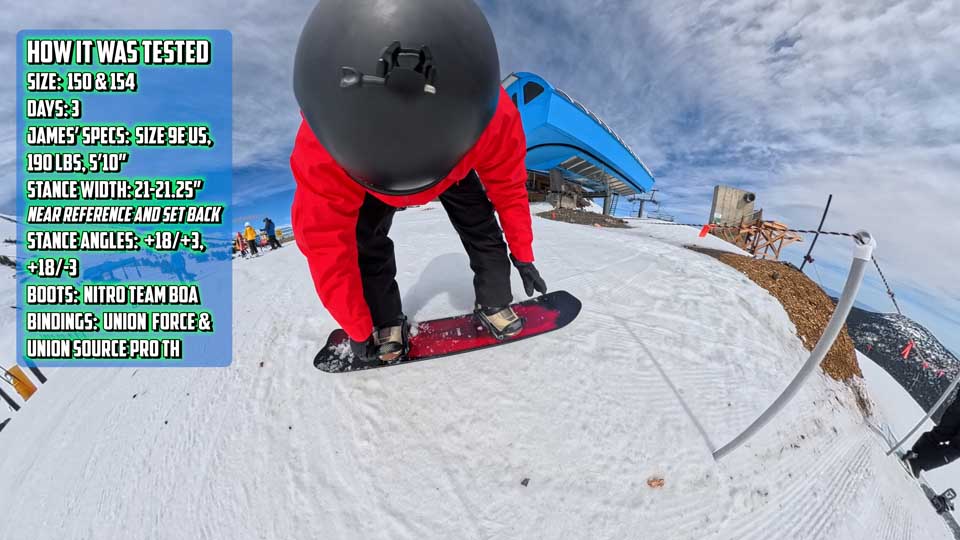
I rode the Stranda Biru primarily with my Union Force bindings and my Nitro Team BOA boots. It was a horrible season up at Mount Bachelor to test boards.
But because I got to know the older Biru in a 154 and a 150 so well, from good powder to firm groomers, I only needed to compare this against the older Biru in same-day tests to see what the new construction did.
So that was accomplished, and I feel I can give you a good review.
We liked it so much we asked to keep it (only do this with favorites).
Size: 150 & 154
Days: 3, but many on the previous model
Conditions: and some early morning Slackountry pow time with Drift Boards & Union Rovers
Riders: James (Size 9 E, 5’10”, 185-190lbs). I’ve tested and compared 850+ boards, 200+ bindings, and 120+ boots
Davey (Size 12, 240lbs, 6’4”)
Boots: Nitro Team BOA, Nitro Team TLS
Insoles: F.I.T. Gamechangers
Bindings: Union Force, Union Source Pro TH
Redundancy: Strapins in case boots or bindings break.
Jacket: Skyline Fuse Jacket, Jones Mtn Surf Anorak
Pant: Skyline Fase 3L Bib Pant, Skyline Faze Pant, Jones Mountain Surf Pant
Helmet: Smith Method, Smith Scout
Goggle: Smith 4D Mag Low Bridge Fit
Gloves: Burton AK Clutch Mitt, Burton AK Tech Leather Glove
James’s Set Up: 21.25” Wide. Stance Angles: +18/-3, +18/+3. Close to what we think the reference is, as it wasn’t marked.
Joe’s Set Up: 21.25” Wide. Stance Angles +18/-3, +18/+3. Close to what we think the reference is, as it wasn’t marked.
Similar Boards We Like (but not the same):
Gnu Gremlin, Salomon Dancehaul, K2 Excavator
Ethics Statement
I was not paid to write this review, and it reflects an honest, objective perspective with no brand oversight. If this review helped, we’d appreciate it if you support objective content by:
- Buying Through Our Sponsor, Blauer Board Shop
- Buying through our other Where To Buy Links, we get paid a small commission if you do. Please make sure we are the last click and don’t use a coupon or discount provider. They take our commission if you do.
- Become a Patron and get early access to reviews well before publication. https://www.patreon.com/thegoodride
- Donate to https://venmo.com/TheGoodRide (@TheGoodRide) or https://paypal.me/thegoodride
- Follow Us: https://www.instagram.com/thegoodride
- Like & Subscribe on YouTube: https://www.youtube.com/@thegoodridesnow
Sizing
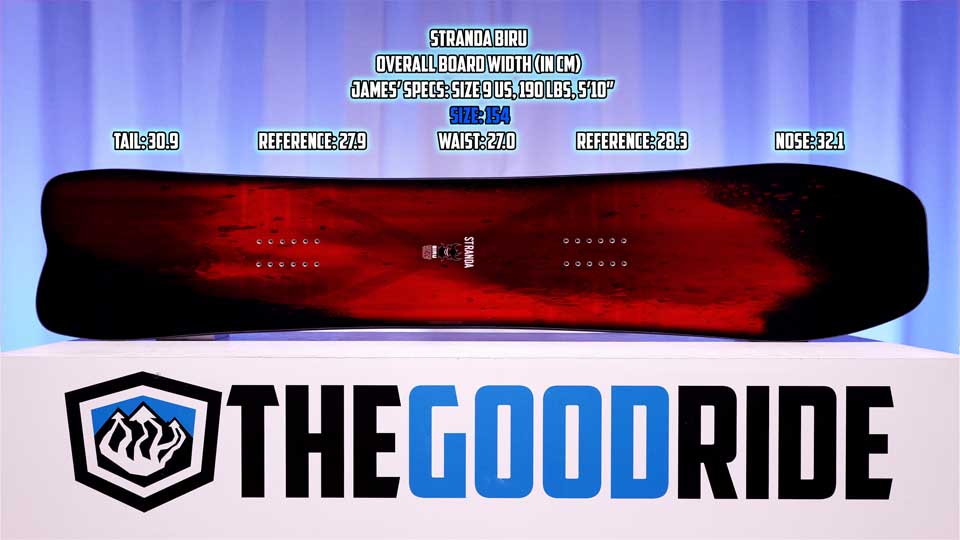
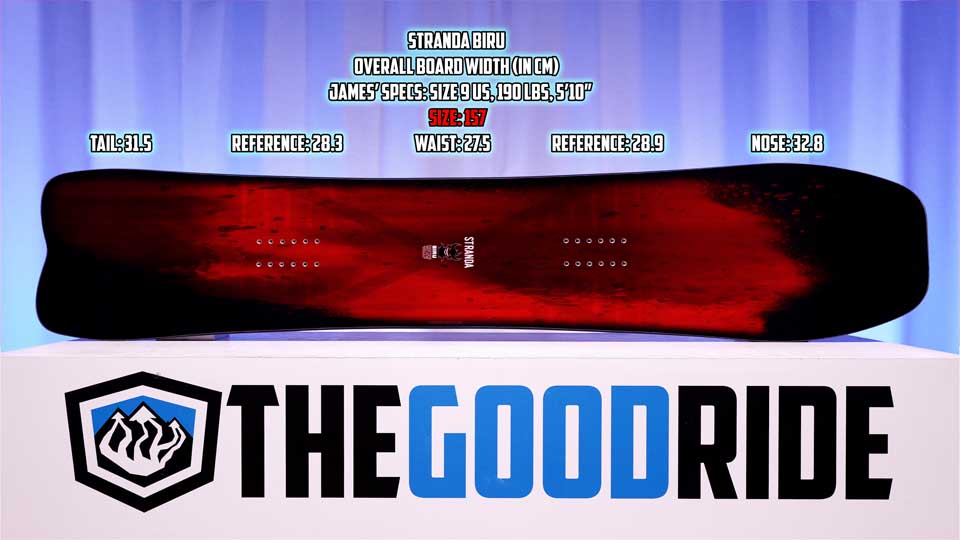
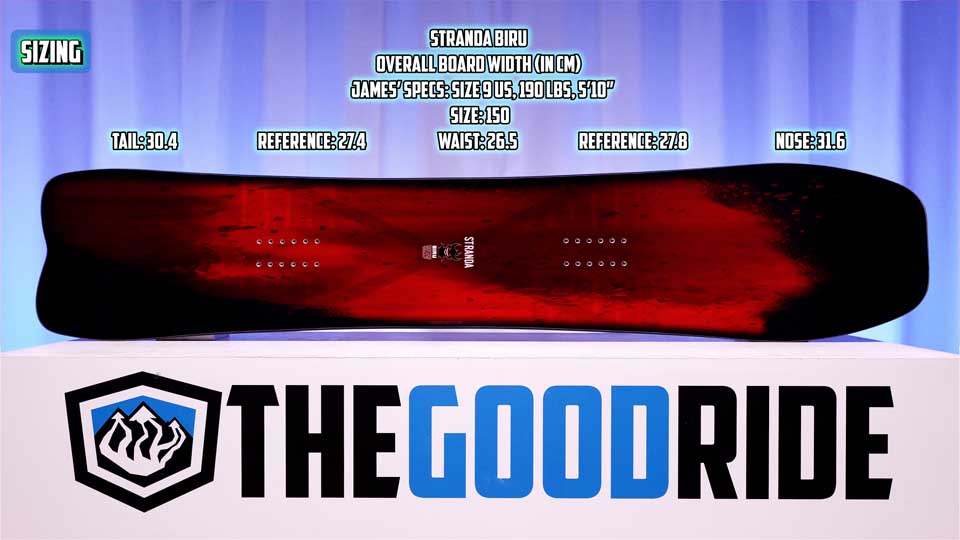
How it Fits Me
I found this 150 best for all-day riding, just like last year. I liked the 154 better in clean morning groomers, and with more responsive boots and bindings, I could probably handle that board all day.
But I don’t want more responsive boots and bindings, so the 150 is the better all-day ride for me. If they had a 152, that might be my perfect board, but as it stands now, the 150 is the better all-day ride, and the 154 is the better clean-condition carver.
How It Might Fit You
Sizing is highly subjective and personal, and many factors come into play when choosing a board. I rarely use “all caps to emphasize something, but NEVER TRUST ANYONE who just references their height and weight. Here are all the factors to consider
Boot Size
You should always start with your boot size first. If your board is too wide for your boot, you can’t turn it; if it’s too narrow, you get the dreaded toe and heel drag. This is the most important part of sizing a board, which is why so many snowboards come in widths like Narrow, Normal, Mid-Wide, Wide, and Ultra-Wide.
Stranda lists the width over the inserts so you can tell whether your boot will overhang and get a better idea of how it will turn.
Here is the sweet spot to turn easily with mid-response bindings/boots and not boot out. You can go wider if you carve really hard or have very responsive bindigns/boots.
150: 8-10, but you can go bigger if you are lighter
154: 10-11, but you can go bigger if you are lighter
157: 11-12, but you can go bigger if you are lighter
Weight
Your weight determines how the board flexes underfoot, affecting pop, speed, and more. An easier-flexing board can also be easier to turn. At 190lbs (5lbs past the recommended weight), I felt this was fine, but make sure your boots can turn the Biru first before deciding on the right weight.
Height
The board’s length determines swing weight/control. If it’s short, it’s easy to spin, and if it’s longer, it floats better and can help with speed. You’ll want to ride this a good bit shorter than you normally do, and because it’s so wide, the swing weight won’t be super easy despite being short.
Boots and Bindings Response
Always factor in your boot and binding’s responsiveness to determine how well you will be able to turn/control a board. The more responsive your boot and binding are, the wider the board can be for your boot size, and the better a lighter rider can control the board.
Stance Width
Check your stance width against their reference and/or the set-back stance to see if it fits you. The Biru runs a little narrower width-wise, so they’re great for narrow-stance riders but not ideal if you have a wider stance.
Personal Preference
Some prefer control, so they match boot size to board width first, then weight. Others prefer speed over control, so they size up to a wider/longer ride and have very responsive boots/bindings.
Design
Base Glide
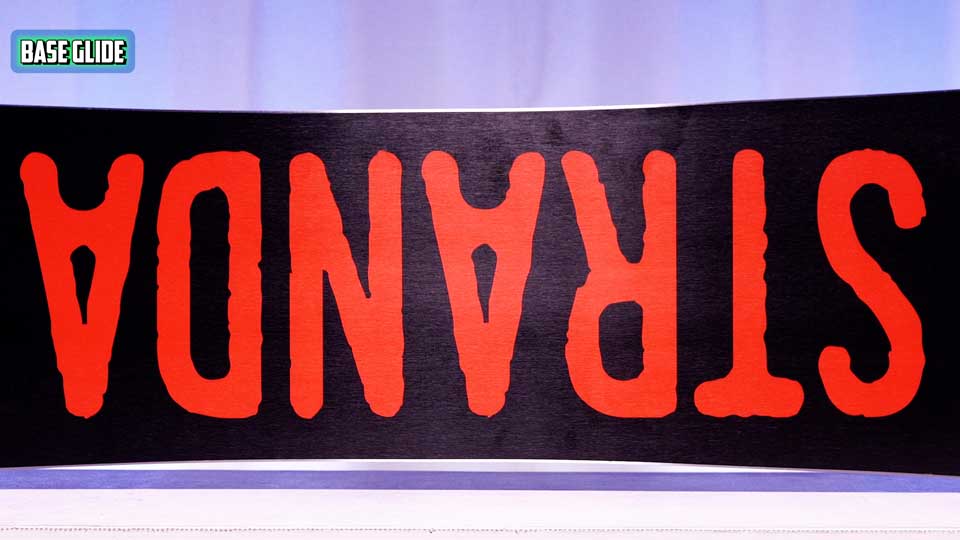
When it comes to construction, this base is very fast and easy to glide on. One of the best out there.
This has excellent wax retention, and I can’t feel any of the die-cut. While I would prefer a black base, it’s just too fast for me to complain about.
Durability / Weight
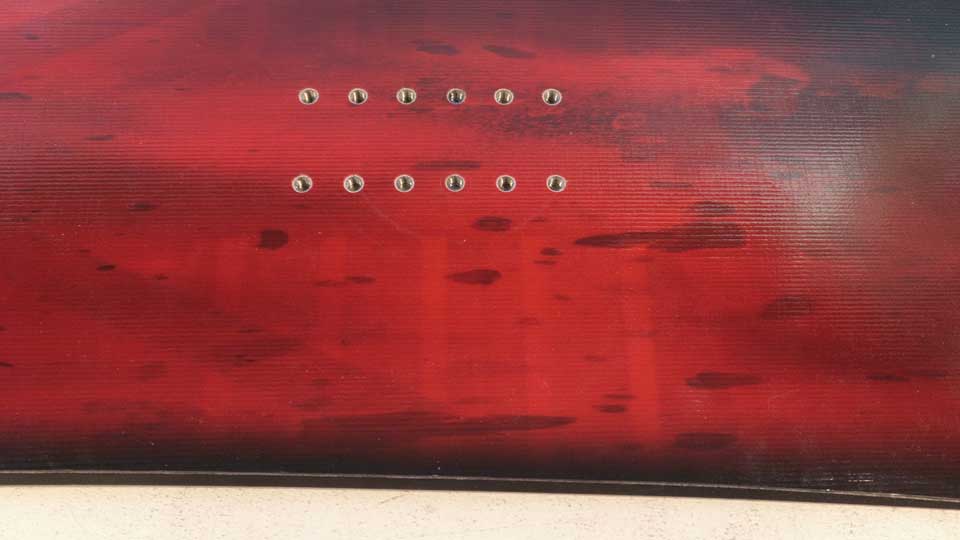
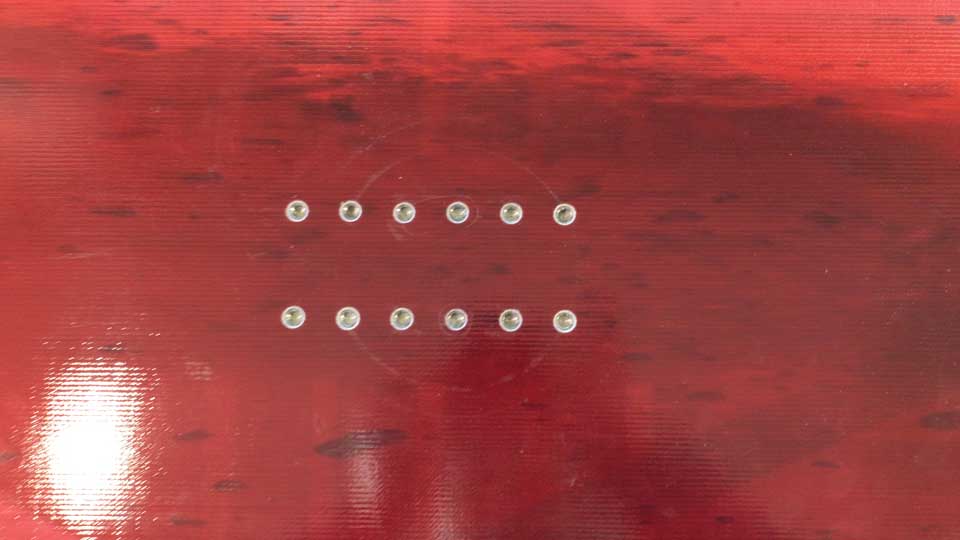
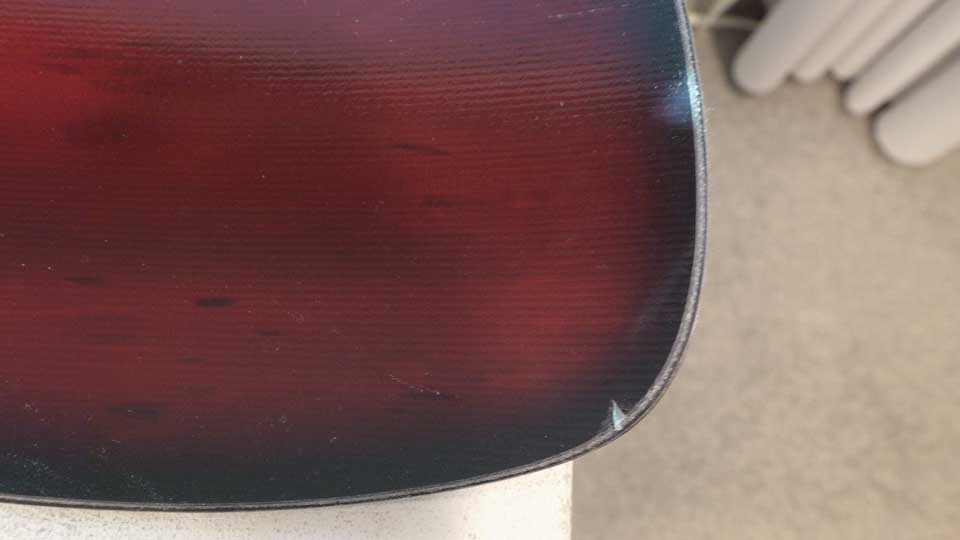
As you get into the edges and the sidewalls, it’s very well done here. I believe Stranda gets its boards from GP87 in China, one of the world’s best factories.
This topsheet looks better than the old matte topsheet. It has a softer, slightly gummy, sticker-like feel on the top.
It seems a little more prone to scuffing and picking up marks and small nicks, though it doesn’t seem to chip as easily.
Overall, the construction is great, and this board will last a long time.
Remember…weight can vary greatly from board to board, so this isn’t a guarantee you will get a board this weight.
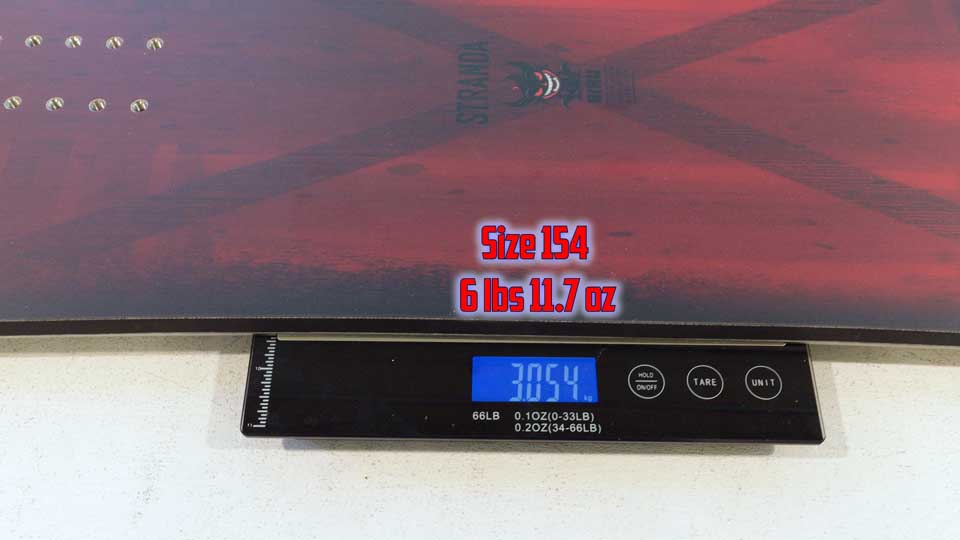
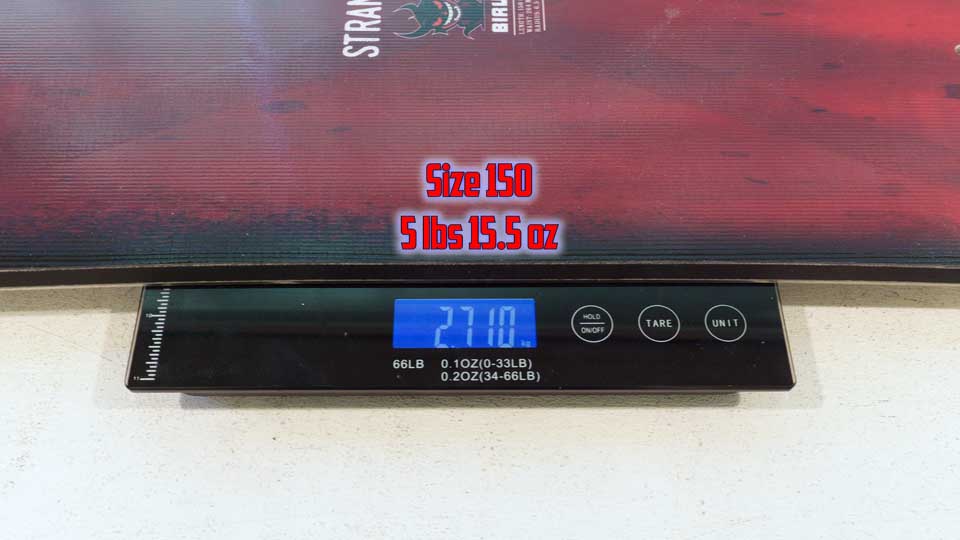
It’s also pretty light and feels maybe a touch lighter than last year, but that can vary greatly from board to board.
Shape & Setback
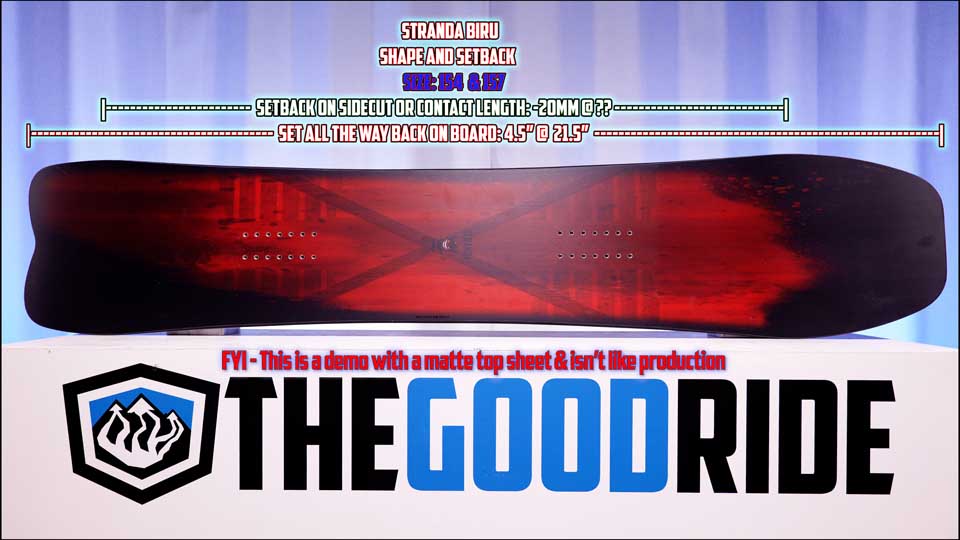
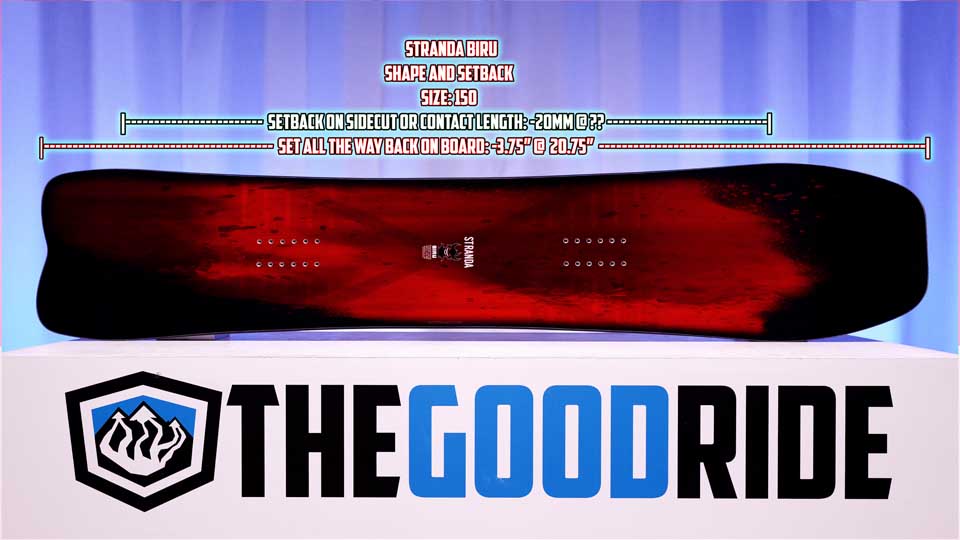
In terms of shape, the Stranda Biru is still tapered and directional, with 12mm of taper. It has that same stance location on board that’s pretty set back.
One thing I learned with the Biru is that the 150 has only six-by-two inserts per foot, while the 154 and 157 have seven-by-two inserts per foot.
So you get a little more stance width versatility with the 154 and 157.
The nose is obviously much longer than the little tail nub, and it feels very directional.
Camber/On Snow Feel
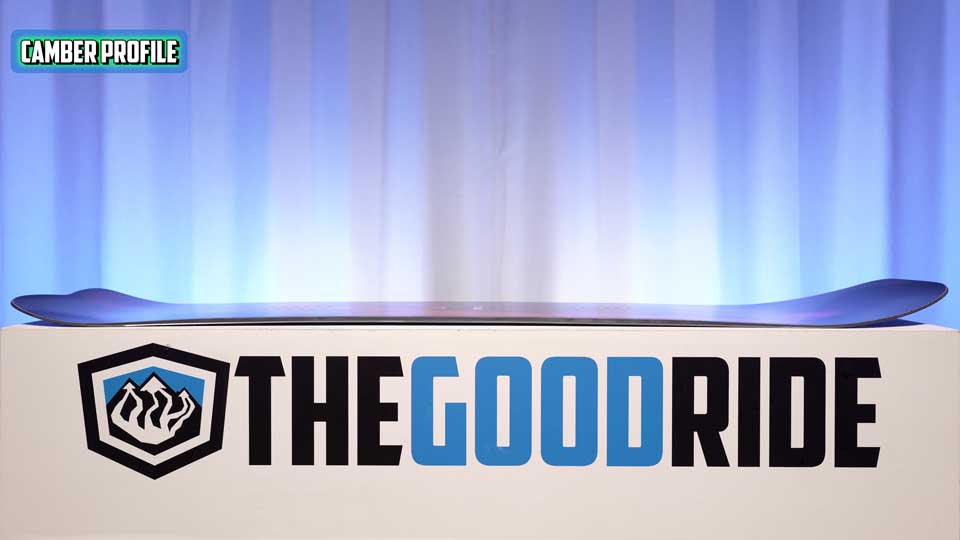
The camber profile hasn’t changed. It’s that same camber from the tail going all the way out to just a little bit before the nose. It’s a mostly camber ride that’s almost full camber.
So this is best for advanced to expert riders and not ideal for committed intermediates because it has a lot of camber and is wider than most people normally ride.
So it’s going to be harder to skid a turn, even though it’s shorter.
But it tracks incredibly well one-footing and flat basing, and it has that same great feel underfoot in all conditions.
It’s an easy board to get to know.
On Snow Performance
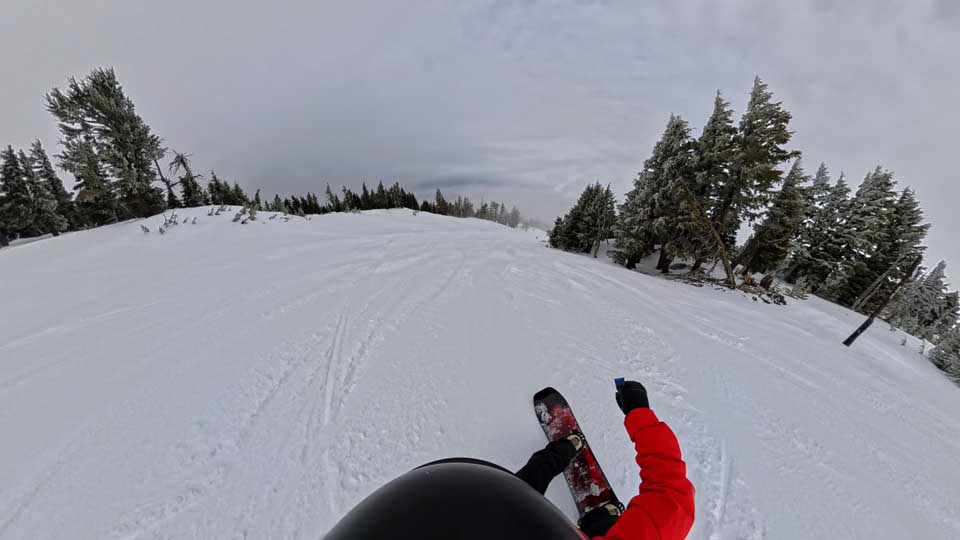
Edge Hold
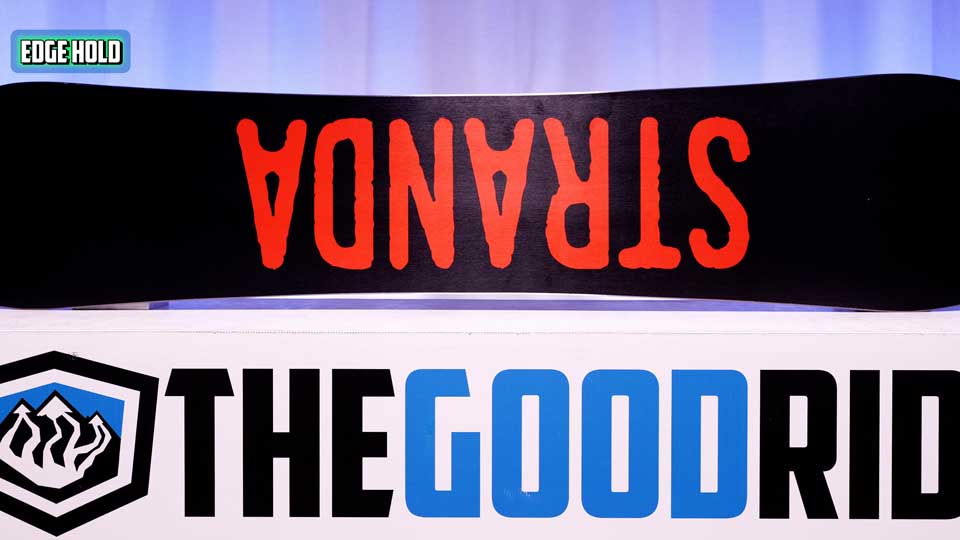
When it comes to edge hold, Stranda has that same slight disruption that gives it very good grip.
This perpendicular wood grain might offer a slight grip improvement, as it lines up with the disruption in the sidecut.
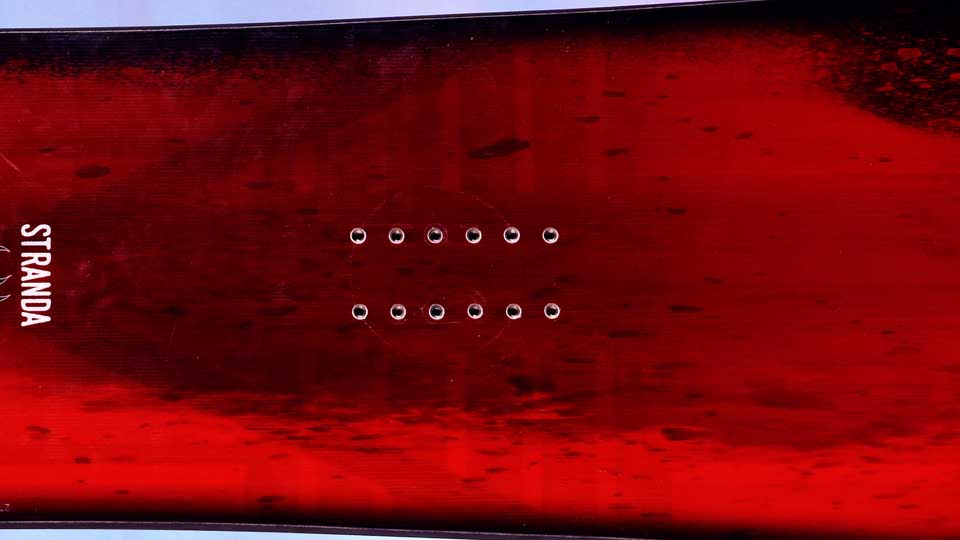
But in same-day tests, this only felt marginally better, if that. Sometimes it felt almost the same, and I did the same run, same bindings, same boots, same turns, in the same places at almost the same times.
So that’s where I’m coming from, perspective-wise.
It’s boring as hell for people to ride with me, but really good for you.
Flex Personality
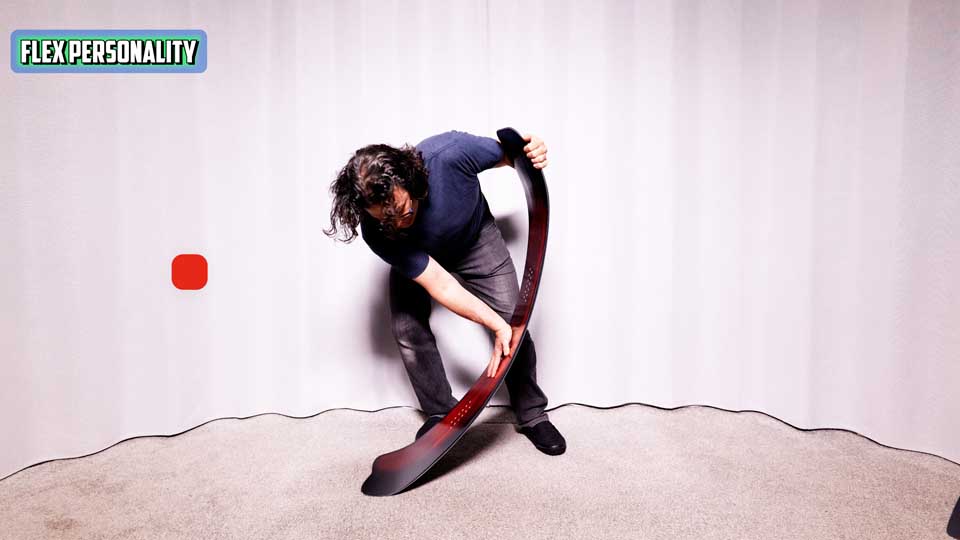
Let’s talk Stranda Biru flex. It’s a medium-stiff flex in the nose. It’s a good bit softer than the rest of the board, and it’s much easier to butter on the nose.
Then when you flex down in the tail, it’s very stiff and definitely more challenging to butter there.
Overall, it’s very poppy. It’s just got this nice energy to it that allows this board to pop really well.
Compared to the previous Stranda Biru, with slightly different construction under the hood but the same shape and everything, this one’s a touch softer.
I rode it a little more, but overall, it’s not much different from when I got it out of the wrapper.
The nose is just as soft. The tail flex is still very stiff, just a touch softer, and the flex between the feet is very stiff as well, like the new Biru.
Uneven Snow
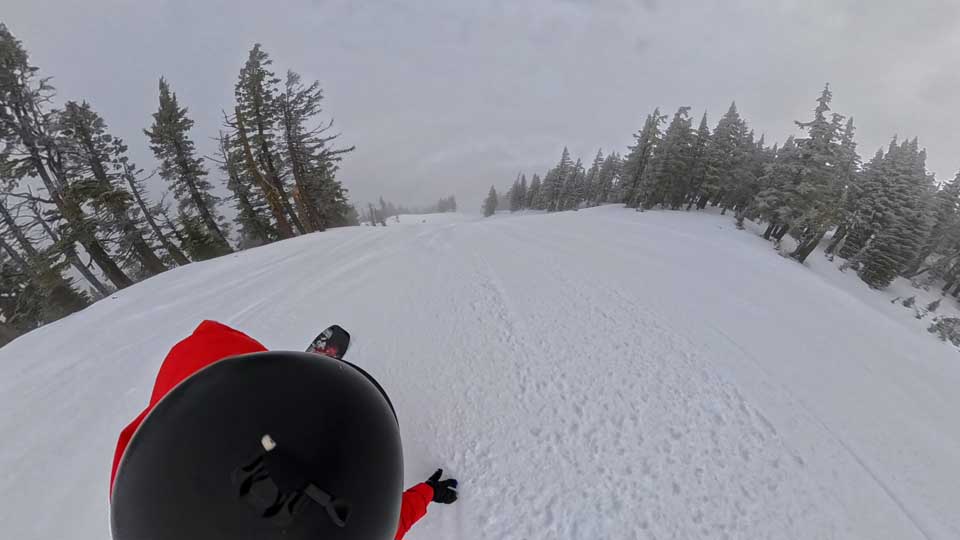
On uneven snow, even though it feels a touch more poppy and responsive, it feels a little damper.
It’s very good with hard groomers that give you that micro-bumpy chatter. It absorbs it pretty well.
It’s not the best of the best, but it’s very good, especially for a short/wide.
In soft, thick, uneven snow, shorter, wider boards like this often buck and bounce a lot.
Yes, this does buck and bounce around a little bit, but it’s really, really good for a short/wide, and it’s not a bad all-day ride by any means.
I actually preferred this slightly to the older model.
Switch/Air/Park
Riding switch is doable but far from ideal. It can be done, and I don’t mind doing it if you need to.
When getting air, you’re usually riding this board with a decent amount of tail behind you. It’s a very fun board to get air with.
It’s not really the kind of board I like to ride pipe with. I like narrower boards, but some might.
Turning/Carving
Turn Initiation
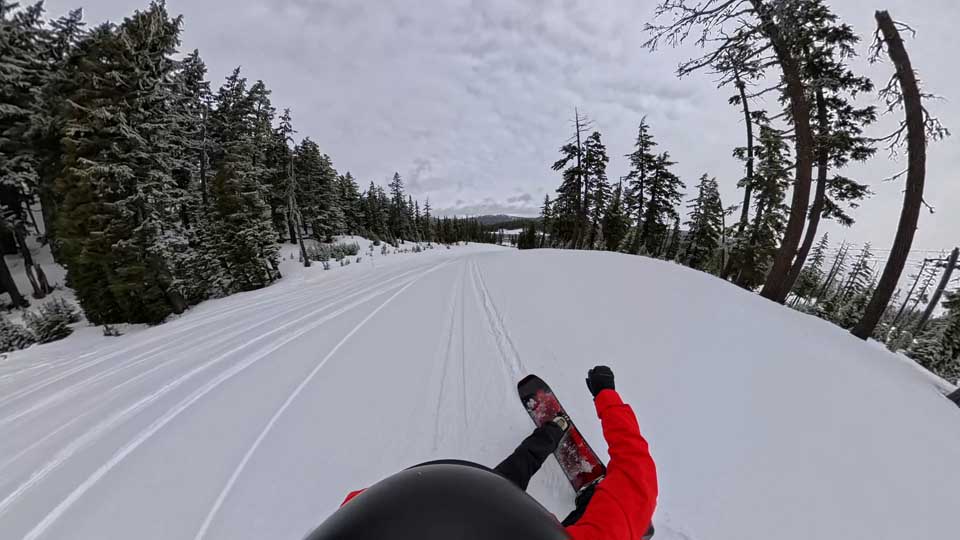
When it comes to turning the Stranda Biru, it is still a very fun board overall.
But one thing about short/wides, Biru included, is they aren’t the best for quick turn initiation.
People think they want to get boards like this for riding moguls and tight tree lines. No, don’t do it.
Especially if you’re like me, who’s riding a size nine on a 26.2 short/wide waist. This turns fast for a short/wide, but not really fast.
Overall, it’s more on the medium side.
Carving/Committed Turns
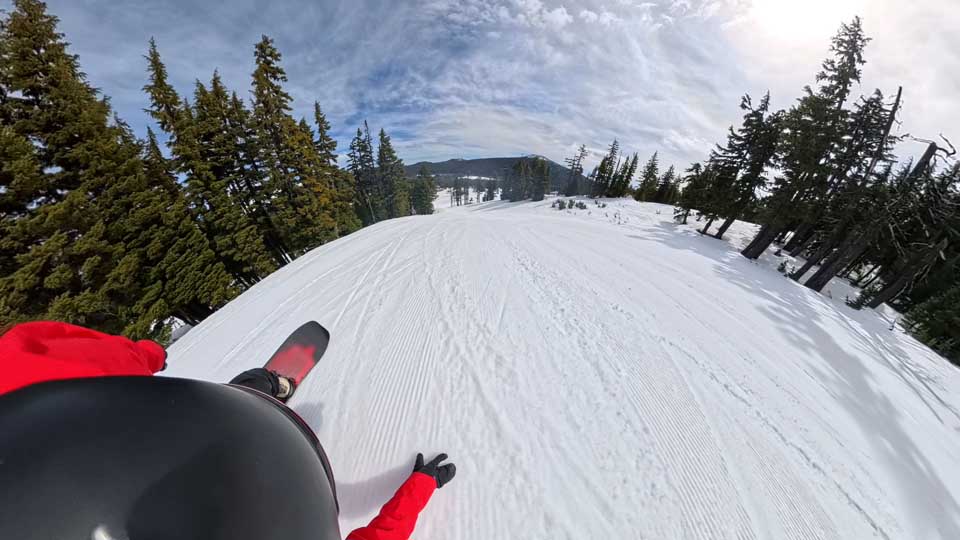
What these boards do really well is that when you get the edge committed, they’ll make a hard right or a hard left really quick, and they turn a much tighter radius.
So overall, it’s a quicker turn, but the initiation is not.
When you get this board on edge on groomers, this camber pops you out of a turn so well, and it’s a nice improvement over the older model.
I felt this initiated a turn a little faster in a 150 and even a little in the 154, and when I got it on edge, the spring out of the turn was a little better.
I could front-foot, center, and back-foot weight my turns really easily with this, and the spring out of the turn was almost the same.
Turning Experience/Sidecut
This 6.5m sidecut radius really loves circle carving and across-the-groomer carving.
That’s where the Stranda Biru absolutely shines.
It’s not bad for medium-radius turns, and while it’s not hooky for longer, more drawn-out medium-to-narrow S-turns, that’s not its strong point.
Speed
If you want to straight-line it, the Stranda Biru is a little damper and a little more capable than before.
It’s not going to try to turn on you when you want to go straight.
But there are better boards for straight-lining. Still very competent for a short/wide, though.
Powder
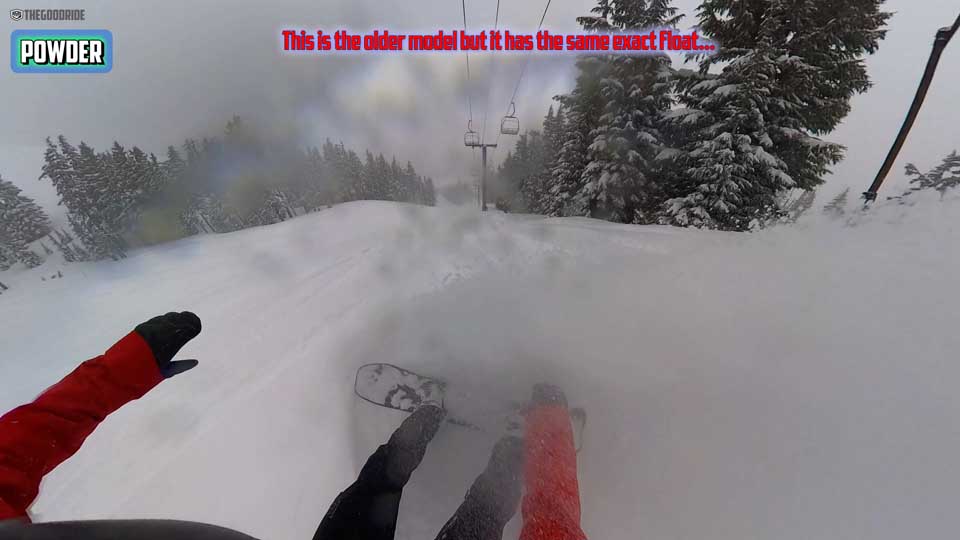
In powder, the old and new Biru will float equally well.
I really thought the old Biru, with all this camber and so little early rise, wouldn’t float that well in powder.
But it really surprised me at how competent it was.
This nose rises up, this tail sinks, and I didn’t feel anywhere near as much rear-leg burn as I expected.
So not a dedicated powder board, but very fun for an almost full-camber short/wide.
With the 154 and 157 Birus, which have seven-by-two inserts per foot, you can get a little more setback and a little easier directional float than the 150 and below.
Final Thoughts
James Final Thoughts
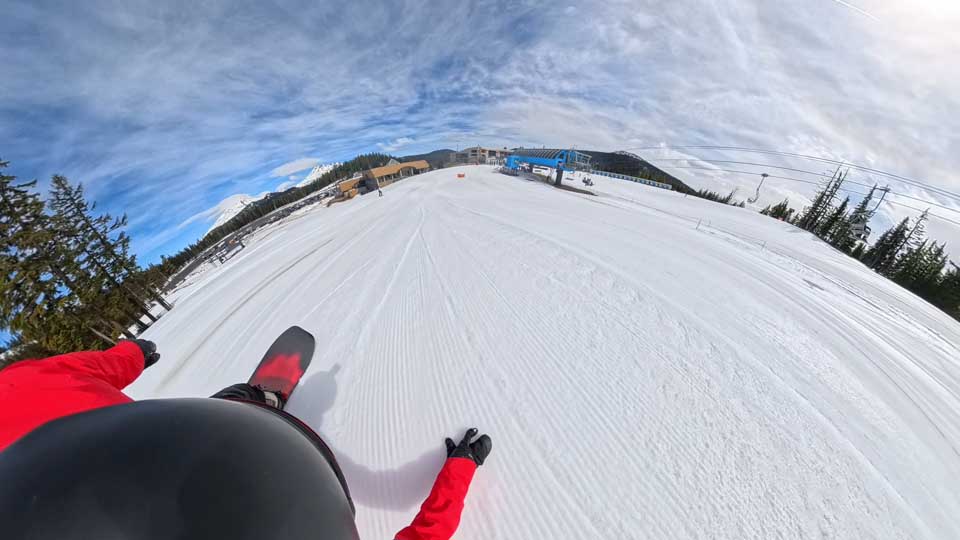
Overall, I’m kind of in between sizes on the Biru. I mean, I’d kill for a 152.
I think this is such a fun board, and this is great as a quiver piece.
But it’s also great for someone who loves short/wides and wants a do-anything, directional, one-board quiver.
From hard snow to powder, this could be a good choice.
Joe’s Take
The 2027 Stranda Biru snowboard, one of my favorite boards to ride this past season.
How Joe Tested It
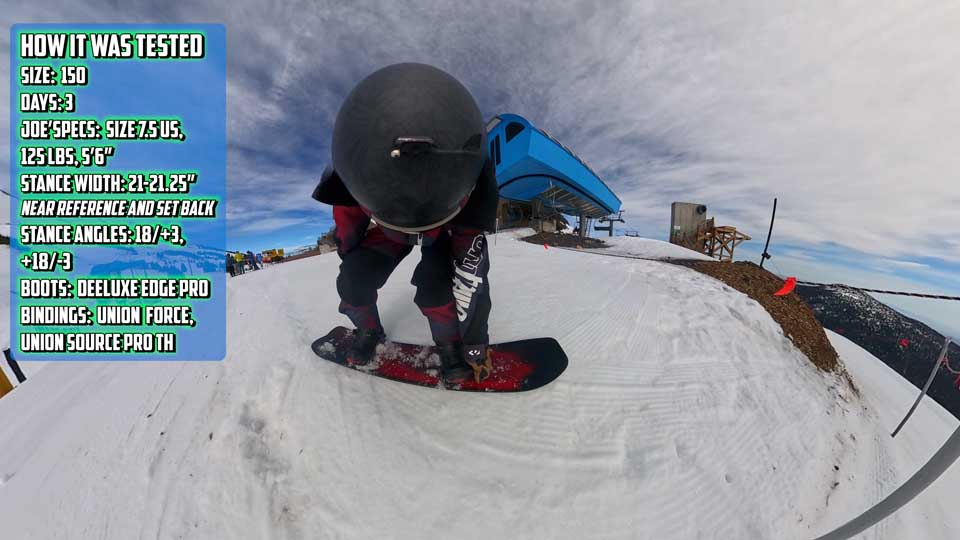
I’m 5’6″ in height, weigh about 125 pounds, and wear a size 7.5 Deeluxe Edge Pro boot.
I tested this board in size 150. As a volume-shifting board, it definitely feels more like a 156 or 158 on snow.
I tested this board using the Union Source Pro bindings as well as the Union Force bindings.
And just to give you context, Joe isn’t a typical small-guy rider. He likes to ride much bigger boards for his boot size, weight, and height.
He accomplishes that with a stiffer boot and usually a much stiffer binding than my Union Forces.
He normally tests the Rome Katana Pro FullWrap with the ankle strap all the way up, which gives it much more response than almost any other binding out there.
How It Rode For Joe
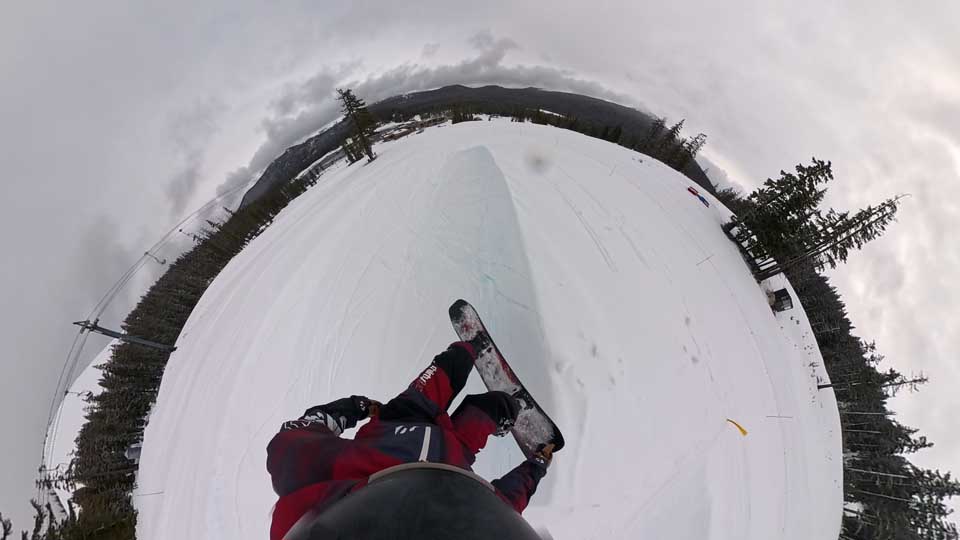
New for 2027, they upgraded the core, which I felt added pop without sacrificing the stability and dampness I loved in the 2026 model.
This board feels much more aggressive than a lot of the other short/wide boards I’ve ridden in the past.
Those boards are often described as party boards, are a little softer in flex, and often feature a little more rocker in the tips, or sometimes even have a flat or rocker profile altogether.
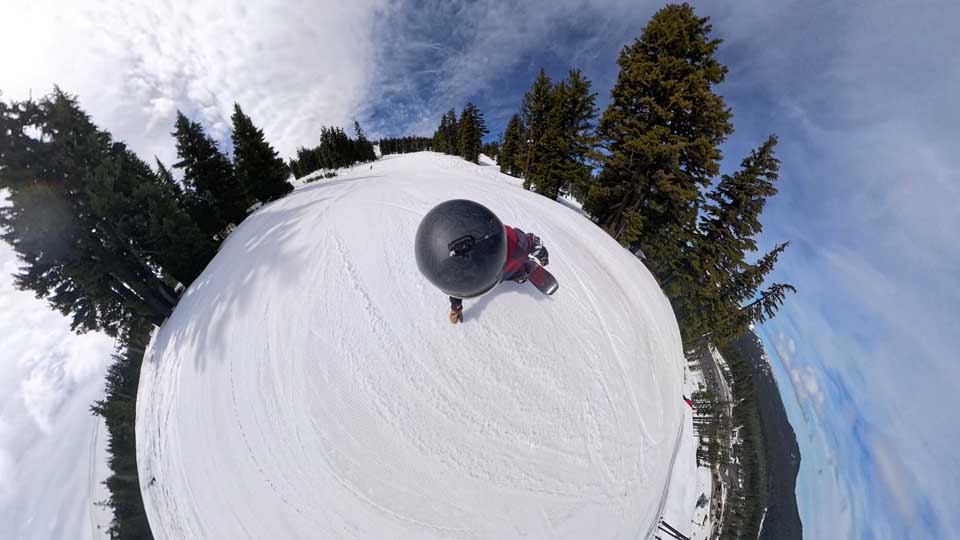
This almost full-camber profile is definitely felt on groomers, and it’s something I really enjoyed riding. I felt this board held a great edge thanks to Stranda’s Power Bumps technology.
This board has a short, stiff tail, which makes it hard to press for butter and a bit harder to ollie on flat ground at slow speeds.
At higher speeds, however, this board definitely likes to launch off a natural kicker or park feature. The tail provides just enough landing gear to keep it comfortable in those situations.
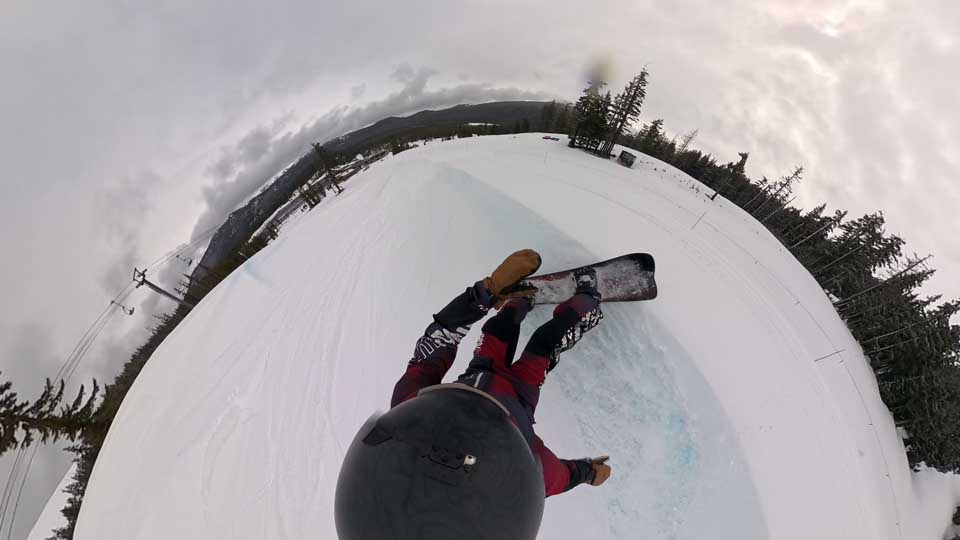
I was lucky enough to take this through the Big Wave course when it was up.
The board held an exceptional edge carving up the walls, and the short tail made it a ton of fun for slashing the coping at the top.
This board can be ridden switch.
So while it’s definitely not intended to be a park board, I think this would be my choice for a few laps after catching fresh powder in the morning or hitting those nice groomers.
This board has a nice fast base. I would definitely recommend this for anyone looking for a volume-shifted board.
Stranda Biru Specs
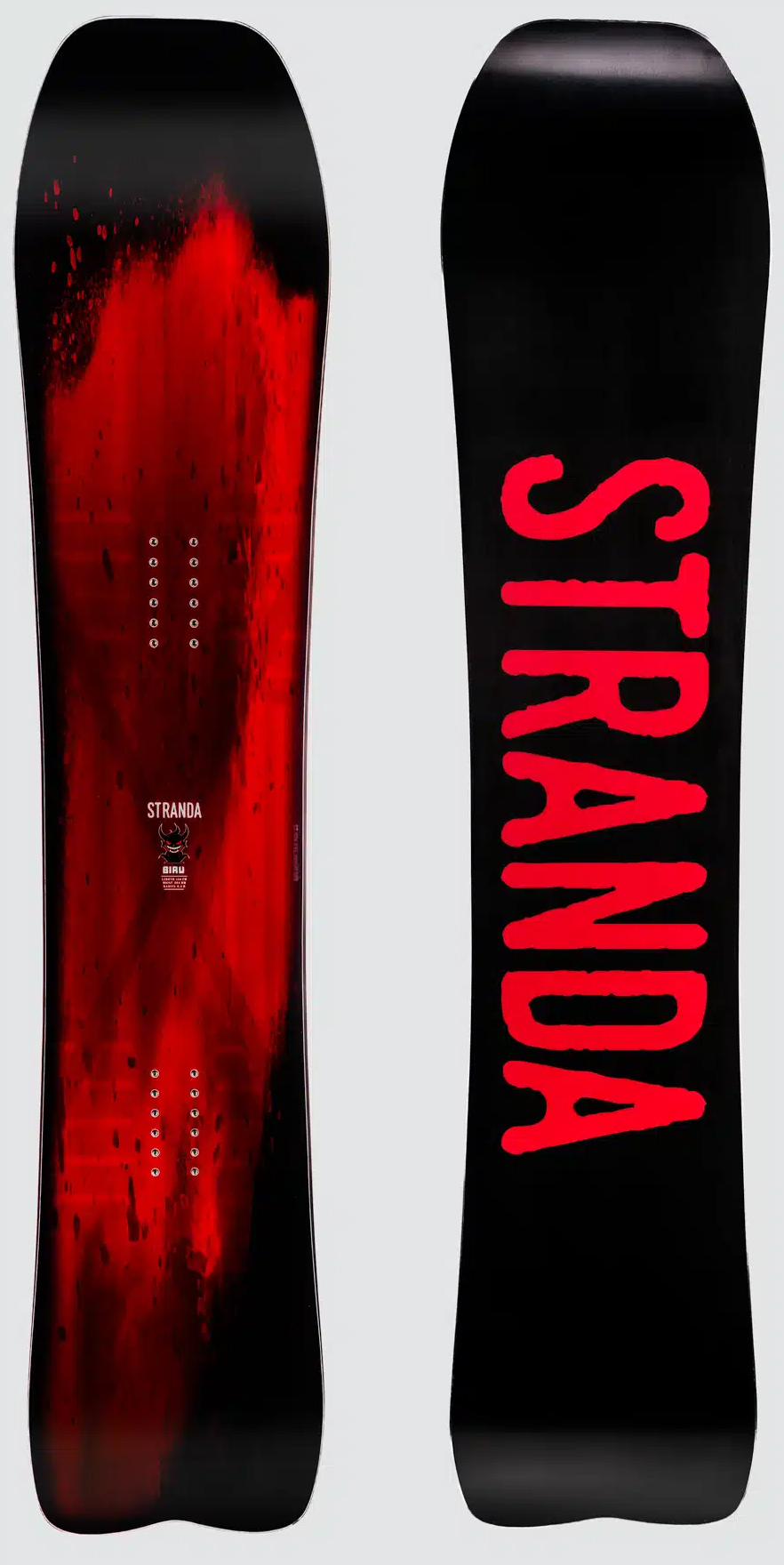
Stranda Biru Images
We try to get as many images of the Stranda Biru, but forgive us if they're not all there.
2026
Stranda Biru User Reviews
Where To Buy
No obligation, but these links support the site.
Stranda
No Results Found
No Results Found
Stranda
SnowCountry
Stranda
Stranda
PRFO Sports Canada
Stranda
No Results Found
Stranda
SnowCountry
Stranda
Stranda
PRFO Sports Canada
Where To Buy
No obligation, but these links support the site.
Stranda
No Results Found