Positives
- Aggressive sidecut
- Soft playful flex
- Approachable Camber
Negatives
- Can be overpowered
- Edge hold challenged on Ice
- Extruded Base
Summary
A Short Summary
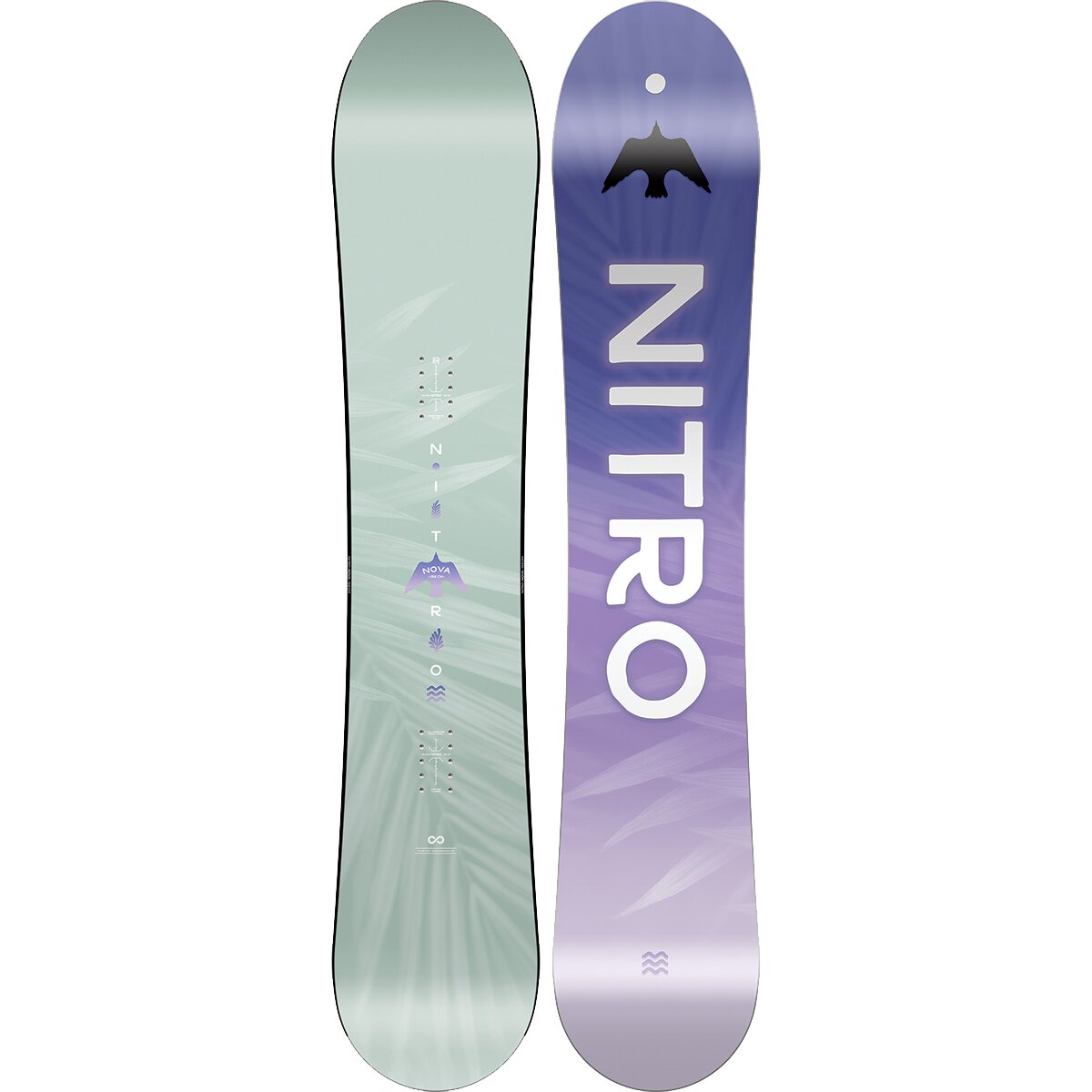
The Nitro Nova takes some of the turning personality of the more aggressive Alternator and puts it into a softer, more approachable package. It has a directional all-mountain twin shape, Cam-Out Camber, and Nitro’s Dual Degressive sidecut. That combination gives you a surprising variety of turning options without requiring you to be on your A-game. For beginners, it’s an approachable way to experience a slightly directional board with a more interesting sidecut. For intermediate and advanced riders, it can be a playful park board or an easy-going option when you just want to have a chill day.Where To Buy
No obligation, but these links support the site.
Blauer Board Shop


Backcountry
evo
REI

SnowCountry

No Results Found
| Riding Style | All Mountain |
| Riding Level | Beginner - Advanced |
| Fits Boot size (US) | Women's, < 8, 8-10 |
| Manufactured in | Taiwan |
| Shape | Directional |
| Camber Profile | Hybrid Camber |
| Stance | Setback -15mm |
| Approx. Weight | Feels Normal |
| Split | No |


|
|
|
|
|
|
|
|
|
|
|

|
|
|
|
|
|
|
|
|
|
|
|
|
| On Snow Feel |

|
| Turn Initiation |

|
| Skidded Turns |

|
| Flex |
|
| Buttering |
|
| Edge Hold |
|
Where To Buy
No obligation, but these links support the site.
Blauer Board Shop
Backcountry
evo
REI
SnowCountry
No Results Found
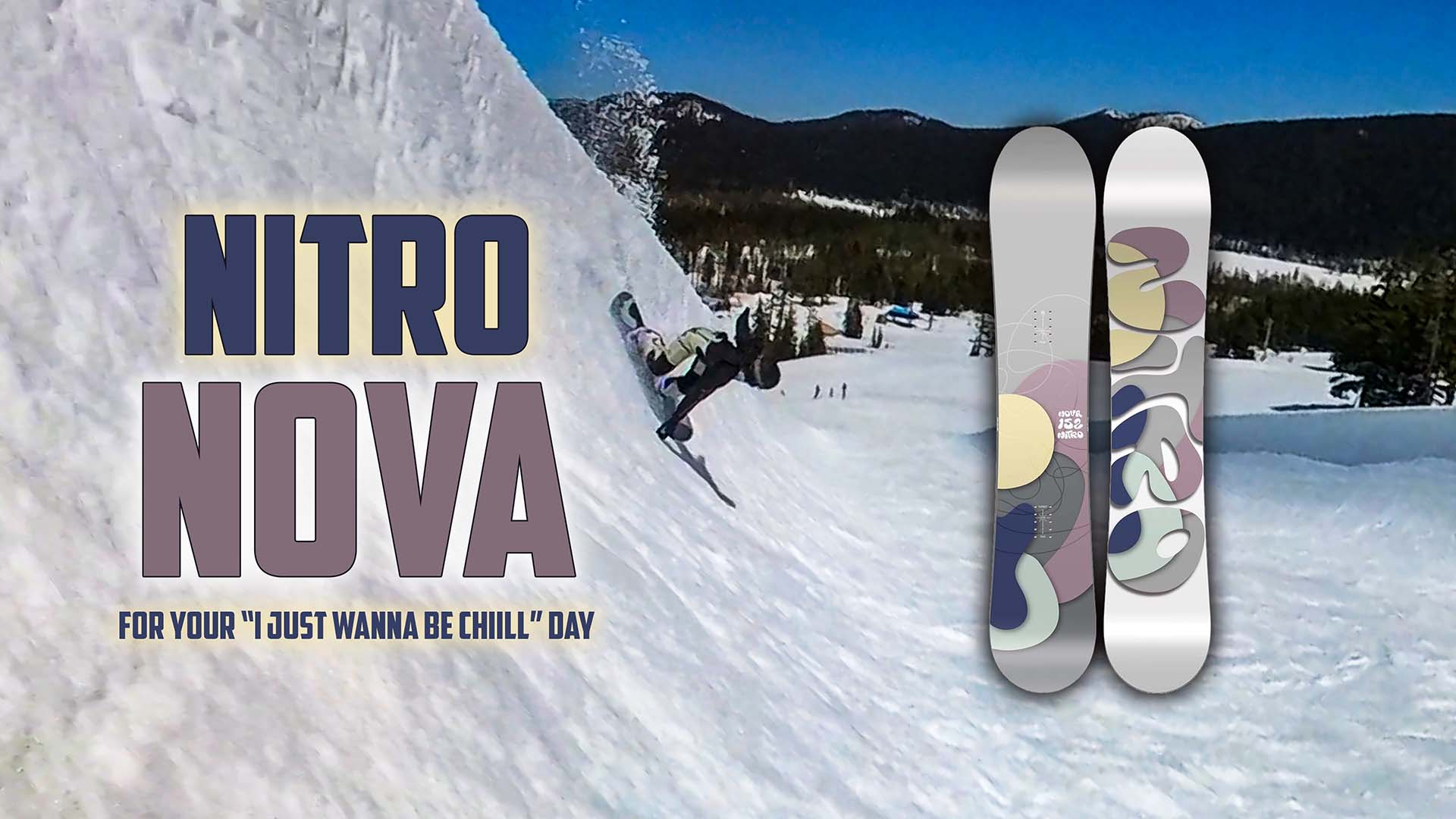
Nitro Nova Snowboard Review by Jordan Review by The Good Ride
How It Was Tested:
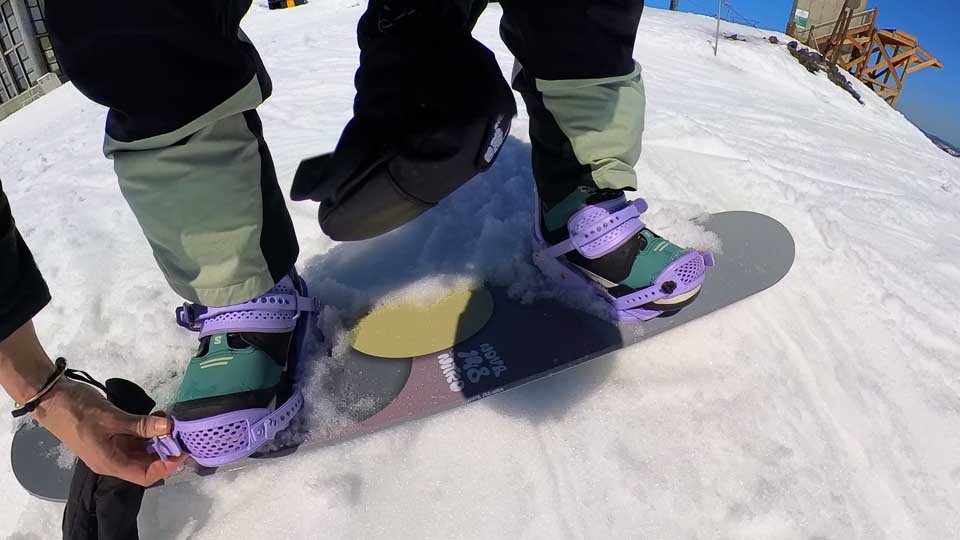
I borrowed the Nitro Nova for an extended demo and sent it back.
Size: 148
Days: 3
Conditions: Mid-to-late spring conditions in the Pacific Northwest. Conditions ranged from firm, frozen snow in the shade to softer corn and slush in the sun. I also rode variable and uneven snow and took it into the park and mini-pipe.
Riders: Jordan (Size 8 Ws, 5’6”, 135-140lbs).
Boots: Salomon Dialogue size Ws 8
Bindings: Union Trilogy size Medium
Helmet: MOD1
Goggle: LineMiner Pro
Jordan’s Set Up: 19.5” Wide. Stance Angles +18/-9. Reference stance.
Ethics Statement
I was not paid to write this review, and it reflects an honest, objective perspective with no brand oversight. If this review helped, we’d appreciate it if you support objective content by:
- Buying Through Our Sponsor, Blauer Board Shop
- Buying through our other Where To Buy Links, we get paid a small commission if you do. Please make sure we are the last click and don’t use a coupon or discount provider. They take our commission if you do.
- Become a Patron for early access to reviews well before publication at https://www.patreon.com/thegoodride
- Donate at https://venmo.com/TheGoodRide (@TheGoodRide) or https://paypal.me/thegoodride
- Follow us at https://www.instagram.com/thegoodride
- Like and Subscribe on YouTube at https://www.youtube.com/@thegoodridesnow
Snowboards that are similar but not the same:
Sizing
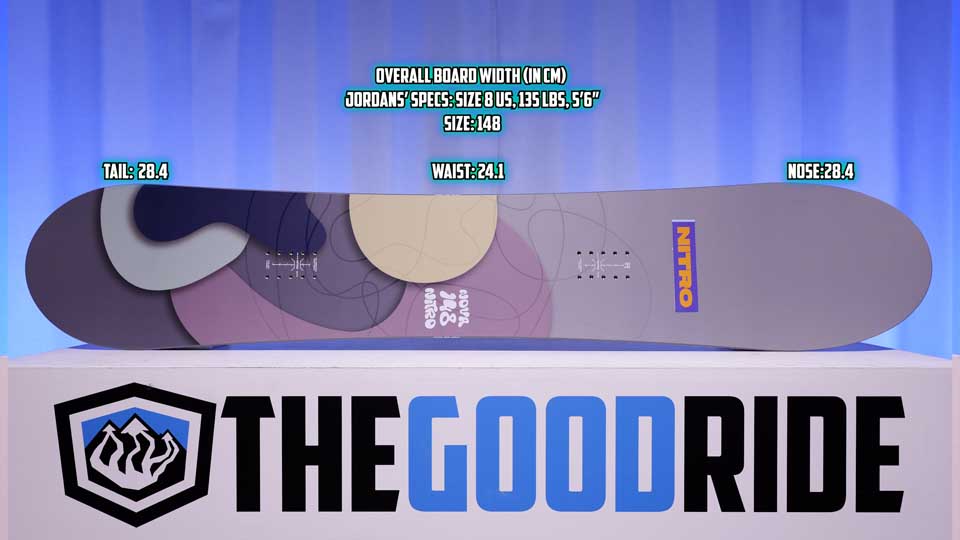
I rode the 148 Nova, which is a sweet spot for me.
Nitro recommends this size for riders from approximately 99 to 140 pounds. The Nova is also available in 139, 144, and 152 sizes.
The 148 has a 24.1cm waist width. That is relatively narrow and is going to favor smaller boot sizes.
Shape
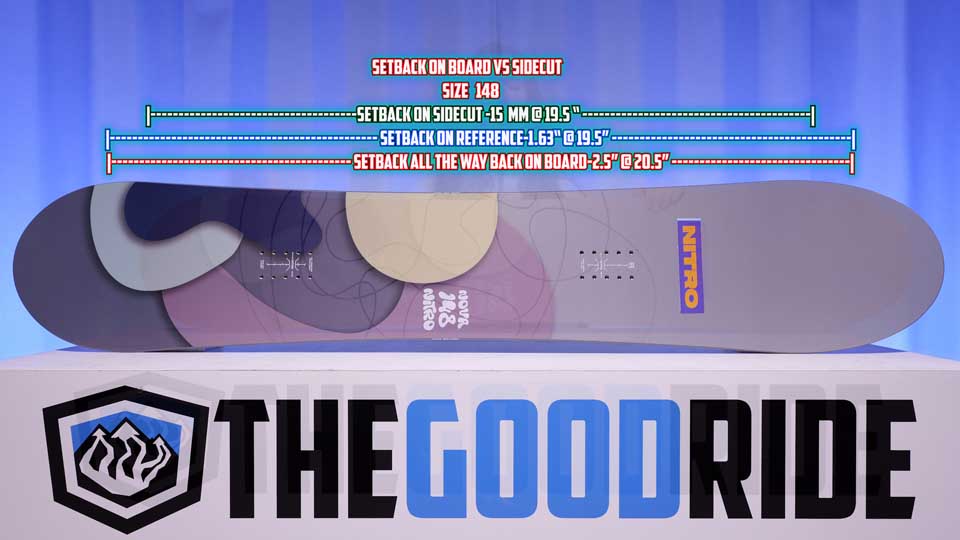
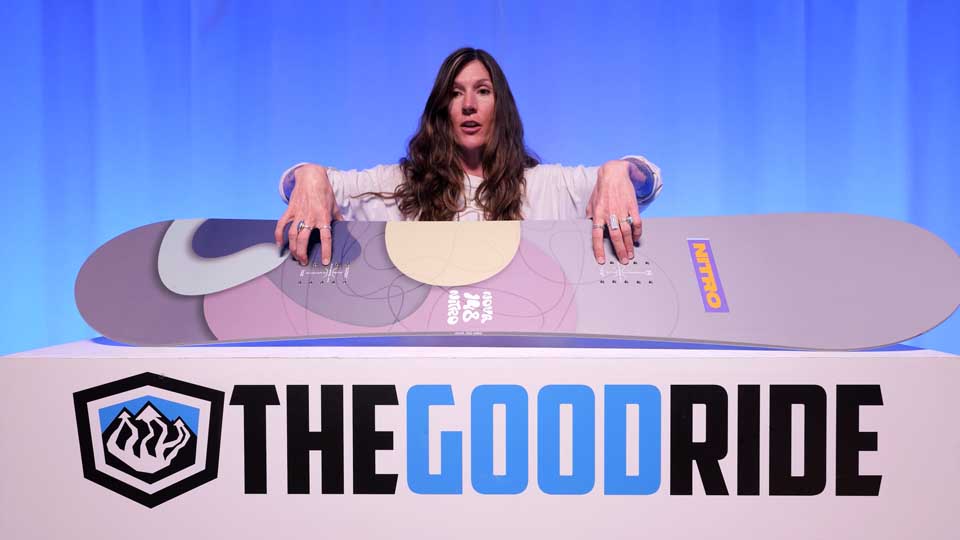
The Nova has a directional all-mountain twin shape with a 15mm setback stance. It is essentially a twin shape with a slightly directional setup.
At the 19.5-inch reference stance, I measured approximately 1.63 inches more nose than tail.
You can also move the bindings back to the furthest inserts. Doing this increases the stance width to approximately 20.5 inches but gives you about 2.5 inches more nose than tail.
That gives the Nova a little more directional versatility than its shape initially suggests.
Camber/On-Snow Feel
Nitro uses its Cam-Out Camber profile on the Nova. It has traditional camber through most of the effective edge, with early rise beginning just outside the inserts.
That early rise makes the board feel less catchy than a traditional tip-to-tail camber profile. It also helps the board ride over tracked-out and uneven snow.
I found the Nova surprisingly stable underfoot despite its softer flex. It was also easy to manipulate. In late-day spring conditions, I could pull and lift the board over piles of snow rather than having to pop over everything.
This is one of the more beginner-friendly directional boards I’ve ridden. The softer flex, early rise, and predictable overall feel make it appropriate for a progressing beginner. However, its sidecut gives it enough personality that intermediate and advanced riders can still have fun with it.
Powder
The Nova isn’t designed as a dedicated powder board, but there are a few things working in its favor.
At reference, I measured about 1.63 inches more nose than tail. The early rise in the nose should also help it plane over deeper or softer snow.
Moving the bindings to the furthest setback position increases that difference to approximately 2.5 inches, although it also widens the stance to around 20.5 inches.
I didn’t ride the Nova in powder, so I can’t speak to its actual performance in deeper snow. Mechanically, however, there are some features that should help when conditions get soft.
Edge Hold
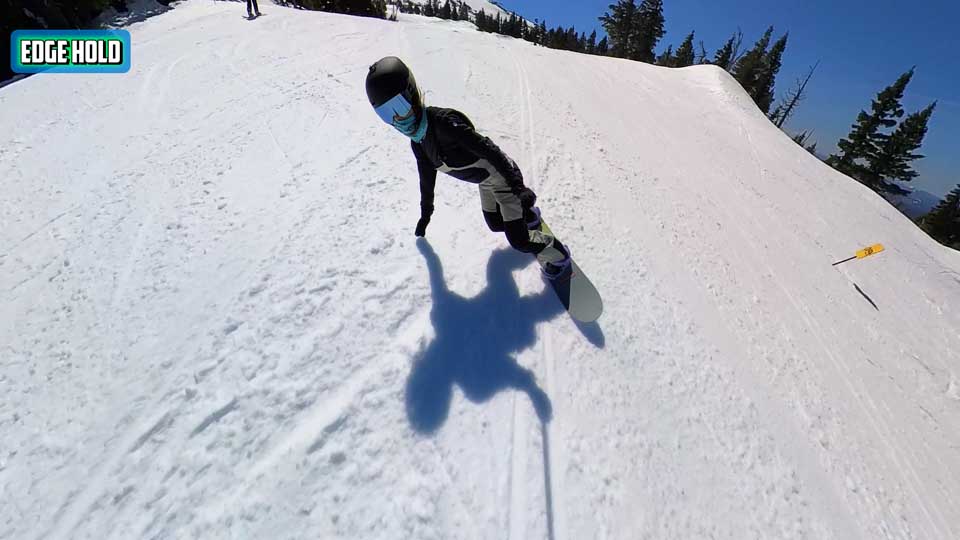
The Nova’s edge hold felt pretty good in the conditions I experienced.
It could lock into an edge at slower speeds and felt comfortable traversing and cross-hilling across firmer snow.
The limitation is the softer flex. Once you start increasing speed and putting more power into the board, you can overpower it.
will be especially noticeable for riders near the top of the recommended weight range. If you want a stronger locked-in sensation at higher speeds, consider sizing up or looking for a stiffer board or one with some additional edge disruption.

Flex
Nitro rates the Nova at a 5/10 flex.
It feels soft and playful, but there is still some rebound. I found the nose slightly softer than the tail, which makes sense with its directional design.
That softer flex made the board easy to manipulate and gave it some playful pop. However, if I put too much power into it, the board would eventually fold rather than continue loading.
This is a board that responds best when you work with it rather than try to overpower it.
Uneven Terrain
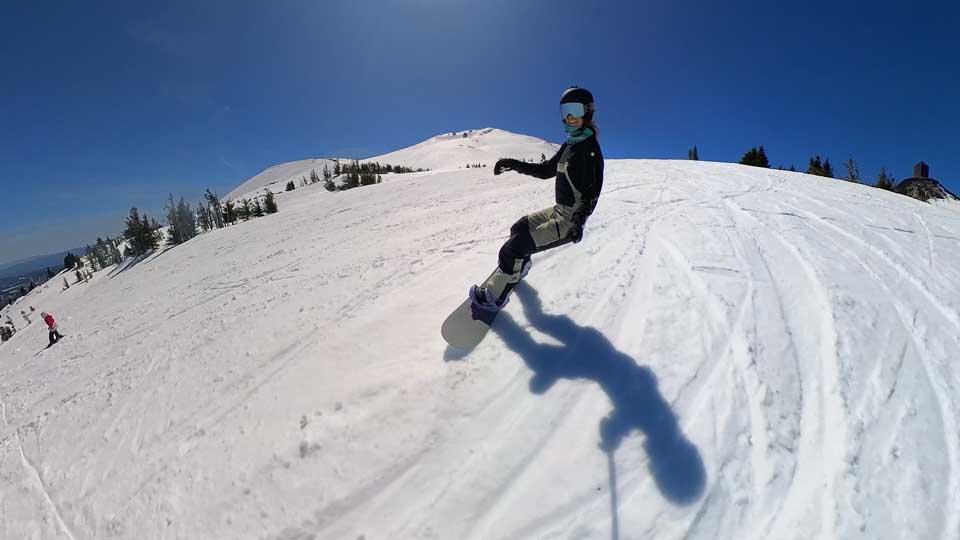
I rode the Nova through some pretty variable conditions while traversing from one side of the mountain to the other.
Conditions ranged from icy and firm to slushy and inconsistent.
The Nova handled it okay. The early rise in the nose and tail helped it move over piles and inconsistent snow instead of catching through everything.
However, because the board is softer, the rider is going to feel more of what is happening underneath them. It doesn’t have the stiffness to absorb and power through rough terrain like a more aggressive board.
Turning Experience
This is where the Nova gets interesting.
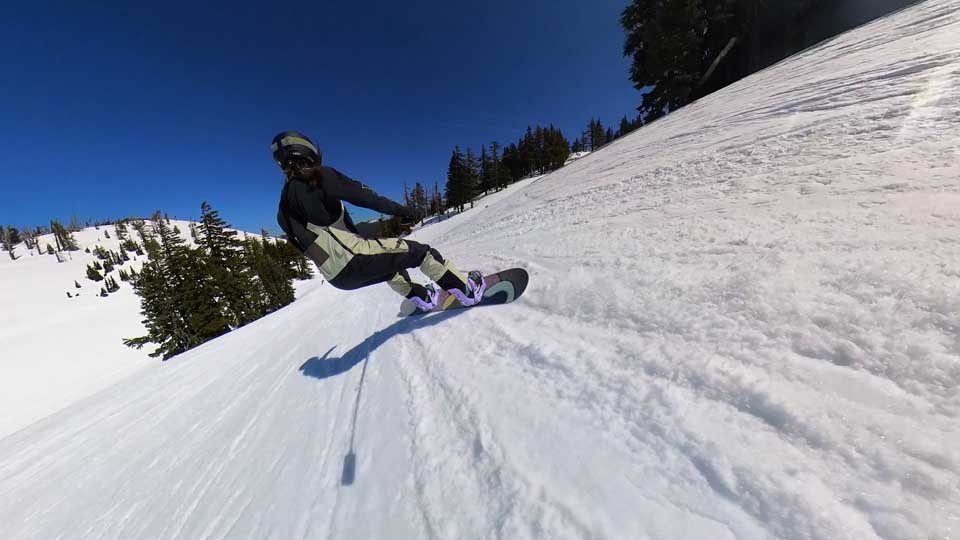
It uses Nitro’s Dual Degressive sidecut, which is also found on the Alternator. The sidecut combines a longer radius toward the tip and tail with a significantly shorter radius through the center.
The result is a board that can produce longer, more carve-oriented turns while still responding quickly when you want shorter, snappier turns.
That experience reminded me quite a bit of the Alternator. The major difference is how much easier the Nova is to ride.
I didn’t have to be completely on my game.
The turning experience was somewhat dependent on conditions because the snow had softened considerably by the time I got on the Nova. It was also dependent on how much effort I put into the board.
If you want to absolutely rail into a board and load it aggressively, the Nova isn’t going to respond the way you want.
If you want an easy ride while still getting some of the joyful turning characteristics of a more aggressive board, it does a great job.

Base/Glide
Nitro equipped the Nova with its Premium Extruded FH Base.
An extruded base makes sense on a more beginner-friendly board because it requires relatively little maintenance. You don’t have to be as diligent about waxing to keep the board usable.
That makes the Nova easier to store, pull out when you have time to ride, and simply go snowboarding.
More aggressive riders who want to manipulate glide and speed through regular waxing may prefer a board with a sintered base.
Park/Pipe/Switch
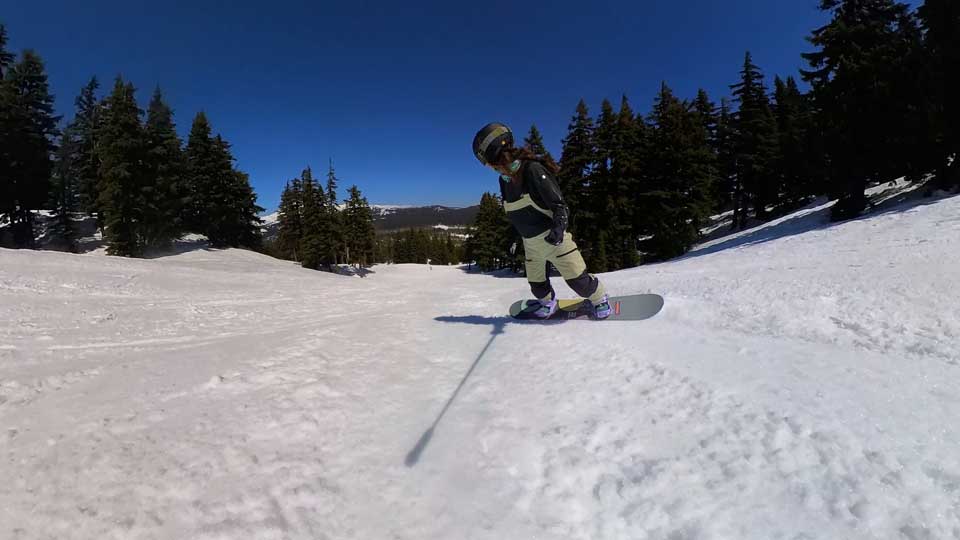
I took the Nova into the park because it felt soft, playful, and easy to manipulate.
I hit a few hips and smaller boxes, and the board gave me enough confidence that apparently my 22-year-old self decided to make an appearance.
The softer flex does change the pop.
Even though the Nova has camber, I didn’t get that compounding sensation I sometimes get from a stiffer camber board. When I loaded an ollie, I essentially got back what I put into it. There wasn’t a lot of extra energy being generated by the board.
That’s actually a nice characteristic for someone learning how to manipulate a snowboard. The response is predictable.
More advanced riders who want to put less effort into the board and get more energy back may prefer a stiffer profile.
I also took the Nova through our mini-pipe and practiced some slashes while trying to learn a handplant.
Because the Nova was light, maneuverable, and relatively easy to move around, I had an easier time getting the board overhead.
Was it the world’s most successful handplant? No.
Was it my first handplant?
Yes.
I’ll give the Nova some credit for that one.
Final Thoughts
The Nitro Nova is a great option for beginner riders who want something slightly directional without immediately stepping onto an aggressive freeride board.
The Dual Degressive sidecut gives it a wide variety of turning radii and makes the board more interesting than its softer flex might suggest. Cam-Out Camber keeps some traditional camber characteristics while the early rise makes the board less catchy and easier to maneuver.
Intermediate and advanced riders can still find a place for the Nova.
It’s playful in the park, easy to manipulate, and a great option when you don’t feel like being switched on all day. You can get some of the enjoyable turning personality I experienced on the Alternator without nearly as much work.
It’s your “I want to chill today” board.
And maybe, because it gives you that little boost of confidence, you’ll learn something new on it too.
Nitro Nova Specs
Nitro Nova Images
We try to get as many images of the Nitro Nova, but forgive us if they're not all there.
Nitro Nova User Reviews
Where To Buy
No obligation, but these links support the site.
Blauer Board Shop
Backcountry
evo
REI
Blauer Board Shop
Backcountry
evo
REI
SnowCountry
No Results Found
Blauer Board Shop
Backcountry
evo
REI
SnowCountry
No Results Found
Where To Buy
No obligation, but these links support the site.
Blauer Board Shop
Backcountry
evo
REI
SnowCountry
No Results Found