Positives
- Rides Much Bigger
- Super Agile
- Fun Shape for the smaller rider
Negatives
- Sizing the board is tricky
- Camber dominant feels divey
- Limited Review
Summary
A Short Summary
The Nitro Fin Twin brings a legitimate volume-shifted swallowtail shape into a size range that smaller riders rarely get to access. The new 141 is compact, quick, and surprisingly maneuverable in powder. However, sizing matters. At 5' 6" and 135–140 lbs, I found the limit of what the 141’s surface area could provide in more than 10 inches of snow. The board floated, but I needed more back-foot pressure than I prefer. For a lighter rider, the 141 could be a completely different experience.Where To Buy
No obligation, but these links support the site.
Blauer Board Shop


evo
SnowCountry

PRFO Sports Canada
| Riding Style | Alternative Freeride |
| Riding Level | Intermediate - Expert |
| Fits Boot size (US) | Women's, 8-10, 10-12, > 12 |
| Manufactured in | Taiwan |
| Shape | Tapered Directional |
| Camber Profile | Hybrid Camber |
| Stance | Setback -20mm |
| Approx. Weight | Feels Normal |
| Split |


|
|
|
|
|
|
|
|

|
|
|
|
|
|
|
|
|
|
|
|
|
|
|
|
| On Snow Feel |

|
| Turn Initiation |

|
| Skidded Turns |

|
| Flex |

|
| Buttering |
|
| Edge Hold |
|
Where To Buy
No obligation, but these links support the site.
Blauer Board Shop
evo
SnowCountry
PRFO Sports Canada
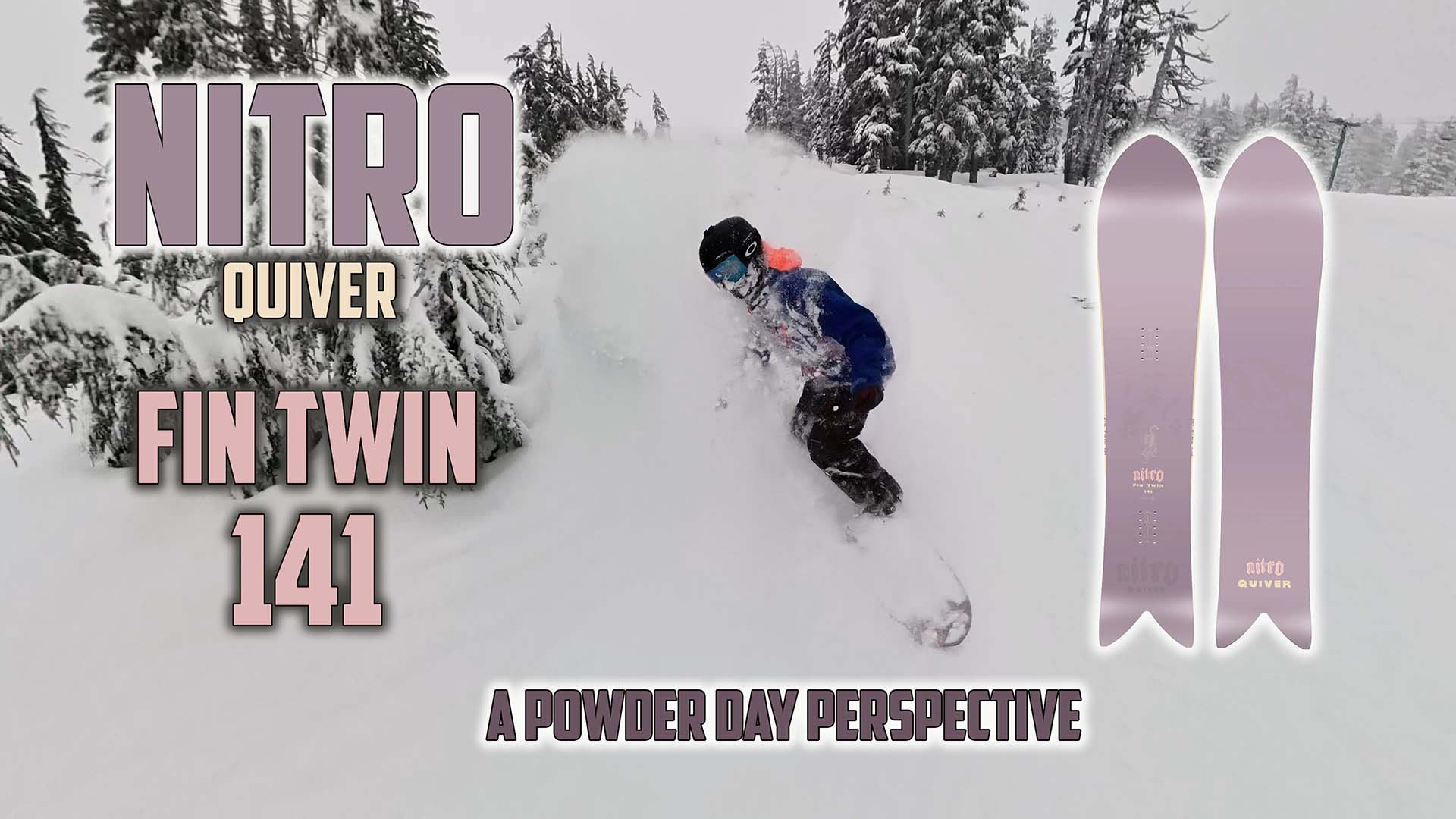
Nitro Quiver 141 Fin Twin- A Powder Day Perspective Review by The Good Ride
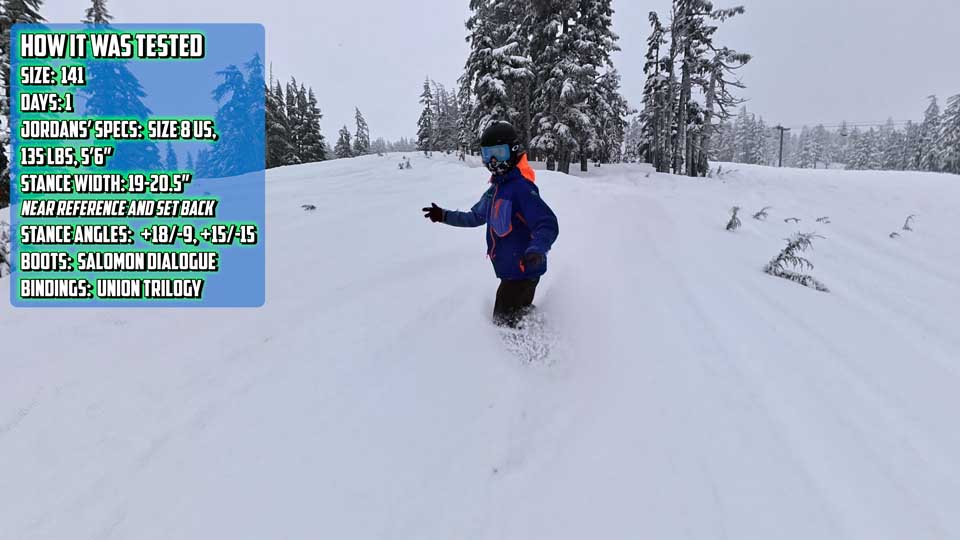
How It Was Tested:
I borrowed the Nitro Fin Twin for a short demo and sent it back.
Size: 141
Days: 1
Conditions: 10+ inches of powder during late spring in the Pacific Northwest.
Riders: Jordan (Size 8 Ws, 5’6”, 135-140lbs).
Boots: Salomon Dialogue
Bindings: Union Trilogy
Helmet: MOD1
Goggle: LineMiner Pro
Jordan’s Set Up: 19” Wide. Stance Angles +18/-9. Reference stance.
I rode the Fin Twin in sequence with the Nitro IKA. The boards have surprisingly similar geometry, but a substantial difference in length. That played a major role in how I was able to ride them in these conditions.
I also want to note that I rode the Fin Twin at reference. Setting the stance farther back may have reduced the nose-diving sensation I experienced. However, I was still limited by the overall length of the 141.
Ethics Statement
I was not paid to write this review, and it reflects an honest, objective perspective with no brand oversight. If this review helped, we’d appreciate it if you support objective content by:
- Buying Through Our Sponsor, Blauer Board Shop
- Buying through our other Where To Buy Links. We get paid a small commission if you do. Please make sure we are the last click and don’t use a coupon or discount provider. They take our commission if you do.
- Become a Patron for early access to reviews well before publication at Patreon
- Donate at Venmo (@TheGoodRide) or PayPal
- Follow us on Instagram
- Like and subscribe on YouTube
Similar but not the same:
Sizing
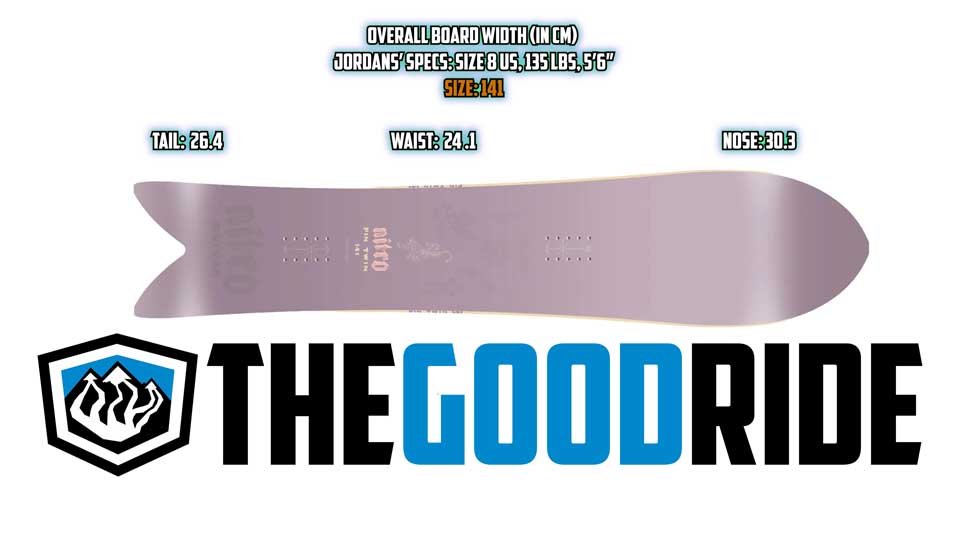
I rode the new 141 Fin Twin. Nitro added this size to make the Fin Twin accessible to smaller riders.
Remember, this is a volume-shifted board. The 141 has a 24 cm waist, which I consider ideal for around a women’s size 7–8 boot. That extra width gives it considerably more surface area than you would expect from a traditional 141.
The Fin Twin is also available in 149 and 154 sizes, which become substantially wider.
With my women’s size 8 boot and weight between 135–140 lbs, the 141 felt small. I would really like to ride the 149.
Beastie rode the 149 and said it fit him well, despite being considerably taller and heavier than I am. I think the additional length could address some of the limitations I experienced, although it would probably change the board’s personality.
Durability
We only had the Fin Twin for a short period, so I can’t make any long-term durability claims.
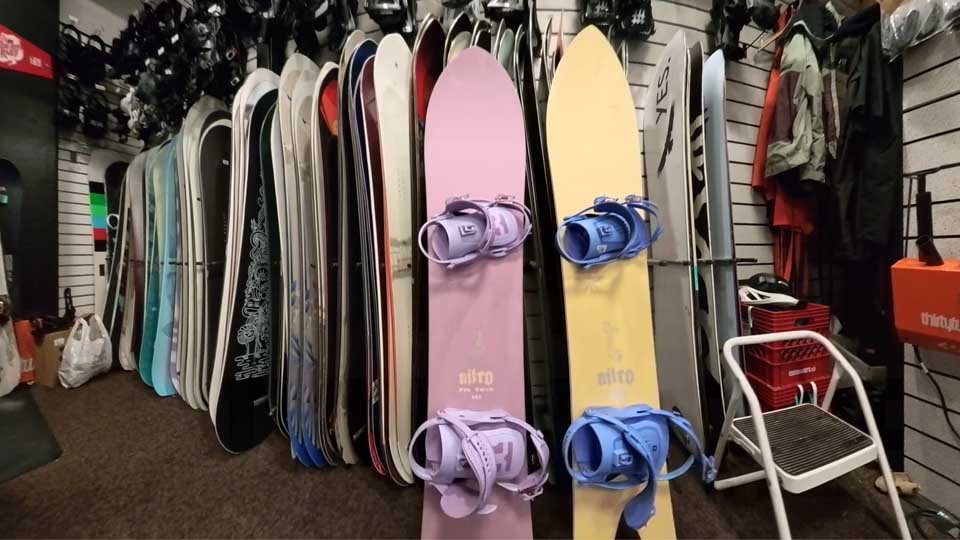
The board uses Nitro’s EcoGuard topsheet, which incorporates recycled material and is designed to provide a durable exterior finish.
It has a matte finish, and I noticed some superficial scuffing during the short time we had it. Nothing looked structural or unusual.
Shape & Setback
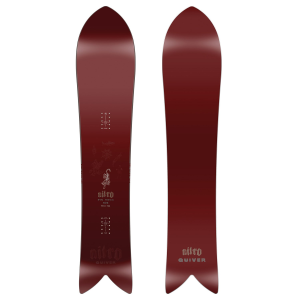
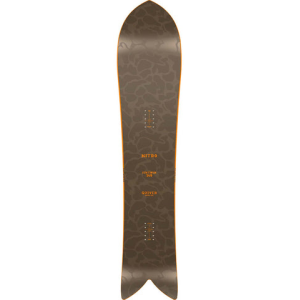
The Fin Twin has a very unique shape. It is conceptually similar to the Nitro IKA but condensed into a much shorter platform.
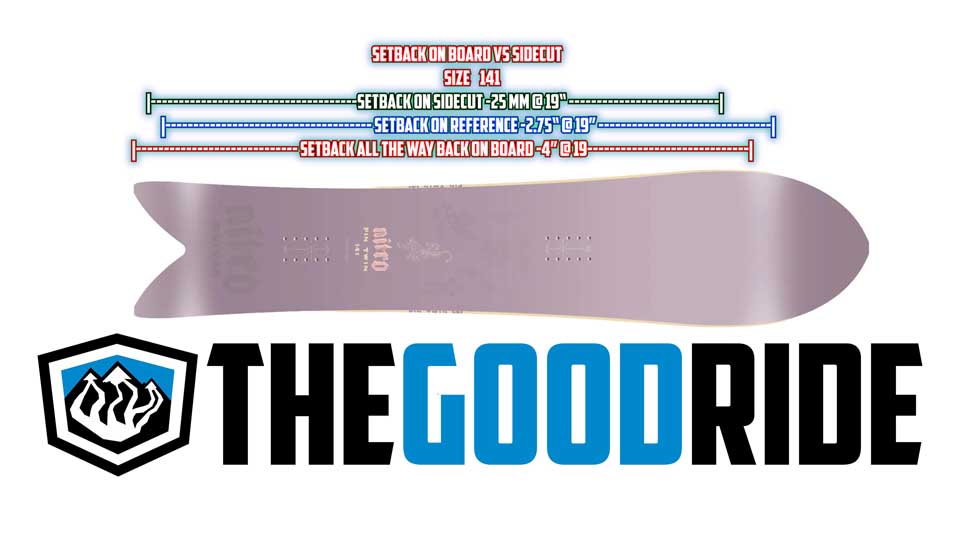
This is a directional, volume-shifted freeride shape with a swallowtail. It has a massive 39 mm of taper and a modest 20 mm setback on board.
At my 19-inch reference stance, I measured about 2.75 inches of setback from the center of the board. Moving the bindings all the way back can give you almost four inches of additional nose.
Camber/On-Snow Feel
The Fin Twin uses Nitro’s Cam-Out Camber. This is predominantly traditional camber with smooth transitions into early rise at the nose and tail.
Combined with the swallowtail and 39 mm of taper, there are several design elements working together to create float.
This is also where sizing became really important for me.
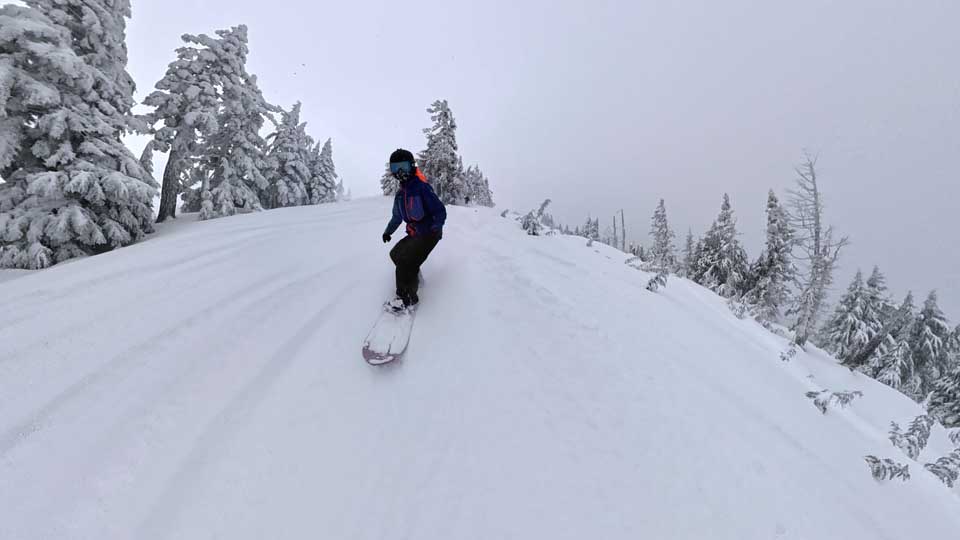
In deep powder, the short length and camber created a sensation of the nose wanting to dive when I weighted the front of the board. I had to become more back-foot dominant to compensate.
That is not the same thing as saying the Fin Twin doesn’t float. It clearly has geometry designed around flotation. I think I simply reached the limit of what the 141’s surface area could provide at my weight in more than 10 inches of snow.
Based on the camber-dominant profile, significant taper, specialized shape, and Nitro’s 7/10 flex rating, I place the Fin Twin primarily in the Advanced–Expert category.
It is maneuverable, but that doesn’t necessarily make it beginner-friendly.

Edge Hold
My review is limited because I was only able to ride the Fin Twin in powder conditions. I wasn’t able to meaningfully test its edge hold on groomers.
Beastie reviewed the 149 in a wider variety of conditions if you want actual on-snow feedback about its groomer performance.
Mechanically, there are some interesting things happening here. You have predominantly traditional camber providing pressure along the effective edge, combined with Nitro’s progressive sidecut.
The sidecut uses a larger radius toward the front and transitions into a tighter radius toward the tail.
Based on that geometry, I would expect the Fin Twin to engage relatively predictably from the front and become increasingly responsive as you move through the turn.
I would also predict a more back-foot, almost surfy riding experience because of how quick and short that tail is.
That is a mechanical prediction, not something I was able to verify in the conditions I rode.

Uneven Snow
I didn’t have the appropriate conditions to meaningfully test the Fin Twin in hard, uneven snow.
What I could feel was how maneuverable the compact length made it. It was easy to redirect and make quick adjustments in the powder conditions I rode.
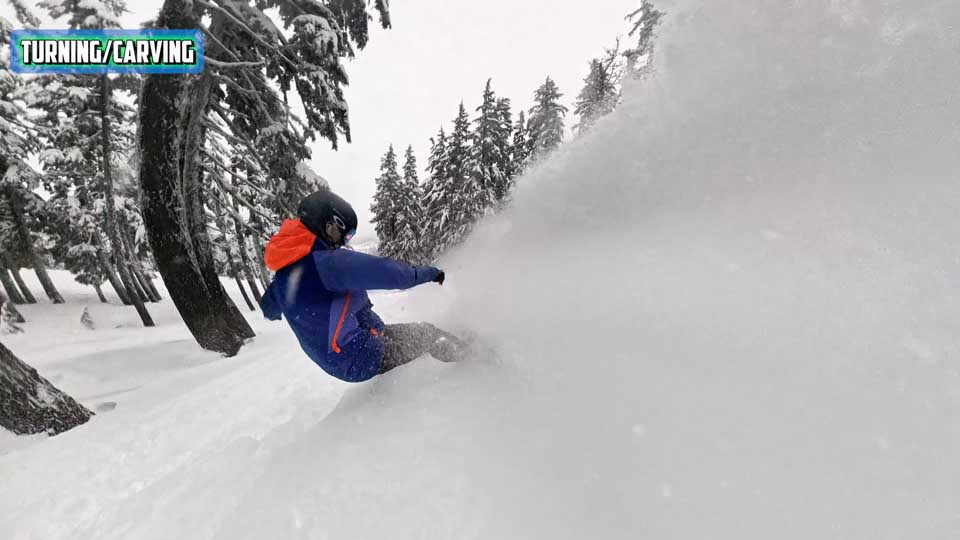
Turning/Carving
My experience with turning initiation was entirely in powder.
The Fin Twin was quick. It gave me an agility I don’t usually expect from a short, wide board.
There were limitations. Weight transfer from front to back was much more noticeable because of the shorter overall length.
I tended to lean back, maneuver the short tail, and ride it with more of a snow-surf style in the powder conditions I was given.
I wasn’t able to ride groomers, so I can’t make a meaningful assessment of its carving performance.
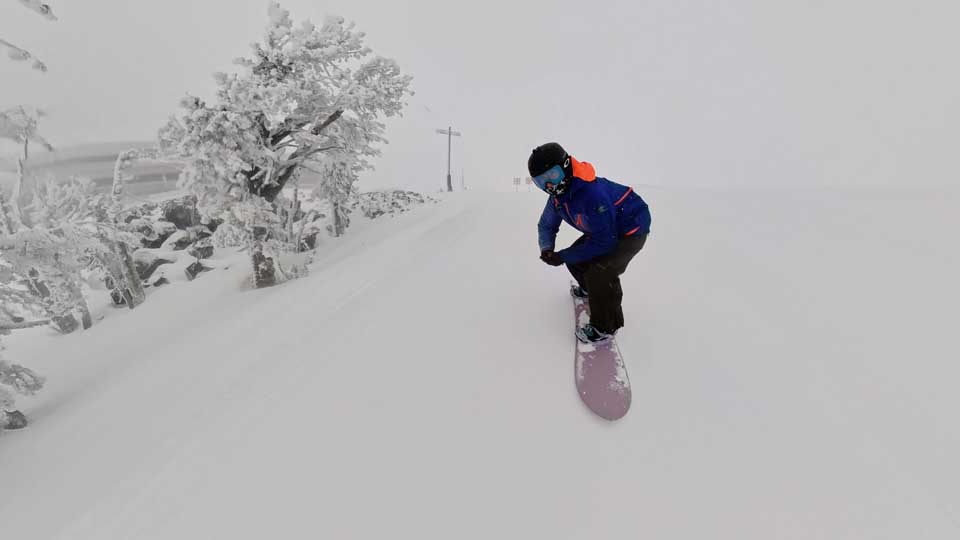
Base Glide
The Fin Twin uses Nitro’s Premium Extruded FH Base.
An extruded base generally prioritizes durability and easy maintenance over maximum glide and wax absorption.
With only one powder day, I don’t have enough testing to assess wax retention meaningfully. I also wouldn’t use those conditions to make a strong statement about overall base speed.
With that said, the board handled well and maintained speed in deep snow on low-angle pitches.
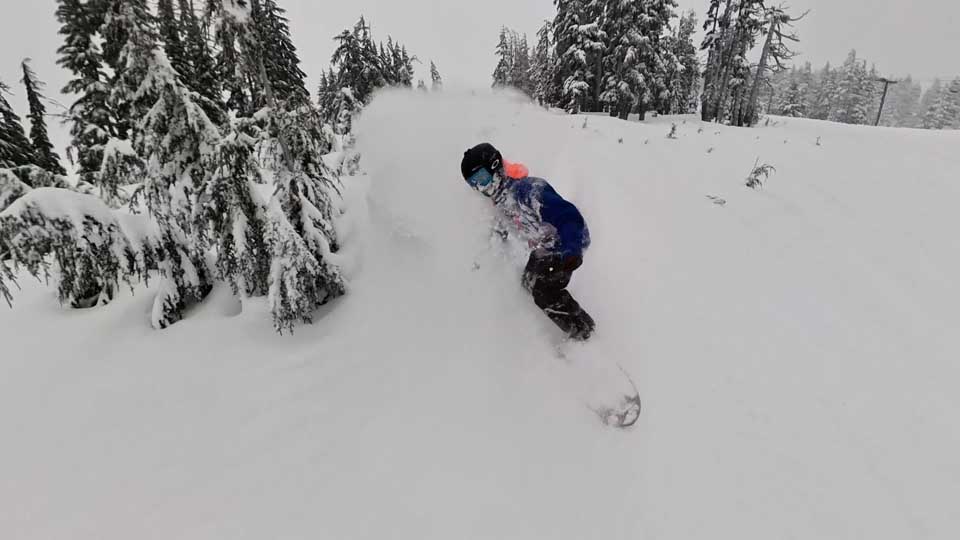
Powder
Powder is where I really got to test the Fin Twin, and this is where the board became interesting.
On paper, almost everything about the shape says float. You have a 30 cm nose, 39 mm of taper, a swallowtail, extra width, early rise, and the ability to increase the amount of nose by moving the stance back.
And the board did float.
The problem for me was how I had to make it float.
At 135–140 lbs on the 141, I needed more rear-foot pressure than I preferred. If I drove aggressively into my front foot, the nose wanted to push down into the snow.
Compare that with the longer Nitro IKA, where I had considerably more board in front of me. I could ride the IKA from a more centered position and let the geometry create the float.
Volume shifting can replace some length with width, but width doesn’t completely reproduce what additional nose length does in deep snow.
For a lighter rider, the 141 could provide a completely different experience. At my weight, I would choose the 149 if deeper powder were the priority.
Final Thoughts
The new 141 Fin Twin is a really interesting addition to Nitro’s lineup. It brings a legitimate volume-shifted swallowtail shape into a size range that smaller riders rarely get to access.
I wouldn’t choose your Fin Twin size based purely on the number printed on the board. Think about your weight, boot size, typical snow conditions, and how aggressively you weight the front of your snowboard.
My experience on the 141 also highlighted something interesting about volume shifting. Width can create a surprising amount of surface area in a very short board, but length still matters.
For a smaller rider, the 141 can provide that compact, quick-turning, powder-oriented experience without requiring a board in the upper 140s.
At my weight and with a women’s size 8 boot, I think I was asking too much from the 141 in more than 10 inches of snow.
I would really like to get on the 149 because the fundamental shape makes sense.
I just think I need more board.
Nitro Fin Twin Specs
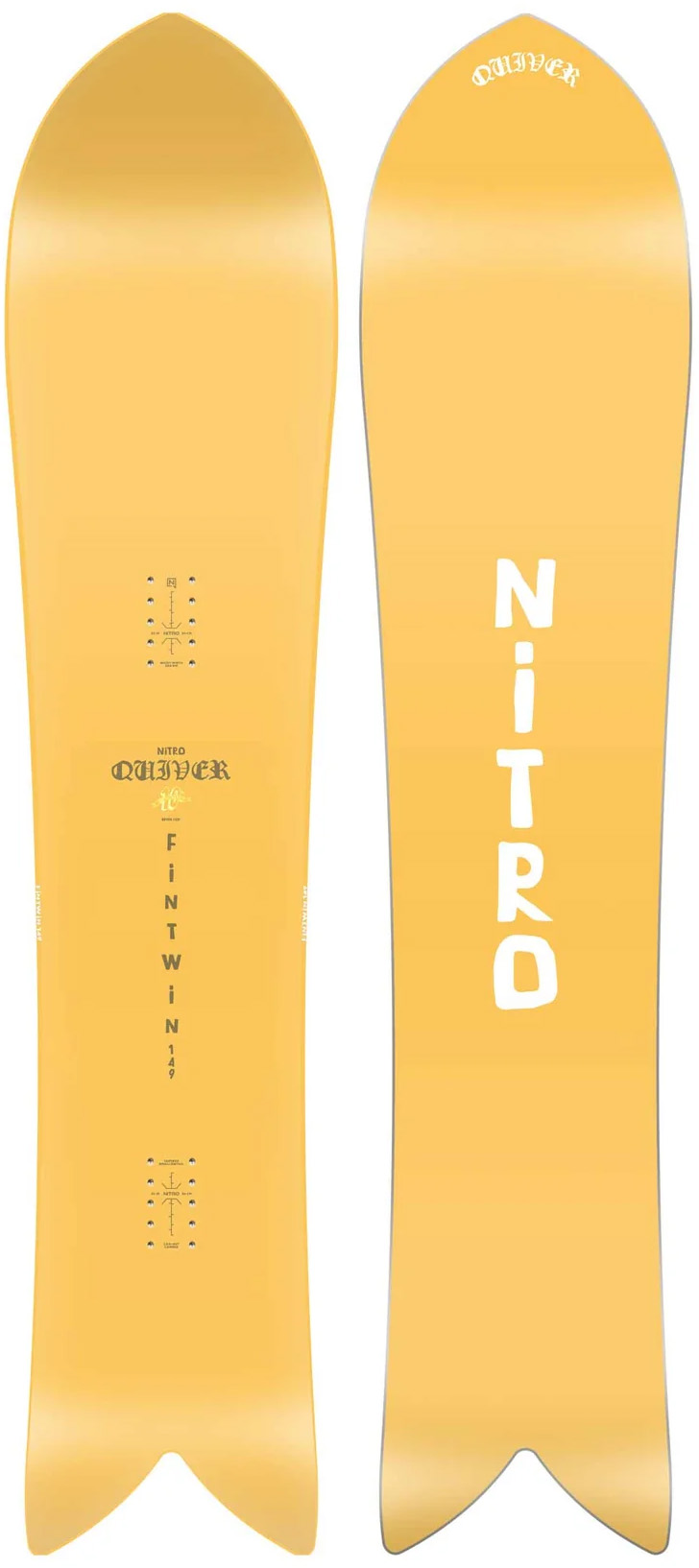
Nitro Fin Twin Images
We try to get as many images of the Nitro Fin Twin, but forgive us if they're not all there.
2025
Nitro Fin Twin User Reviews
Where To Buy
No obligation, but these links support the site.
Blauer Board Shop
evo
Blauer Board Shop
evo
SnowCountry
PRFO Sports Canada
Blauer Board Shop
evo
SnowCountry
PRFO Sports Canada
Where To Buy
No obligation, but these links support the site.