Positives
- More stable
- Great Edge Hold
- T3 had less of impact on adaptation
Negatives
- Slower response time
- Challenging in tight terrain
Summary
A Short Summary
I rode this board in sequence with pretty much the entire women's lineup. This was the third board I rode, directly after the Proto T3, which is a true twin. The Infinity is the first slightly directional board in the lineup. It also ended up being my favorite. The biggest strength of the Infinity is its stability. Compared to the Breezy Rider and the Proto, it felt much more grounded. It also had phenomenal edge hold, which is something Never Summer consistently does well. Once the edge engaged, it locked in and inspired a lot of confidence. The stiffer flex made the T3 camber feel less noticeable than it did on the other boards. That was a huge plus for me. The tradeoff is slower response. The added stiffness made it harder to maneuver through tight trees. I found myself having to throw my turns more than I wanted. It also has very little torsional flex. If you like to gas pedal your board to make quick adjustments, this isn't going to respond the way some softer boards do. That same stiffness, however, contributes to many of the things that make this board such a good ride.Where To Buy
No obligation, but these links support the site.
Blauer Board Shop
Blauer Board Shop
Sun & Ski Sports
Sun & Ski Sports
Blauer Board Shop
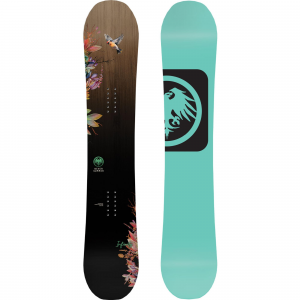
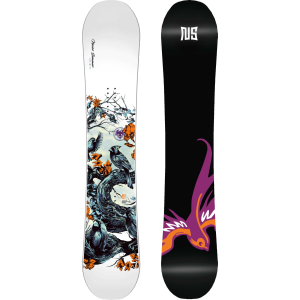
Never Summer Infinity Snowboard 2026 - Women's


Sun & Ski Sports
evo
SnowCountry

No Results Found
| Riding Style | All Mountain Freestyle |
| Riding Level | Intermediate - Expert |
| Fits Boot size (US) | Women's, < 8, 8-10 |
| Manufactured in | Denver, CO |
| Shape | Directional Twin |
| Camber Profile | Hybrid Camber |
| Stance | Centered |
| Approx. Weight | Feels Normal |
| Split |


|
|
|
|
|
|
|
|
|
|
|

|
|
|
|
|
|
|
|
|
|
|
|
|
| On Snow Feel |

|
| Turn Initiation |
|
| Skidded Turns |
|
| Flex |
|
| Buttering |

|
| Edge Hold |

|
Where To Buy
No obligation, but these links support the site.
Blauer Board Shop
Never Summer Infinity X Snowboard 2027 - Women's

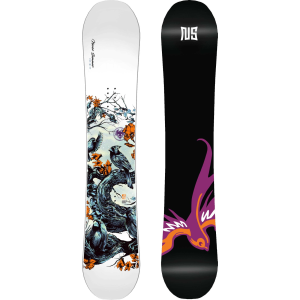
Never Summer Infinity Snowboard 2027 - Women's

Never Summer Infinity Snowboard 2026 - Women's
Sun & Ski Sports
evo
SnowCountry
No Results Found
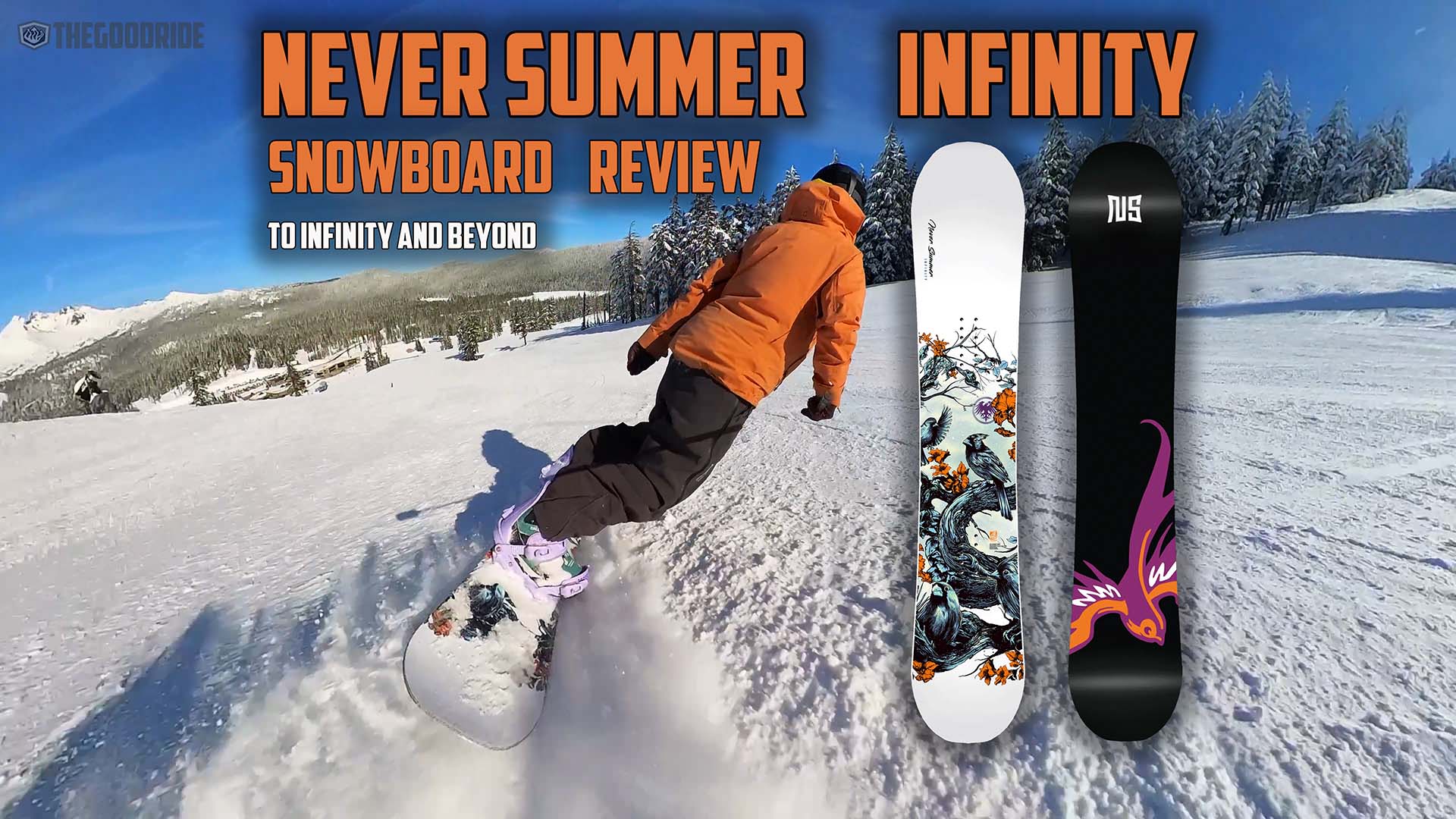
Never Summer Infinity Snowboard Review by Jordan Review by The Good Ride
How It Was Tested
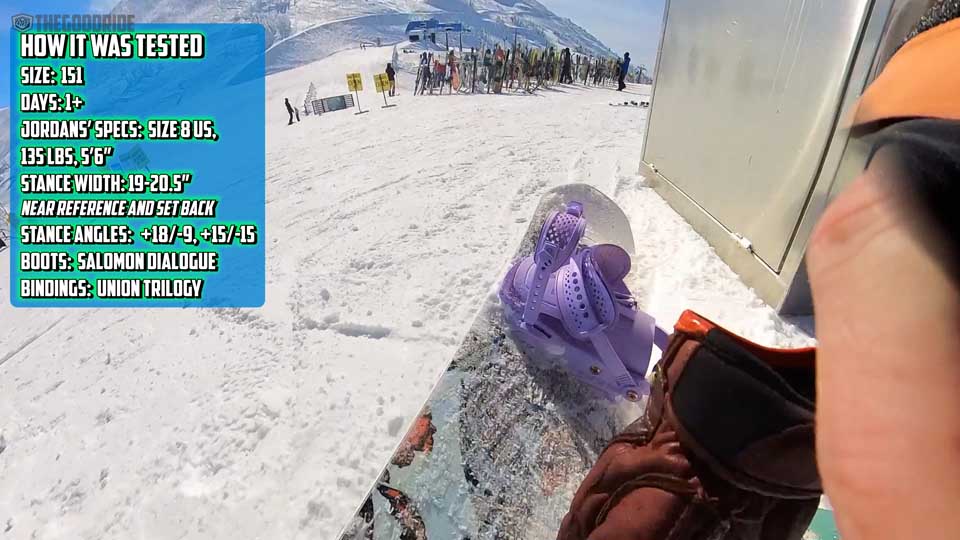
Size: 151
Days: 3+
Conditions: Groomers, light-tracked runs, off-piste tracked-out powder with pockets of snow 4-6inches deep with deeper sections of 8-10inches.
Riders: Jordan (Size W8, 5’6”, 135-140lbs).
Boots: Salmon Dialogue
Bindings: Union Trilogy, YES Condas
Helmet: Oakley MOD1
Goggle: Oakley Lineminer Pro
Jordan’s Set Up: 19-01.5” Wide. Stance Angles +18/-9, +15/-15. Close to Reference on
groomers and Set all the way back in powder.
Ethics Statement
I was not paid to write this review, and it reflects an honest, objective perspective with no brand oversight. If
this review helped, we’d appreciate it if you support objective content by:
- Buying Through Our Sponsor, Blauer Board Shop
- Buying through our other Where To Buy Links, we get paid a small commission if you do. Please
make sure we are the last click and don’t use a coupon or discount provider. They take our
commission if you do.
- Become a Patron and get early access to reviews well before
publication. https://www.patreon.com/thegoodride
- Donate to https://venmo.com/TheGoodRide (@TheGoodRide) or https://paypal.me/thegoodride
- Follow Us: https://www.instagram.com/thegoodride
- Like & Subscribe on YouTube https://www.youtube.com/@thegoodridesnow
Sizing
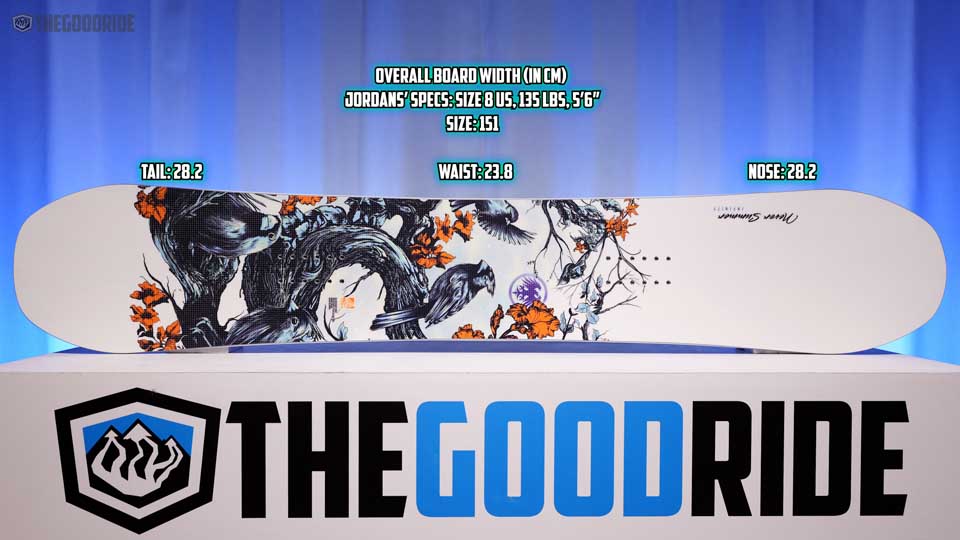
The 151 is recommended for riders between 120 and 150 pounds.
I’m on the lower end of that range, but this falls right in my preferred size. I generally like boards between a 148 and a 152, and sometimes up to a 153 depending on the model.
For me, the 151 felt like a great fit.
Never Summer also provides a recommended rider height between 5’4″ and 5’8″. Personally, I think height is more about preference than performance.
The waist width on this board is 23.8 cm, which comfortably accommodates boots up to about a women’s size 9.
One thing I noticed across the Never Summer lineup is that once you move above the 148, getting a narrower stance becomes more difficult.
I prefer a stance width around 19 to 19.5 inches. On the 151, I had to use the innermost inserts to achieve that.
From an engineering standpoint, that’s worth paying attention to. Moving inward also moves your feet farther away from the outer camber sections of the Triple Camber profile.
That changes how you interact with the board.
If you prefer a narrower stance, or you’re between sizes, the 148 may actually center your feet over the profile a little better.
Shape & Setback
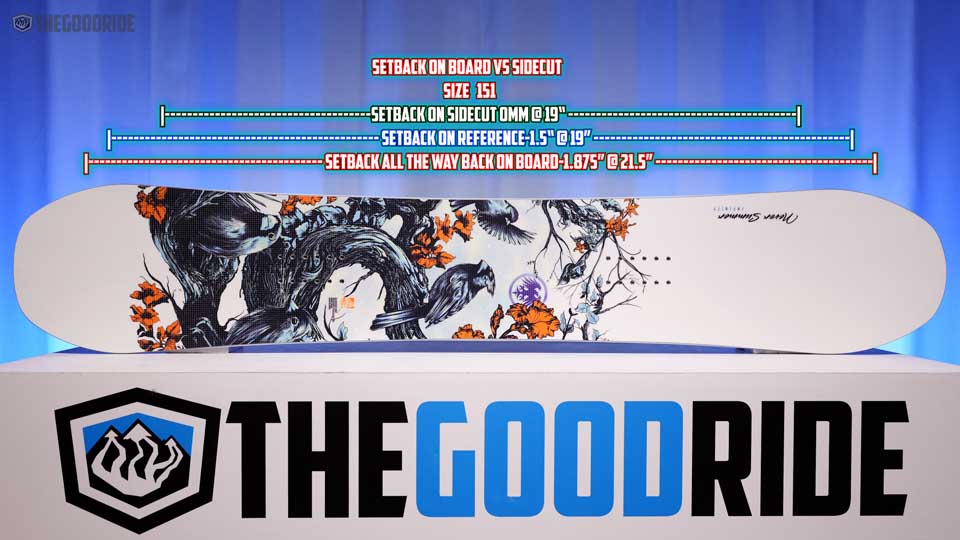
The Infinity is the first board in the lineup with a directional shape. More specifically, it’s a directional twin. That means the nose and tail are symmetrical. However, the stance is set back 1.5 inches at the inserts.
That gives the board a more directional feel without giving up the balanced ride of a twin.
For riders, it strikes a nice middle ground. You get more confidence riding forward, but the board still feels comfortable when you decide to ride switch.
Camber / On Snow Feel
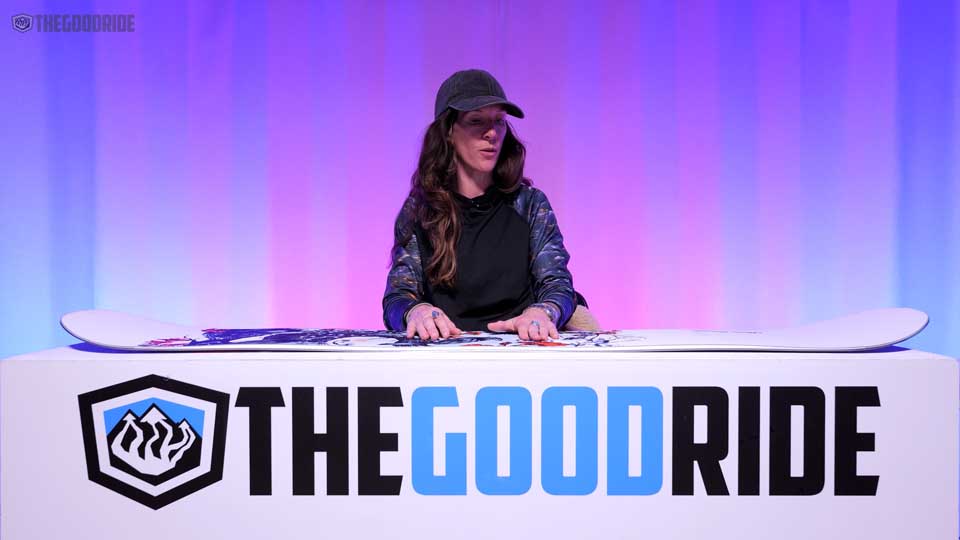
New for 2026, the entire women’s lineup features Never Summer’s Triple Camber profile.
Triple Camber uses three separate camber sections. One sits under the nose, another between the feet, and the third under the tail. Between those camber zones are small rocker transition areas.
Compared to the Proto and the Breezy Rider, the Infinity felt noticeably more stable.
As a rider, this was the first Triple Camber board where I stopped thinking about the profile and simply rode it.
It felt more grounded. It felt less squirrely. I wasn’t fighting that loose sensation I noticed on the previous boards.
That added stability showed up everywhere. It was easier skating to the lift, unloading, traversing, and riding long flat sections.
The Infinity also feels like more board under your feet than the Proto or the Breezy Rider.
Interestingly, it doesn’t necessarily feel dramatically stiffer. It just feels more composed.
The overall riding experience is different. The asymmetrical Breezy Rider and the true twin Proto both feel quicker underfoot. The Infinity feels calmer and more predictable.
That makes it a board I would recommend for an advanced beginner all the way through an expert rider who wants a true all-mountain, one-board quiver.
Edge Hold
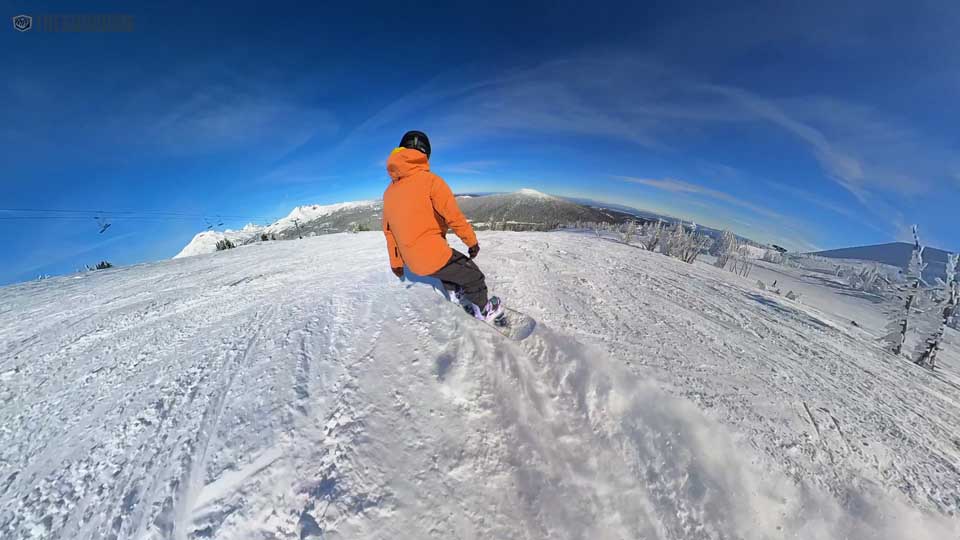
Edge hold is where Never Summer continues to stand out.
As soon as this board engages an edge, it locks in with confidence. That grip stays consistent all the way through the turn, even right before edge release.
Never Summer uses its Power Grip Progressive Sidecut. The sidecut radius gradually changes as you move away from the center of the board. That creates additional contact points without making the board feel overly grabby.
I wasn’t able to ride the Infinity in icy conditions.
Even so, based on how securely it held an edge during testing, I have a lot of confidence that it would perform well when conditions get firm.
As a rider, this is one of those boards that makes you trust your edge. Once it’s engaged, you don’t spend time wondering if it’s going to wash out.
You simply focus on the turn.
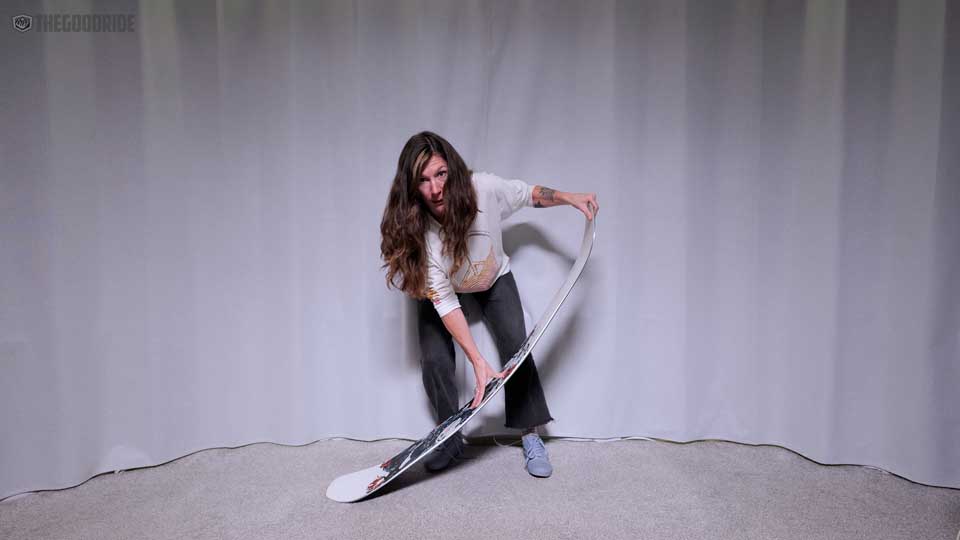
Flex Personality
Never Summer rates the Infinity as a 5 out of 10 for flex.
Compared to the Breezy Rider, it definitely feels a little stiffer.
The directional design gives the nose a touch more support, while the tail remains slightly softer. Combined with the Triple Camber profile, there is plenty of support through the middle of the board.
Even so, I wouldn’t call this a stiff snowboard.
There’s enough flex to keep it approachable, and the rebound is solid without feeling overly energetic.
One thing I noticed throughout the lineup is that Triple Camber rewards riders who actively load the board outside the inserts.
If you pressure those camber zones, the board responds well.
If you stay centered and passive, you’re leaving some performance on the table.
As a rider, the Infinity feels supportive without becoming demanding.
It has enough backbone to increase confidence at speed, but it never crossed the line into feeling punishing.
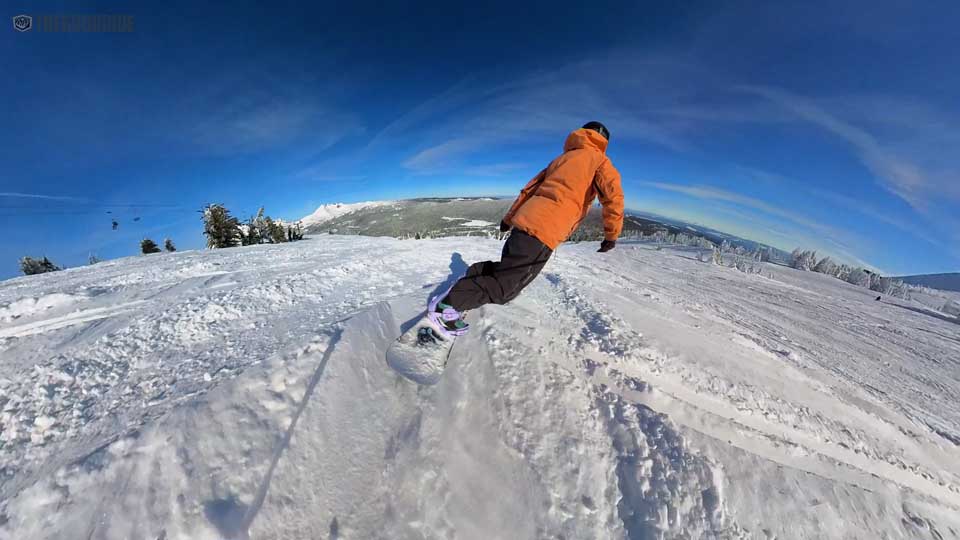
Uneven Snow
The Infinity was the first setback directional board I rode in the lineup, and it immediately felt more comfortable once I left the groomers.
The slight setback, combined with the added stability, helped the board stay composed through uneven snow.
I was able to carry speed through tracked powder, bumps, and mixed conditions without feeling like the board wanted to get knocked around.
That extra stability made the ride much more enjoyable off piste.
Instead of constantly correcting my line, I could stay relaxed and let the board work through the terrain.
For riders who spend a lot of time exploring chopped-up snow after a storm, that’s one of the Infinity’s biggest strengths.
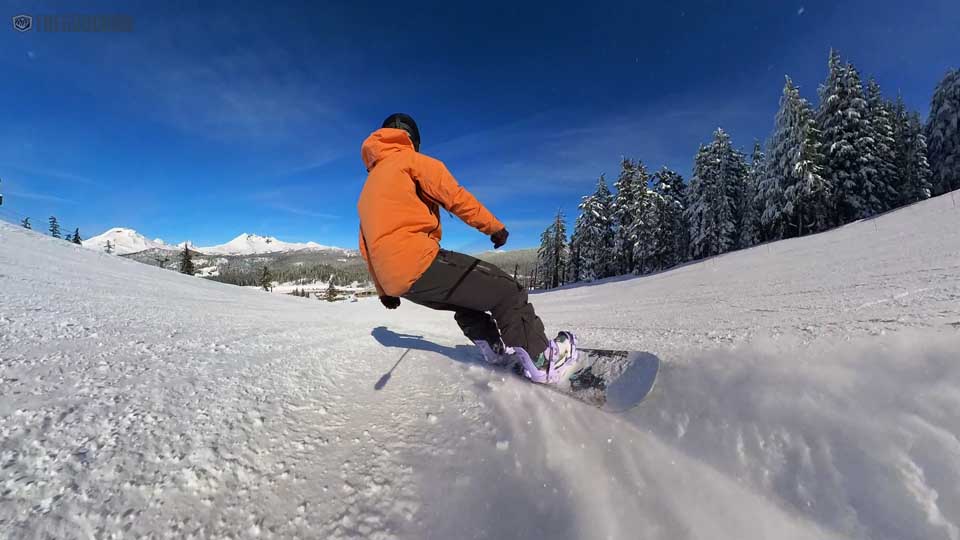
Speed
One thing I was really looking forward to was seeing how the Infinity handled speed.
After riding the Proto and the Breezy Rider, I wanted something that felt more planted. Those boards always left me with a little uncertainty once I started carrying more speed.
The Infinity was a completely different experience.
Whether it was the added stiffness, the directional design, or simply the way the Triple Camber felt on this board, I immediately had more confidence pointing it downhill.
I could bend my knees, stay centered, and let the board run without feeling nervous.
As a rider, that’s what stood out the most. The Infinity encouraged me to ride faster because it never felt unsettled.
Once I moved into steeper terrain, I did start to overpower the board a little.
This is a step up in stiffness compared to the Proto and Breezy Rider. However, it’s still not the stiffest board in Never Summer’s lineup.
That role belongs to the Cirrus.
The Infinity sits in a nice middle ground. It provides plenty of stability for most riders while remaining accessible.
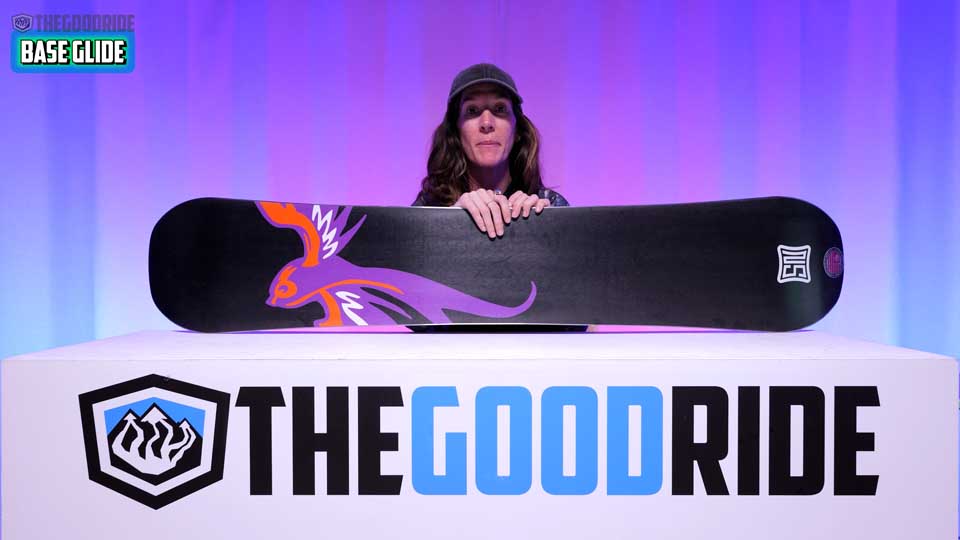
Base Glide
The Infinity comes equipped with a sintered base.
As with any sintered base, regular waxing will improve performance and help maintain consistent glide throughout the season.
At The Good Ride, we always try to ride boards in their factory condition first. That gives us a better idea of how they’ll perform for someone taking them straight from the shop to the mountain.
Even with the factory tune, the Infinity had solid base glide.
It never felt sticky, and it carried speed well across the conditions I tested.
After putting a fresh wax on it, the glide improved even more.
That’s not surprising for a sintered base.
If you stay on top of maintenance and use condition-specific wax when possible, you’ll get even better performance out of this board.
Turning / Carving
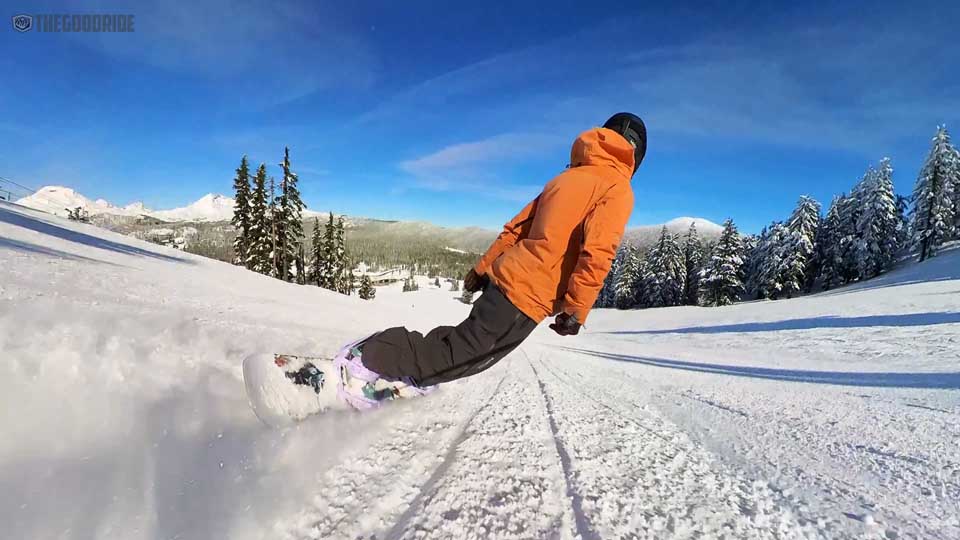
I rode the Infinity after the Breezy Rider and the Proto, so the differences were immediately obvious.
The turning experience is completely different.
If the Breezy Rider felt like Kung Fu, the Infinity felt like Tai Chi.
The reactions are slower. The movements are smoother.
I think this comes down to three things. The Infinity has a stiffer torsional flex, a more supportive overall flex pattern, and a slight setback stance.
Those characteristics slow down edge-to-edge transitions.
As a rider, the board naturally wanted to point downhill instead of making quick, snappy direction changes.
The turning radius felt longer than the Breezy Rider or the Proto.
I could still tighten up turns when I wanted to, but the board clearly preferred smooth, flowing arcs.
That slower response actually became one of my favorite traits.
Because the board wasn’t reacting instantly to every movement, I felt like I was driving it instead of constantly managing it.
Turn initiation became smoother.
Turn exits became smoother.
I stopped fighting the board and simply focused on where I wanted to go.
That confidence really changed the riding experience.
The downside showed up in tight trees.
This isn’t a board that likes rapid-fire direction changes.
When I needed immediate response, I found myself throwing the board around instead of simply rolling it onto edge.
Those longer turn characteristics became a disadvantage in tight terrain.
If trees are your primary focus, I’d consider sizing down.
That shorter length should make the board noticeably easier to maneuver while keeping many of the same strengths.
Powder
I was able to get the Infinity into powder, and it performed well overall.
One thing I found interesting had nothing to do with the shape. It had more to do with the insert pack.
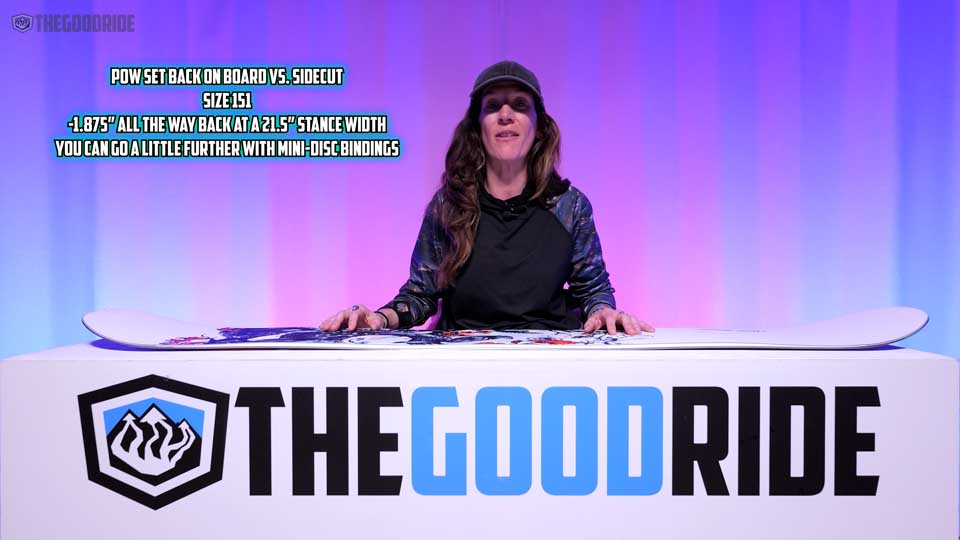
Because I ride a relatively narrow 19-inch stance, I was already using the innermost inserts.
That meant I couldn’t move my bindings farther back without increasing my stance width.
If I wanted maximum setback, my stance would grow to about 21.5 inches.
For me, that’s simply too wide.
That’s something worth considering before you buy this board.
If you naturally ride a wider stance, you’ll have more flexibility to take advantage of the setback.
If you prefer a narrower stance as I do, your powder setup options become more limited.
Even riding it in my normal stance, the Infinity performed well in powder.
The slight setback and added stability helped it stay composed.
Compared to the Proto, though, I found the insert layout a little surprising.
The Proto actually gives you more usable setback in its dedicated powder position.
That makes the Infinity an interesting case.
Can it handle powder? Absolutely.
Would I call it a dedicated powder board? No.
It’s more of an all-mountain directional twin that performs well when fresh snow shows up.
If powder is your primary goal, I’d look for something that’s designed with a more directional shape and additional built-in setback.
Switch / Freestyle
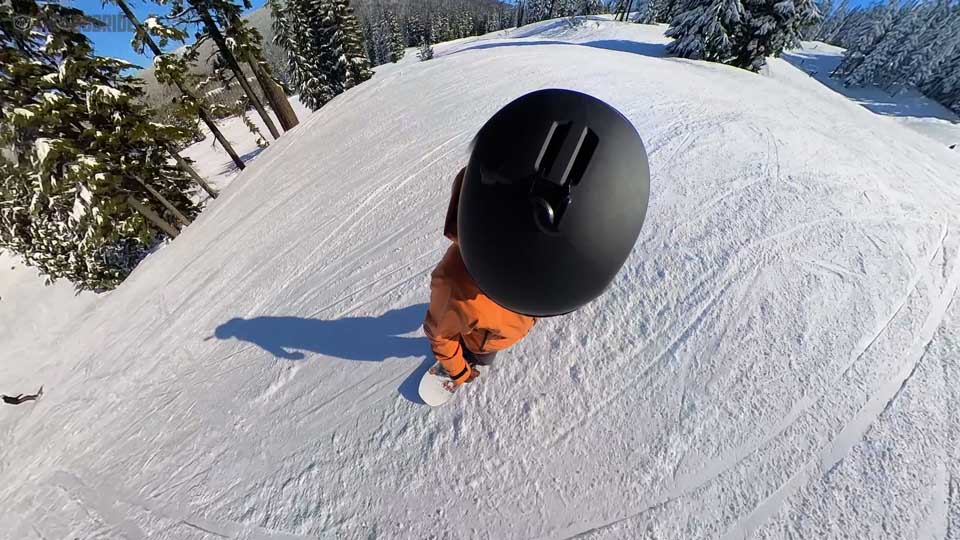
Even though the Infinity has a directional stance, it still rides very much like a twin when you put it on edge.
The nose and tail are symmetrical, so riding switch felt surprisingly natural.
Unlike some directional boards that constantly remind you they’re designed to go one way, the Infinity stayed balanced.
As a rider, I never felt like the board was trying to pull me back into its preferred direction.
It stayed centered and predictable, which made riding switch comfortable.
Would I call this a freestyle board? No.
Compared to the Breezy Rider and the Proto, both of which are true twins, the Infinity is much more focused on all-mountain riding.
Those boards are simply better choices if freestyle is your priority.
The Infinity is much happier carving, exploring the mountain, and covering a variety of terrain than spending all day in the park.
Final Thoughts
Overall, the Infinity ended up being my favorite board in the lineup.
It felt the most stable underfoot, and that stability inspired confidence from the very first run.
The slower turn initiation won’t appeal to everyone.
If you love lightning-fast edge-to-edge transitions or spend most of your day weaving through tight trees, this probably isn’t the best fit.
However, that same slower response is what makes the Infinity so composed in open terrain.
Instead of reacting to every small movement, the board stays calm and predictable.
That made it much easier for me to relax, trust the edge, and enjoy the ride.
The biggest limitation I found was the insert pack.
If you prefer a stance narrower than 19 inches, you’ll end up riding on the innermost inserts.
That also moves your feet farther away from the outer camber sections.
If trees are your priority, or you naturally ride a narrower stance, I’d strongly consider sizing down.
A shorter length should make the board more maneuverable while still keeping the personality that makes the Infinity so enjoyable.
For riders looking for a stable all-mountain directional twin with outstanding edge hold and confidence at speed, the Infinity is an excellent choice.
Out of every board I rode in the lineup, this is the one I’d reach for first.
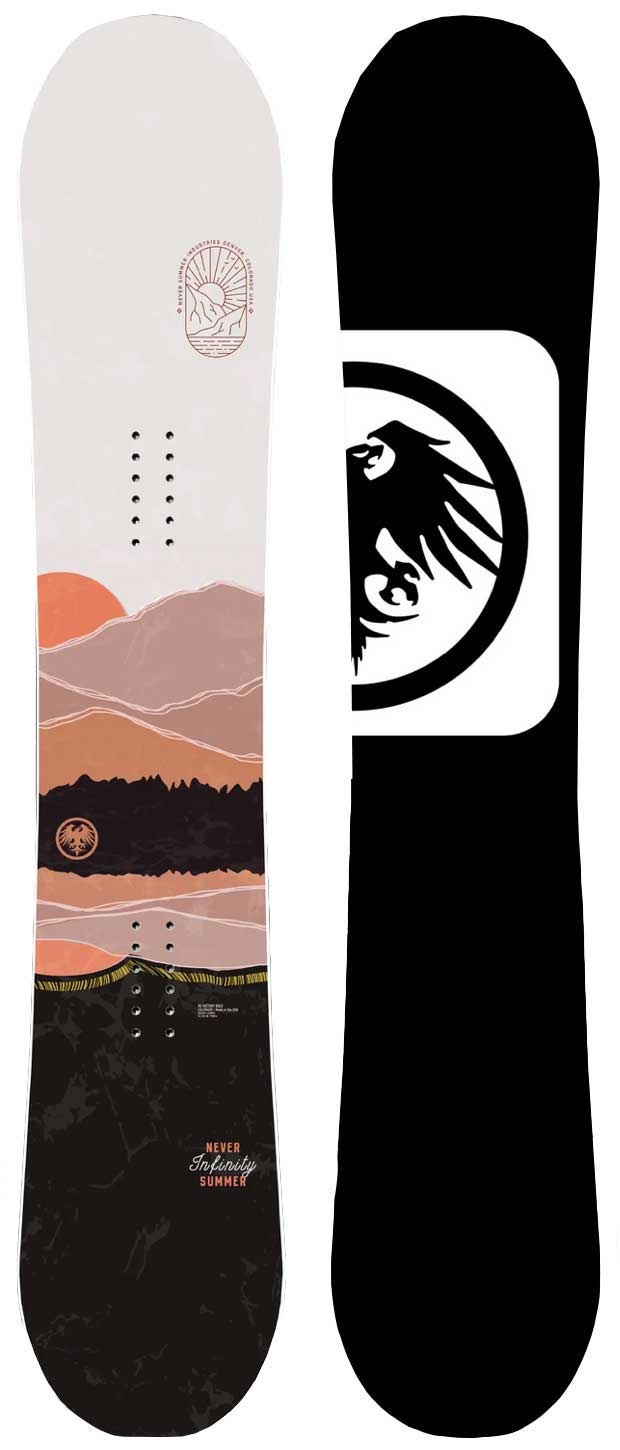
Never Summer Infinity Specs
Never Summer Infinity Images
We try to get as many images of the Never Summer Infinity, but forgive us if they're not all there.
2024
2023

2021
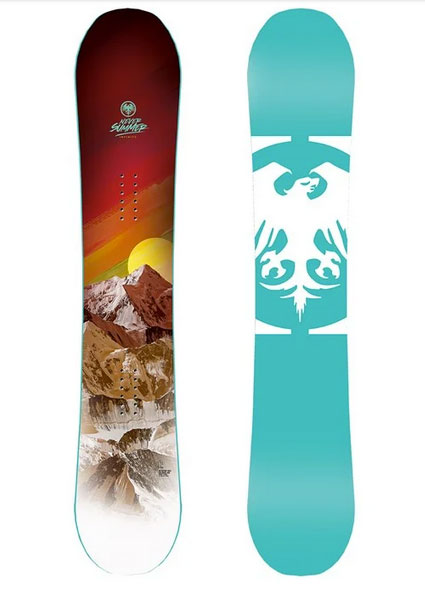

2020
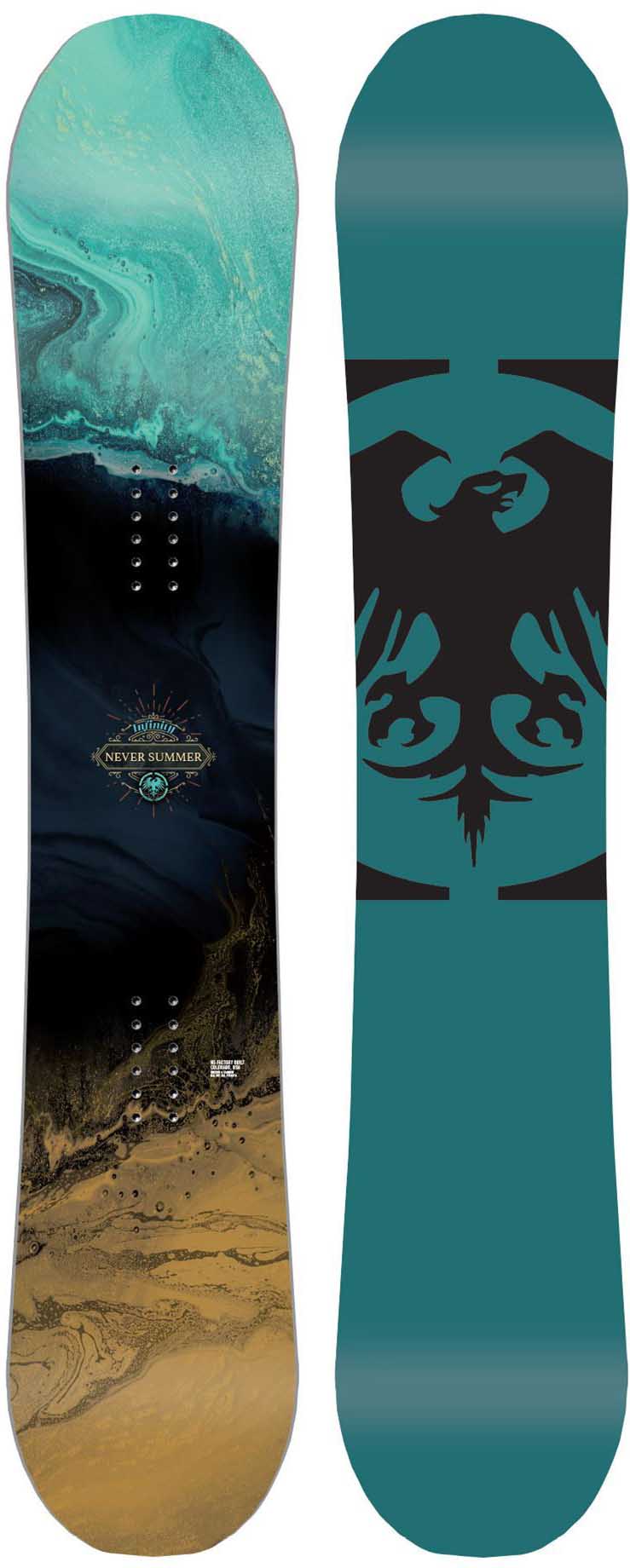
2019
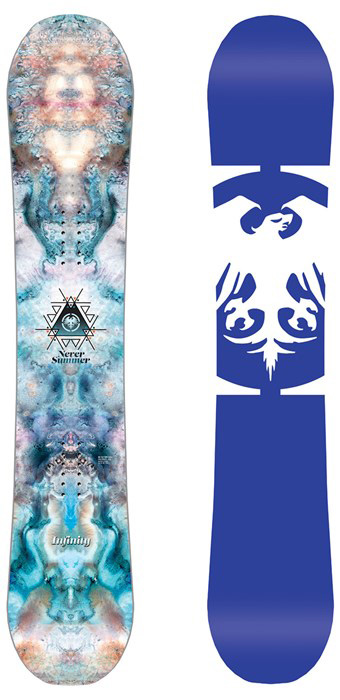
2018
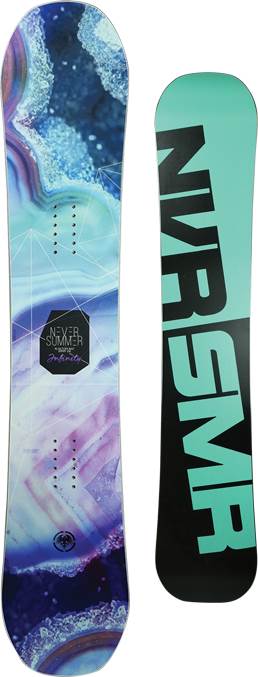
2017
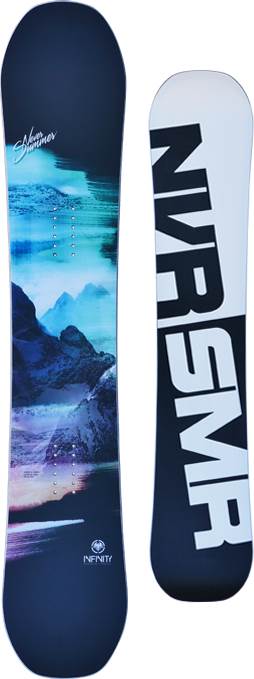
2016

2015

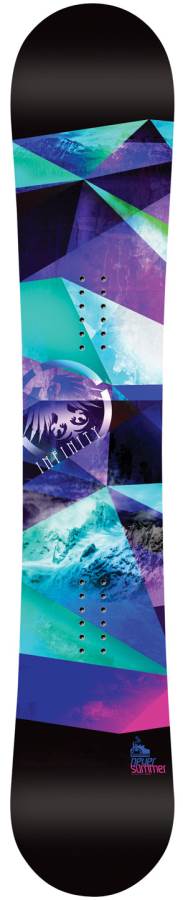
2014


2013
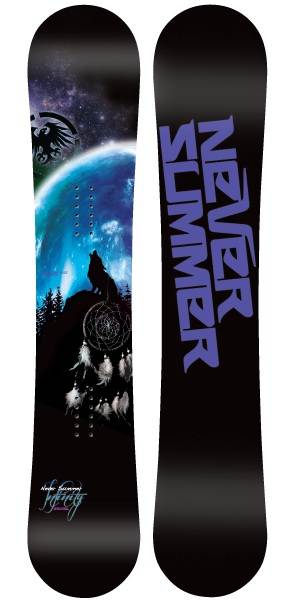
2012
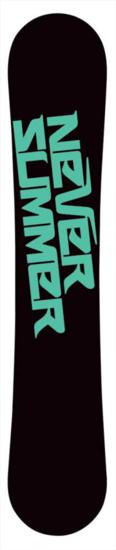


2011
2010
Never Summer Infinity User Reviews
Where To Buy
No obligation, but these links support the site.
Blauer Board Shop
Blauer Board Shop
Sun & Ski Sports
Sun & Ski Sports
Blauer Board Shop
Never Summer Infinity X Snowboard 2027 - Women's
Never Summer Infinity Snowboard 2027 - Women's
Never Summer Infinity Snowboard 2026 - Women's
Sun & Ski Sports
evo
SnowCountry
No Results Found
Blauer Board Shop
Blauer Board Shop
Sun & Ski Sports
Sun & Ski Sports
Blauer Board Shop
Never Summer Infinity X Snowboard 2027 - Women's
Never Summer Infinity Snowboard 2027 - Women's
Never Summer Infinity Snowboard 2026 - Women's
Sun & Ski Sports
evo
SnowCountry
No Results Found
Where To Buy
No obligation, but these links support the site.
Blauer Board Shop
Blauer Board Shop
Sun & Ski Sports
Sun & Ski Sports
Blauer Board Shop
Never Summer Infinity X Snowboard 2027 - Women's
Never Summer Infinity Snowboard 2027 - Women's
Never Summer Infinity Snowboard 2026 - Women's
Sun & Ski Sports
evo
SnowCountry
No Results Found