Positives
- New Directional Shape
- Forgiving Camber
- Quick and Playful
Negatives
- Soft flex
- Edge hold is challenged by speed
- Easily overpowered
Summary
The redesigned Jones Dreamweaver 2.0 takes a noticeable step toward becoming a more directional freeride board. Jones changed the shape, construction, and camber profile while maintaining an approachable personality. The new shape adds more taper and a directional feel that should help riders explore off-piste terrain. However, the demo board I tested was extremely soft. That soft flex limited stability, edge hold, and higher-speed performance. Jones told us the production board should be stiffer, which would address many of my concerns. As tested, however, the Dreamweaver is best suited for beginner to intermediate riders. It offers quick turns, an easy on-snow feel, and a playful personality. *Note for 26/27- Production Model is slightly stiffer but does not significantly change the personality away from a soft beginner board.Where To Buy
No obligation, but these links support the site.
| Riding Style | All Mountain |
| Riding Level | Beginner - Intermediate |
| Fits Boot size (US) | Women's, < 8, 8-10 |
| Manufactured in | |
| Shape | Directional |
| Camber Profile | Directional Camber |
| Stance | Setback -20mm |
| Approx. Weight | Feels Normal |
| Split | Comes in split |


|
|
|
|
|
|
|
|
|
|
|
|
|
|
|
|
|
|
|
|
|
|
|
|
|
| On Snow Feel |

|
| Turn Initiation |

|
| Skidded Turns |

|
| Flex |
|
| Buttering |
|
| Edge Hold |
|
Where To Buy
No obligation, but these links support the site.
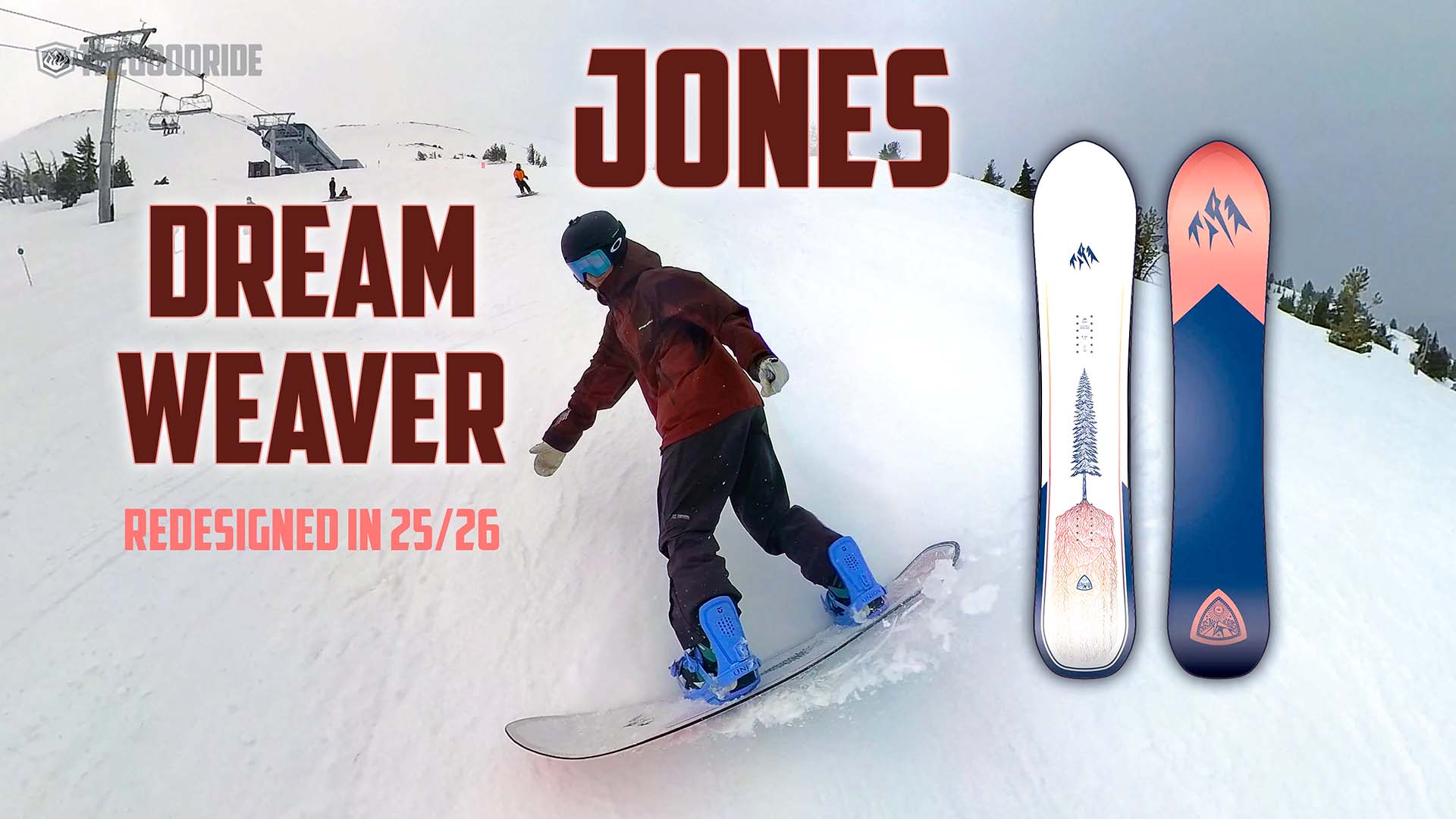
Jones Dreamweaver 2.0 Snowboard Review by Jordan Review by The Good Ride
How It Was Tested:
I borrowed the Jones Dreamweaver for an extended demo and sent it back.
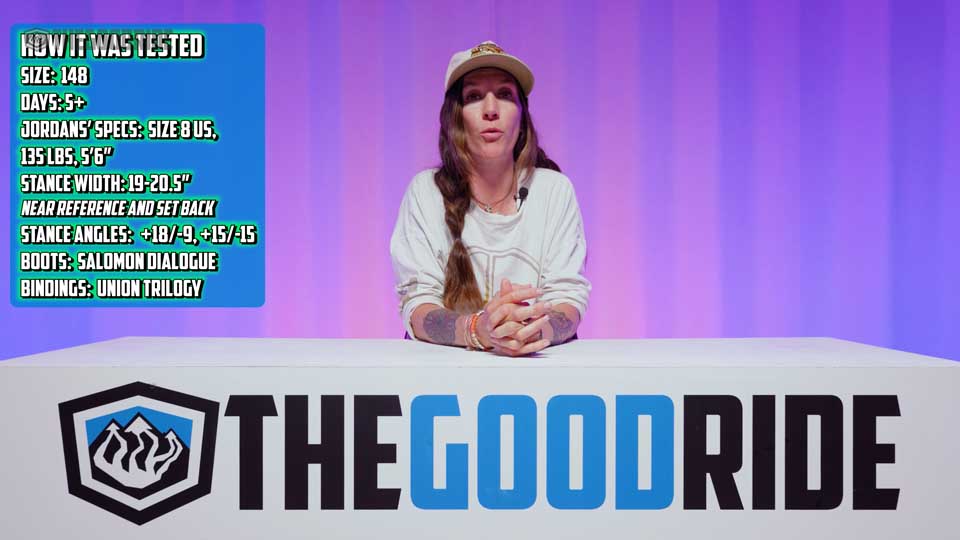
Size: 148
Days: Multiple
Conditions: Packed groomers, early-to-late spring conditions, hard setup snow, ice, corn snow, and slush.
Riders: Jordan (Size 8 Ws, 5’6”, 135-140lbs).
Boots: Salomon Dialogue
Bindings: Union Trilogy
Helmet: MOD1
Goggle: LineMiner Pro
Jordan’s Set Up: 19.3” Wide. Stance Angles +18/-9. Reference stance.
Ethics Statement
I was not paid to write this review, and it reflects an honest, objective perspective with no brand oversight. If this review helped, we’d appreciate it if you support objective content by:
- Buying Through Our Sponsor, Blauer Board Shop
- Buying through our other Where To Buy Links. We get paid a small commission if you do. Please make sure we are the last click and don’t use a coupon or discount provider. They take our commission if you do.
- Become a Patron for early access to reviews well before publication at https://www.patreon.com/thegoodride
- Donate at https://venmo.com/TheGoodRide (@TheGoodRide) or https://paypal.me/thegoodride
- Follow us at https://www.instagram.com/thegoodride
- Like and subscribe on YouTube at https://www.youtube.com/@thegoodridesnow
Sizing
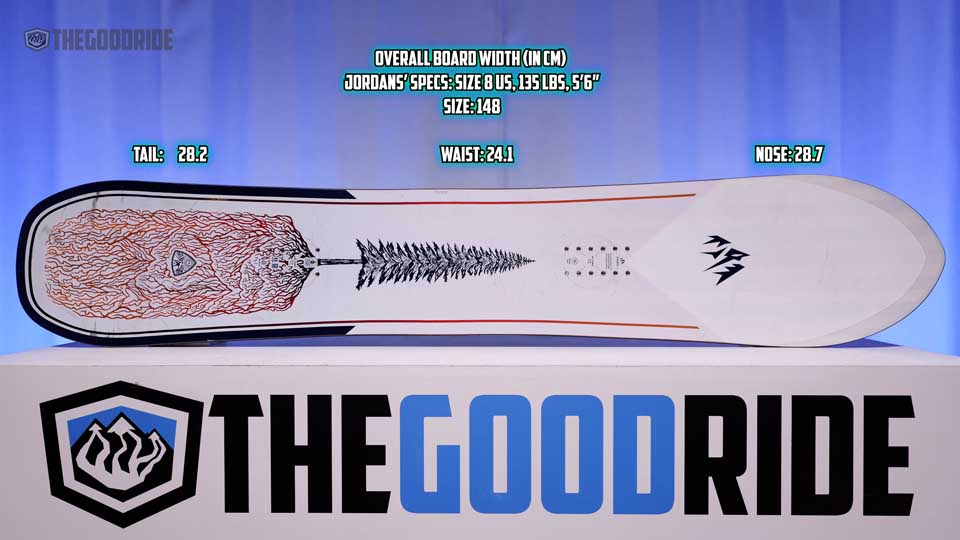
I tested the Dreamweaver in a 148. Jones recommends this size for a fairly broad rider weight range of approximately 100 to 150 pounds.
The women’s Dreamweaver is available from a 139 through a 156. There is also a men’s counterpart with additional sizing options.
The 148 has a 24.1 cm waist width. That width is ideal for roughly a women’s size 6 to 8 boot. It could accommodate slightly larger boots, but riders around a size 9 or 9.5 may experience toe drag.
Shape & Setback
New for 2026, the Dreamweaver has a redesigned directional freeride shape. It features approximately 5mm of taper and medium 3D contouring in the nose.
Jones also modified the board’s construction and camber profile. Combined, these changes make this a significant redesign rather than a minor update.
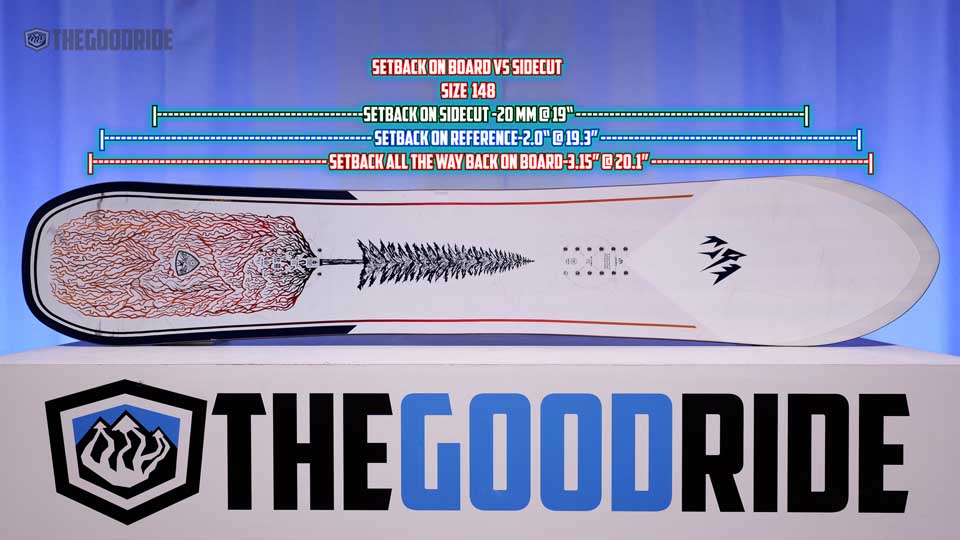
The Dreamweaver is set back 20mm on sidecut. At the 19.3-inch reference stance, it is also set back approximately two inches on board.
Moving the bindings completely back increases the stance width to approximately 20.1 inches. It also provides around 3.125 inches of additional nose. That should be useful when riding powder.
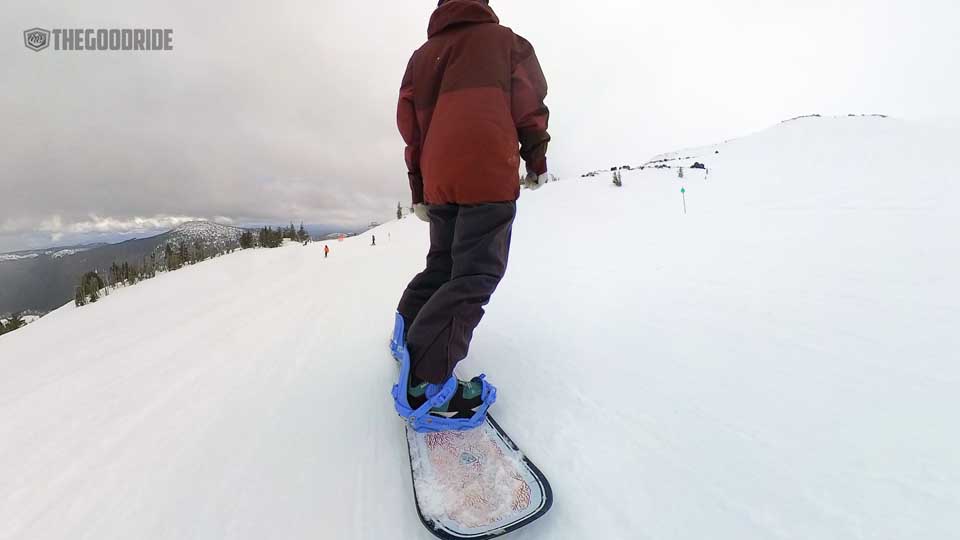
Camber/On-Snow Feel
Jones redesigned the Dreamweaver’s camber profile for 2026. The camber extends farther toward the tail and slightly farther toward the nose.
It still maintains relatively low camber, with rocker in the nose and tail. This creates a friendly introduction to a camber-dominant freeride board.
The low camber reduces some of the catchiness commonly associated with traditional camber. It felt immediately comfortable and remained stable at slower speeds and on lower-angle terrain.
That stability became more challenged as speed and turning forces increased. The primary limitation was the extremely soft flex of the demo board.
Based on the board I tested, I would recommend the Dreamweaver primarily for beginner to intermediate riders. The shape provides room for progression, but the soft flex limits its usefulness for more advanced riding.
Jones told us the production board should be stiffer than this demo. A moderate increase in flex could significantly expand its progression range.
*Production Model is slightly stiffer but did not change the progression range.
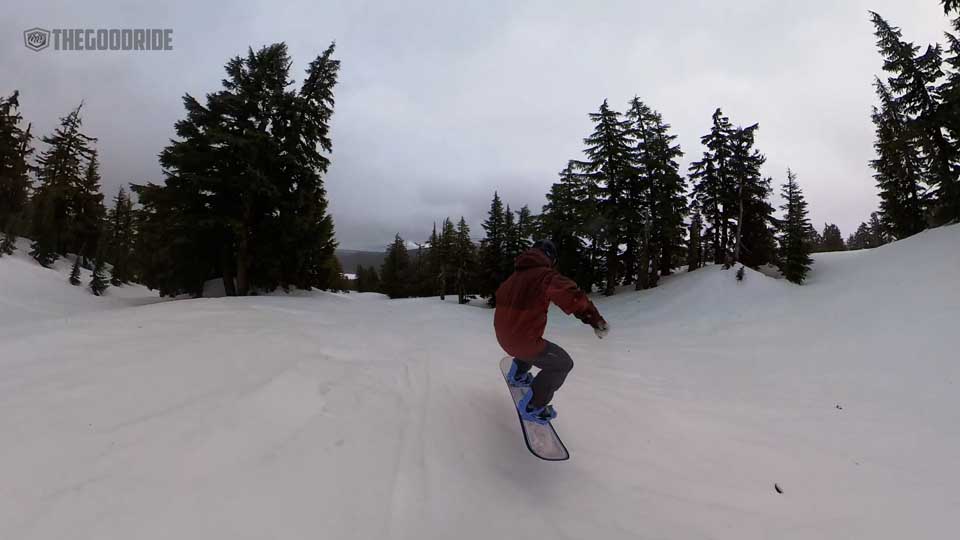
Powder
I wasn’t able to ride the Dreamweaver in true powder conditions.
However, the redesigned directional shape, setback, low taper, and 3D contour should make it reasonable for softer snow.
Moving the stance completely back on the inserts provides substantially more nose. That should help beginner and intermediate riders experimenting with lower-grade powder conditions.
I wouldn’t choose this as a dedicated deep-snow board. Instead, it makes more sense for variable resort conditions. You can ride groomers, venture into softer snow, and then return to the trail.
For a similarly playful personality with a more powder-specific design, consider the Jones Mind Expander. Its more directional shape provides additional nose support and taper for better flotation.
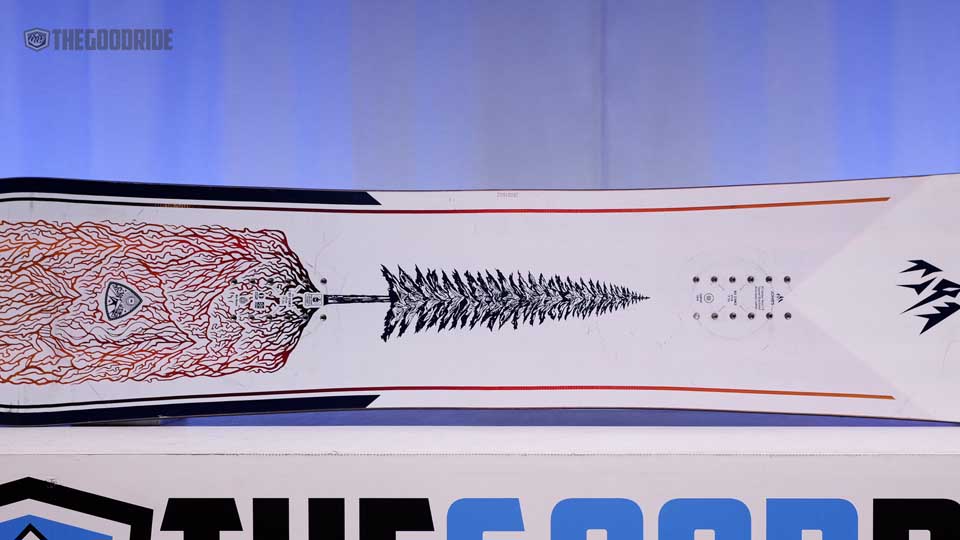
Edge Hold
The Dreamweaver has slight disruption along the edge. This provided acceptable edge hold at slow to moderate speeds.
It worked particularly well on lower-angle green and blue terrain where I wasn’t generating large turning forces.
The limitation became apparent when I increased speed or applied more pressure through the turn. The board struggled to maintain the same level of hold under those larger loads.
The edge design itself wasn’t necessarily the problem. The very soft flex allowed the board to deform more easily under pressure. That reduced its ability to maintain a consistent platform during aggressive turns.
Again, the production board is expected to be stiffer. That change could improve the edge-hold limitations I experienced on this demo.
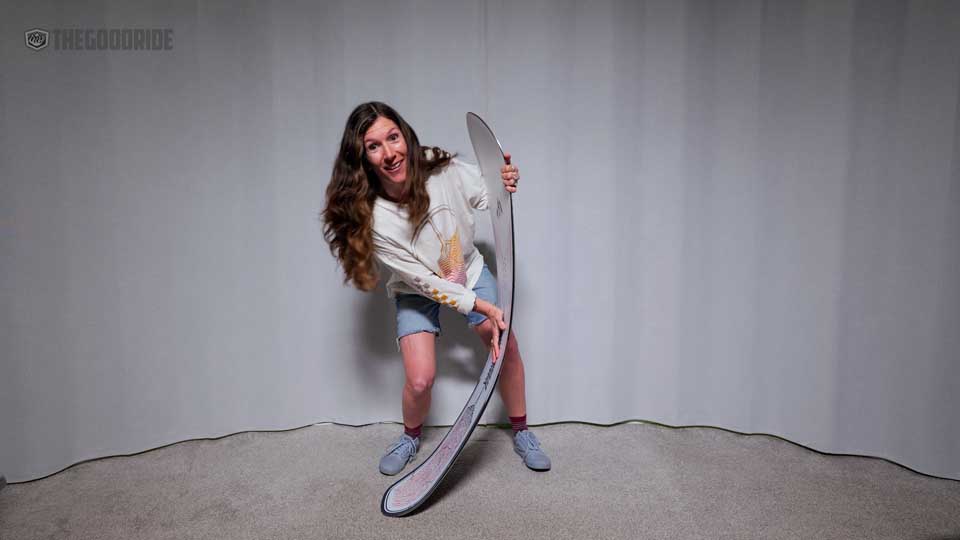
Flex Personality
This demo Dreamweaver was extremely soft.
The tail was slightly stiffer than the nose, but the overall flex remained very soft. The directional nose was especially easy to flex.
Jones previously rated the Dreamweaver around four out of five on its flex scale. The redesigned model dropped to approximately two out of five.
On our scale, that represents a substantial change from roughly a seven to around a three or four.
Jones told us the production board should be slightly stiffer. That’s encouraging because the demo felt softer than necessary for the board’s intended progression range.
Even with additional stiffness, I expect the Dreamweaver to retain its playful personality. The design clearly favors accessibility and maneuverability over aggressive freeride performance.
Uneven Snow
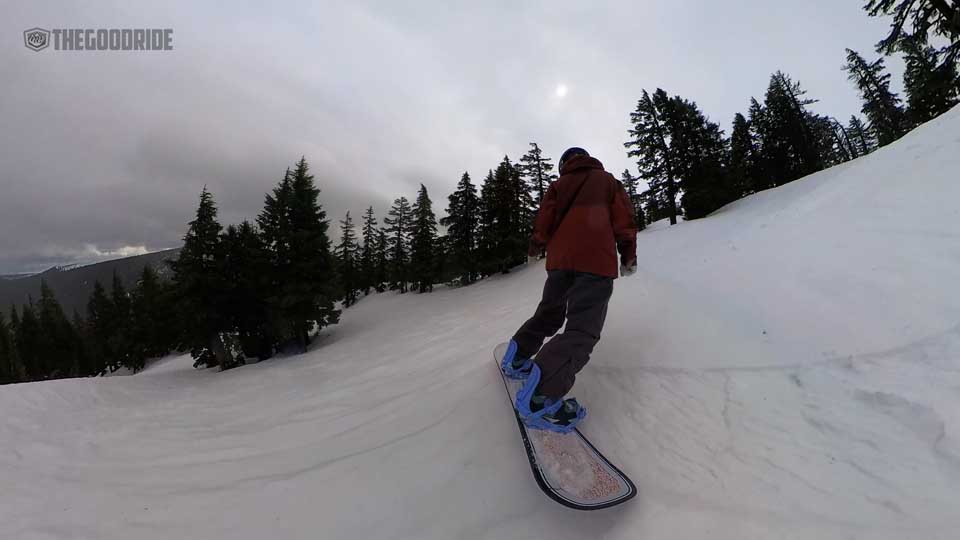
I rode the Dreamweaver through uneven snow during mid-to-late spring conditions.
It handled softer uneven terrain reasonably well. The board didn’t absorb bumps particularly well, but its soft flex allowed me to manipulate it around terrain.
I could easily lift and reposition the board instead of driving directly through rough sections.
Performance deteriorated when the snow became firm. Shadowed patches and harder snow created considerable feedback through the board and made it more difficult to control.
The 3D-contoured nose helped keep the front of the board from diving into softer piles. However, the board lacked meaningful dampening when conditions became rough.
Turning/Carving
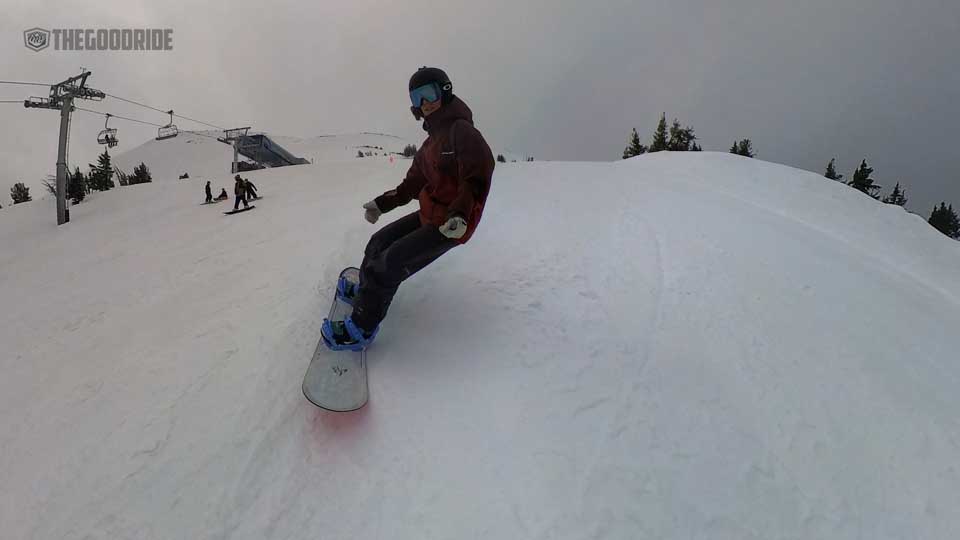
Despite its extremely soft personality, the Dreamweaver was a lot of fun to turn.
It immediately felt comfortable on snow. The 6.8-meter sidecut creates a tighter turning radius that favors quick, reactive turns.
The 3D-contoured base also makes entering and exiting turns easy. That combination creates a very approachable turning experience for progressing riders.
I could get the Dreamweaver onto edge and initiate a carve. However, the soft flex limited how much speed and pressure I could comfortably carry through the turn.
I never felt comfortable generating enough speed to complete a true Eurocarve. At higher speeds, I didn’t trust the board to provide enough support if I needed to stop aggressively.
For slower and moderate-speed carving, however, the Dreamweaver was quick, playful, and easy to manipulate.
Speed
Speed is one of the primary limitations of the Dreamweaver I tested.
At slower and moderate speeds, the board remained comfortable and easy to control. Increasing speed exposed the limitations of its very soft flex.
A softer platform moves and deforms more under load. That reduced my confidence when pushing the board harder or making aggressive stops.
This isn’t intended to be a high-speed freeride board. Still, a slightly stiffer production model would give progressing riders more room to increase their speed without quickly reaching the board’s limits.
Base Glide
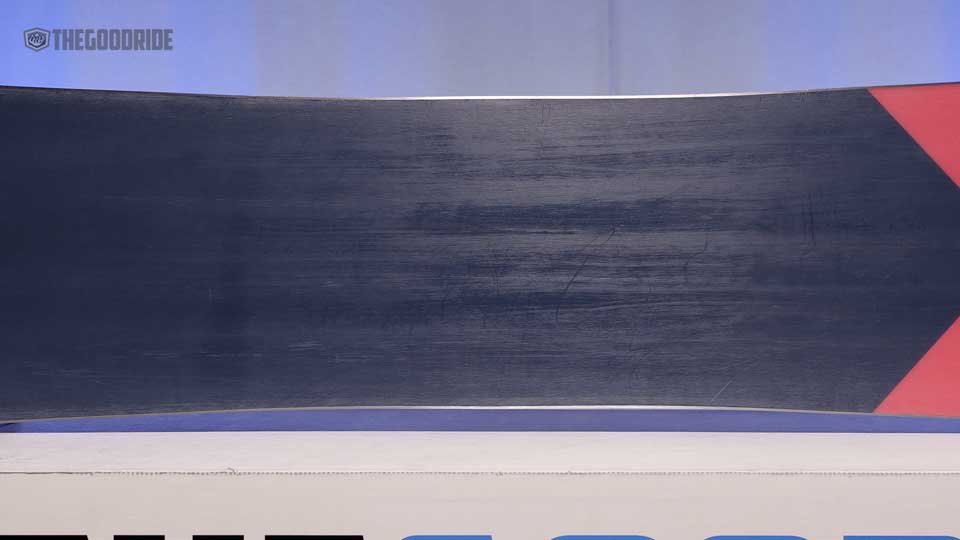
The Dreamweaver comes with the same sintered 8000 base found on higher-end boards in the Jones lineup.
This is a base that rewards regular maintenance and conditions-specific wax. Developing those habits early is worthwhile for progressing riders.
The base glide was very good during testing. In fact, it performed well enough out of the gate that I didn’t feel the need to wax it.
Switch/Park
Despite its directional freeride shape, the Dreamweaver has a playful personality that works surprisingly well in a park setting.
The soft flex makes the board easy to manipulate and lowers the amount of force needed to load it.
I felt comfortable enough to take it into the park and hit several jumps, even though the park isn’t really my safe space anymore.
The directional shape isn’t optimized for dedicated switch riding. However, beginner and intermediate riders who occasionally ride switch or experiment with freestyle terrain should still find it manageable.
Its playful flex also keeps the board entertaining at slower speeds.
Final Thoughts
The Dreamweaver has been a favorite of ours at The Good Ride for years because of its versatility and progression potential.
I’m glad Jones invested in redesigning a freeride board for beginner riders. Adding more taper and directional characteristics creates a natural pathway for riders who want to move beyond groomed terrain.
My main concern is the flex.
The previous Dreamweaver offered more support as riders progressed. The demo I tested felt significantly softer, making it more of a dedicated beginner board.
Jones told us the production version should be stiffer. I hope that’s the case. A moderate increase in stiffness could preserve the playful personality while giving riders considerably more room to progress.
As tested, the Dreamweaver was quick, easy to turn, and immediately comfortable. I even enjoyed taking it through the park and hitting a few jumps.
It’s a fun, accessible board that fills an important gap in the Jones lineup. I just hope the production flex gives progressing riders enough support to take full advantage of the redesigned shape.
Jones Dreamweaver 2.0 Specs
Jones Dreamweaver 2.0 Images
We try to get as many images of the Jones Dreamweaver 2.0, but forgive us if they're not all there.
Jones Dreamweaver 2.0 User Reviews
Where To Buy
No obligation, but these links support the site.
No Results Found
No Results Found
No Results Found
Where To Buy
No obligation, but these links support the site.