Positives
- Approachable
- Maintains fun, snappy turning
- Stable on snow
Negatives
- Right sizing is important
- Edge Hold is challenged
Summary
The Burton Counterbalance immediately felt stable on snow, quick turning, and snappy at speed. It maintains much of the fast-charging personality I liked about the Storyboard. However, I found it more approachable and less demanding. Sizing seems to play a significant role with this board. I rode the 150, and I think sizing down would have changed my experience considerably. Being deliberate with sizing could make the difference between this board feeling good or great. I wasn't able to ride it in true powder conditions. I'm curious to see how other riders respond to it in deeper snow. *26/27 Model has not changed construction-only topsheet designWhere To Buy
No obligation, but these links support the site.
Evo
Evo
Blauer Boardshop
evo

The House
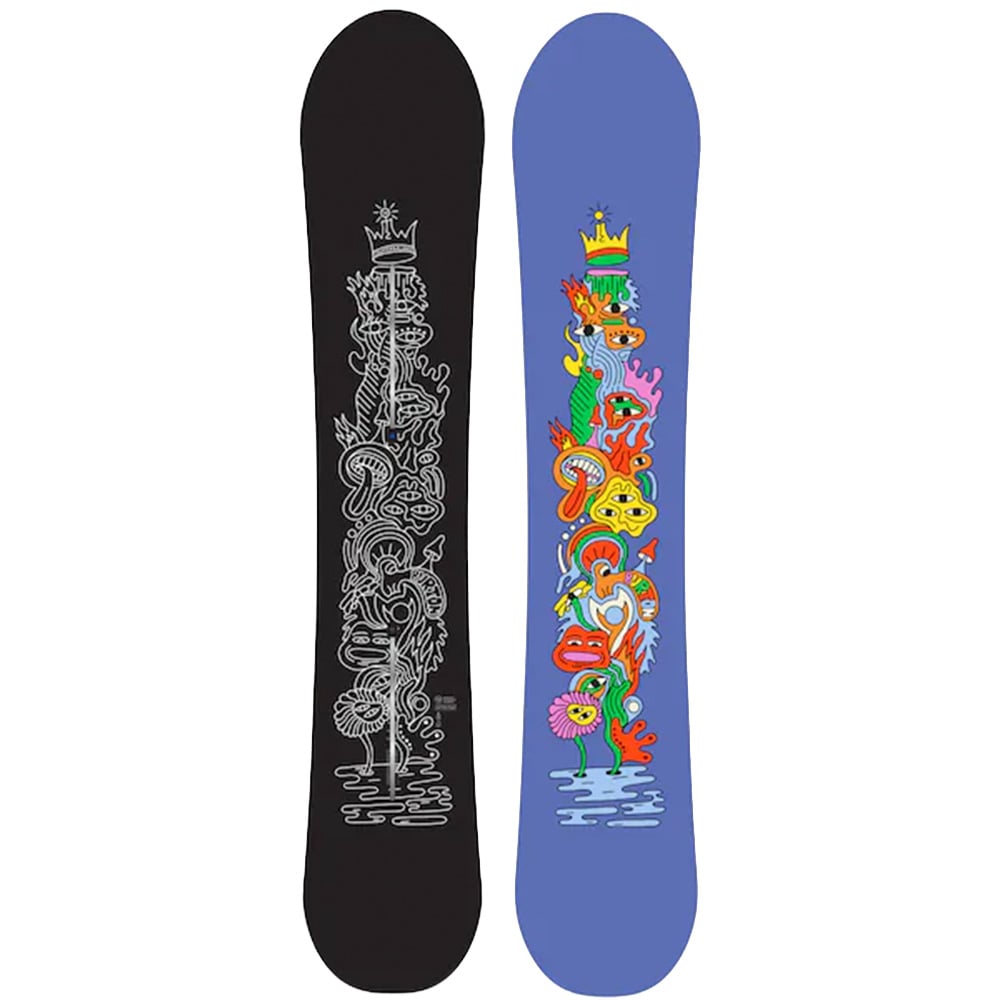
Burton Counterbalance Camber All Mountain Snowboard - Hallucinate, 150 | The House
Tactics
SnowCountry

PRFO Sports Canada
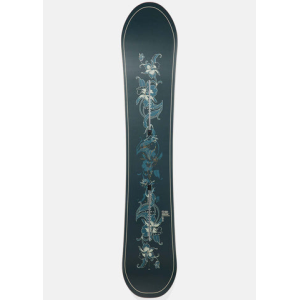
| Riding Style | All Mountain |
| Riding Level | Intermediate - Expert |
| Fits Boot size (US) | Women's, < 8, 8-10, 10-12 |
| Manufactured in | Austria |
| Shape | Tapered Directional |
| Camber Profile | Directional Camber |
| Stance | Setback over 20mm |
| Approx. Weight | Feels Normal |
| Split | No |


|
|

|
|
|
|
|
|
|
|
|
|
|
|
|
|
|
|
|
|
|
|
|
|
| On Snow Feel |

|
| Turn Initiation |

|
| Skidded Turns |
|
| Flex |
|
| Buttering |
|
| Edge Hold |
|
Where To Buy
No obligation, but these links support the site.
evo
The House
Burton Counterbalance Camber All Mountain Snowboard - Hallucinate, 150 | The House
Burton Counterbalance Camber All Mountain Snowboard - Hallucinate, 154 | The House
Tactics
The House
Tactics
SnowCountry
PRFO Sports Canada
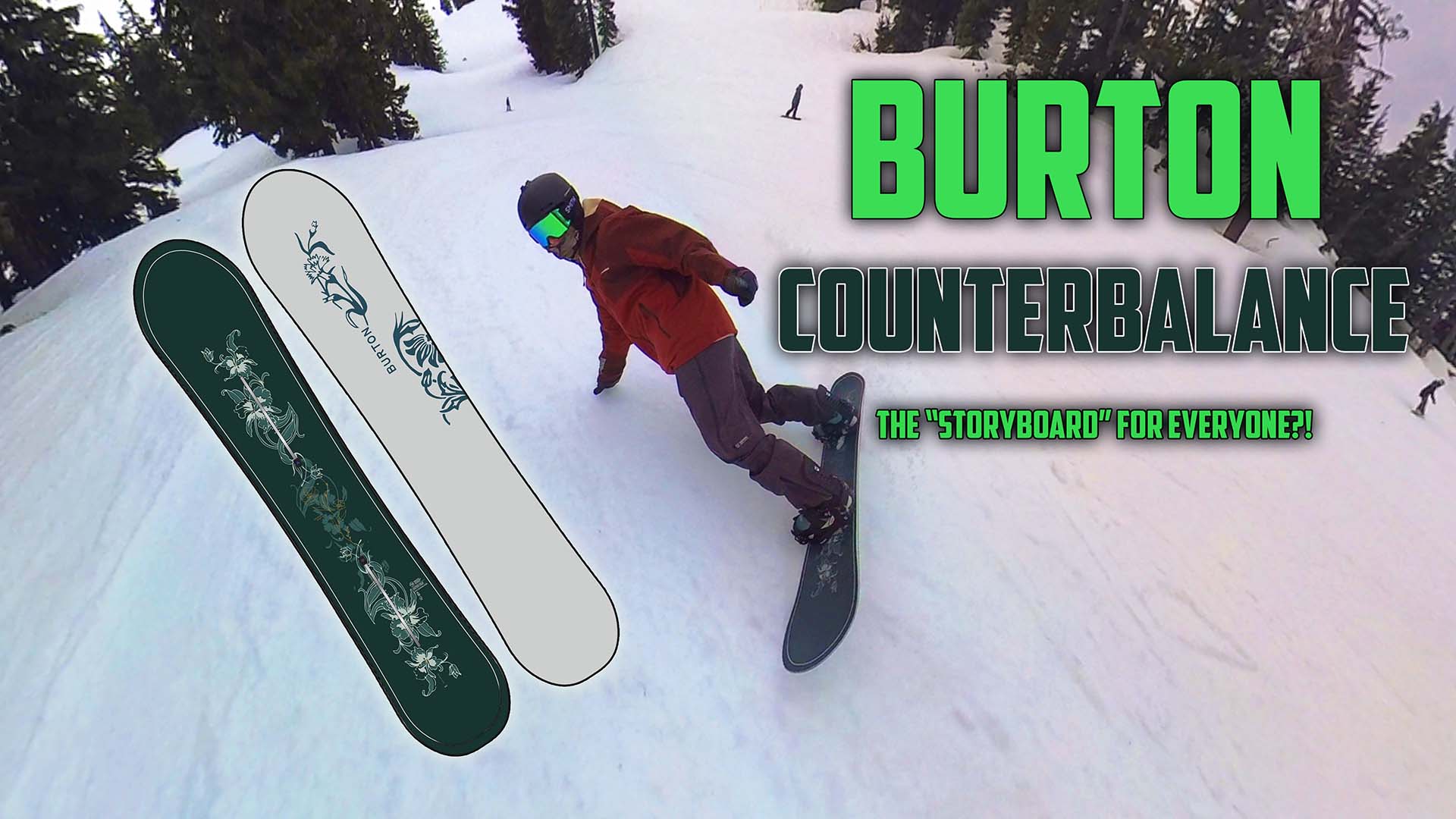
Burton Counterbalance Snowboard Review by Jordan Review by The Good Ride
How It Was Tested:
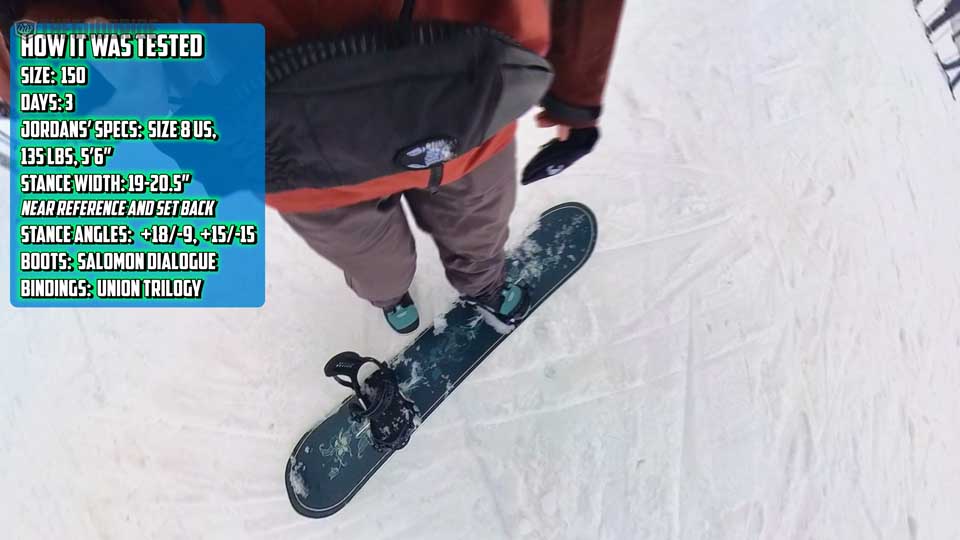
I borrowed the Burton Counterbalance for an extended demo and sent it back.
Size: 150
Days: 5+
Conditions: Set-up tracked snow, ice, and spots of softer snow.
Riders: Jordan (Size 8 Ws, 5’6”, 135-140lbs).
Boots: Salomon Dialogue, Men’s Size 7
Bindings: Union Trilogy, Size Medium
Helmet: MOD1
Goggle: LineMiner Pro
Jordan’s Set Up: 20-21” Wide. Close to Reference.
I primarily compared the Counterbalance to the Burton Storyboard. It replaces the Storyboard as Burton’s unisex option. However, I also found some similarities to the Cartographer.
Ethics Statement
I was not paid to write this review, and it reflects an honest, objective perspective with no brand oversight. If this review helped, we’d appreciate it if you support objective content by:
- Buying Through Our Sponsor, Blauer Board Shop
- Buying through our other Where To Buy Links. We get paid a small commission if you do. Please make sure we are the last click and don’t use a coupon or discount provider. They take our commission if you do.
- Become a Patron for early access to reviews well before publication at https://www.patreon.com/thegoodride
- Donate at https://venmo.com/TheGoodRide (@TheGoodRide) or https://paypal.me/thegoodride
- Follow us at https://www.instagram.com/thegoodride
- Like and Subscribe on YouTube at https://www.youtube.com/@thegoodridesnow
Sizing
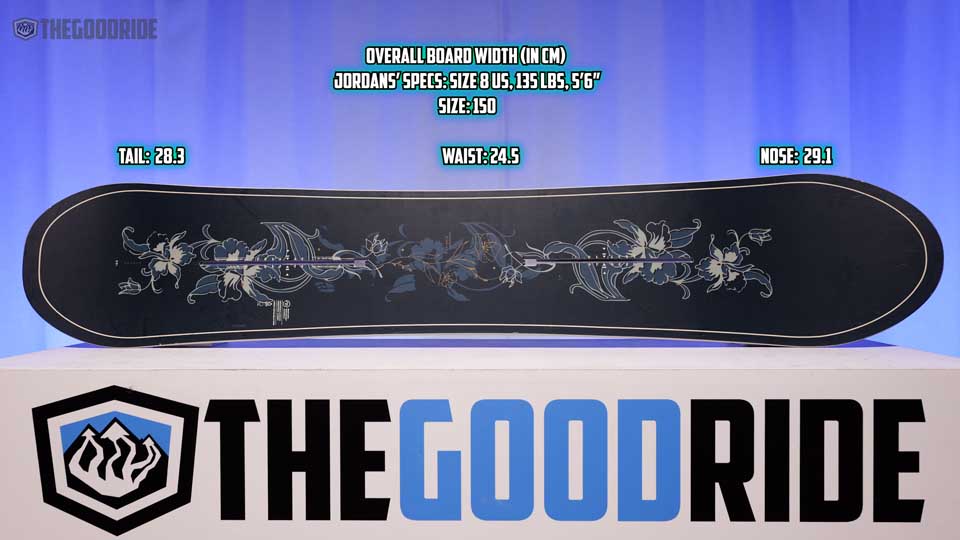
I requested the 150 because I typically ride between a 149 and 152. However, the Counterbalance 150 has a 24.5 cm waist width. That makes it better suited to a woman with a larger foot than mine.
In retrospect, I should have ridden the 146. It would have been a closer comparison to the 147 Storyboard I rode last year.
The reference stance was 21 inches. I initially rode it there, which felt centered but slightly wide for my preference. I later brought it down to 20 inches due to some foot pain and discomfort.
Sizing likely influenced several aspects of my experience with this board. The wider 150 sometimes made it difficult for me to fully engage the edge.
Shape & Setback
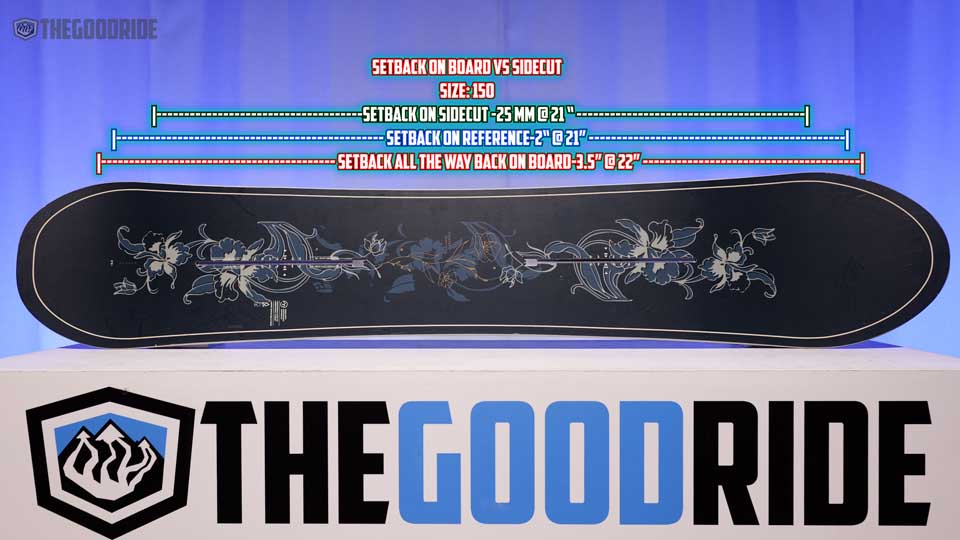
The Counterbalance has a directional freeride shape with approximately 8 mm of taper. There is 25 mm of setback on the sidecut.
At the 21-inch reference stance, there is approximately two inches of extra nose.
Moving the bindings to the furthest setback inserts increases the stance to roughly 22 inches. That’s quite wide, but it increases the extra nose to approximately 3.5 inches.
This gives the Counterbalance some useful directional characteristics while maintaining a relatively versatile overall shape.
Camber/On-Snow Feel
The Counterbalance uses directional camber. The camber is set back beneath the inserts, with significant rocker in the nose and a small amount in the tail.
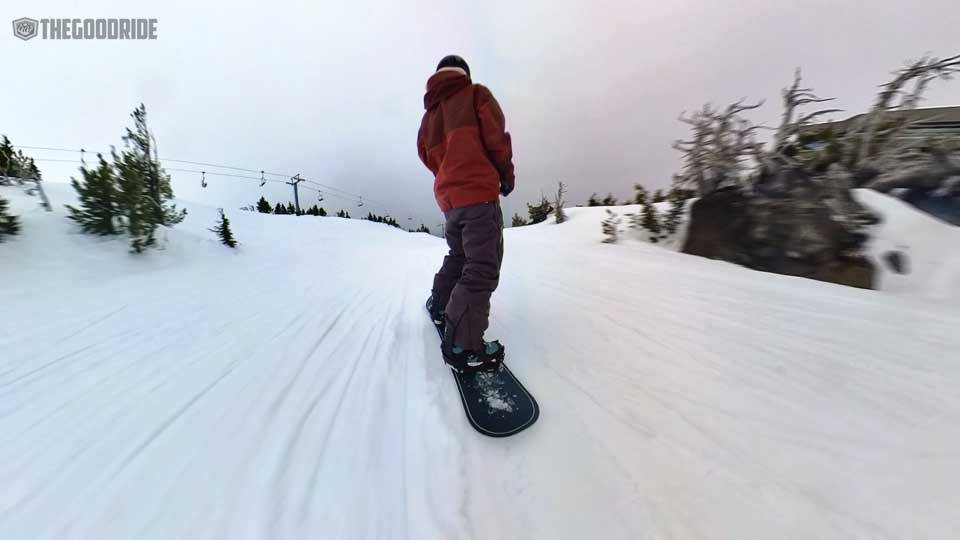
It immediately felt stable on snow. It combined some of the comfortable, grounded feeling of the Cartographer with the Storyboard’s stability at speed.
She likes to go.
I never experienced much slipping or catchiness while unloading the lift or traversing. I could also skid turns relatively easily. I think the early rise and setback camber contributed to that more forgiving feeling.
However, riders who still rely heavily on skid turns could find this board challenging. Sizing down may make it easier to manage those potential catch points.
My biggest takeaway was how much more approachable it felt than the Storyboard. I didn’t have to work as hard to make the board respond.
That doesn’t make it an easy board. Its camber profile, flex, and wider platform still require some experience.
I recommend the Counterbalance for intermediate through expert riders looking for an all-around board for most conditions.
Edge Hold
The Counterbalance may have a slight disruption in the sidecut beneath the inserts.
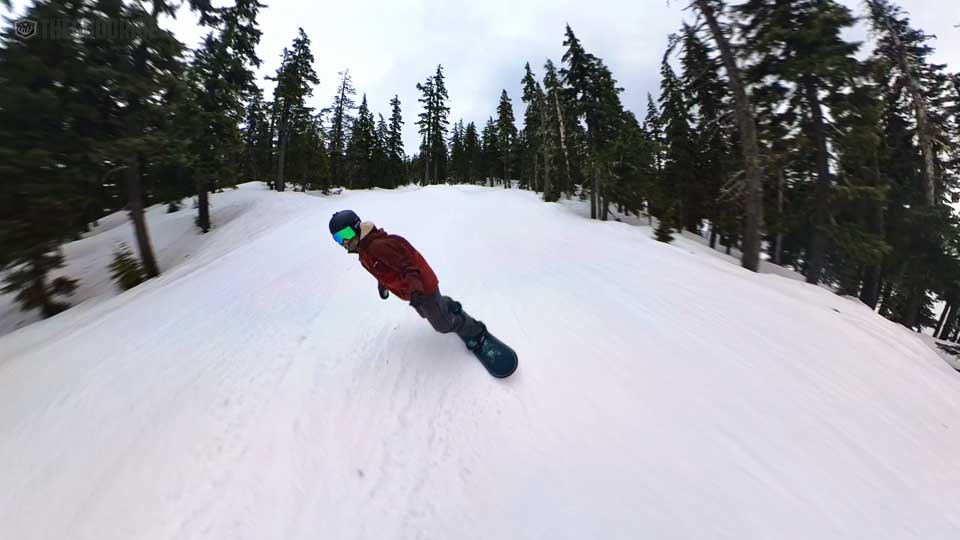
Overall, its edge hold felt pretty good. It held better for me than the Sketch Artist, Smooth Operator, and even the Cartographer at moderate speeds.
However, I still experienced some chatter through turns. Again, sizing could have contributed.
At times, it felt like I couldn’t fully get the board onto its edge. I could tell the edge was capable of holding, but I couldn’t consistently engage it.
A smaller size may have allowed me to leverage the board more effectively. That could have produced an experience closer to the Storyboard, which I’ve really enjoyed.
Hard and icy snow amplified the issue. I found myself skid turning more instead of fully engaging the edge.
Even with those limitations, the edge hold improved over several Burton boards I’ve ridden in the past.

Flex Personality
The Counterbalance has a fairly stiff tail. It transitions into a slightly softer middle and becomes softer toward the nose.
This is still a mid-flex board that requires some effort to manipulate.
The stiffer tail also gives it excellent pop. It worked well for both flat-base and off-edge ollies.
That combination made the board playful, especially when using natural side hits around the mountain.
Switch/Park
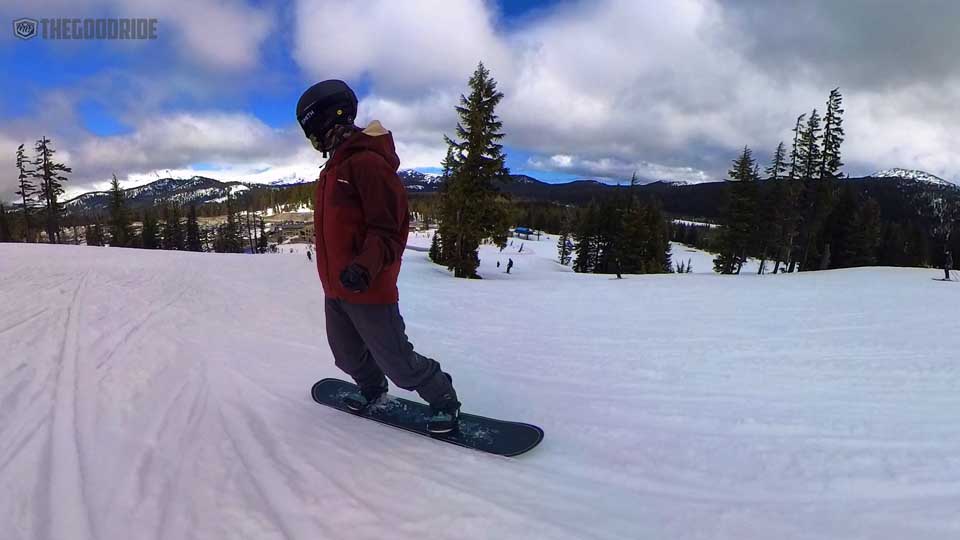
Switch felt surprisingly comfortable for a directional board.
My weight felt slightly forward from center when riding switch, which makes sense given the directional shape. However, it wasn’t so directional that switch landings immediately forced the board around.
The strong pop and stiffer tail also make the Counterbalance entertaining around natural features.
I wouldn’t consider this a dedicated freestyle board. However, riders who like mixing all-mountain freeriding with some freestyle should have plenty to work with.
Uneven Snow
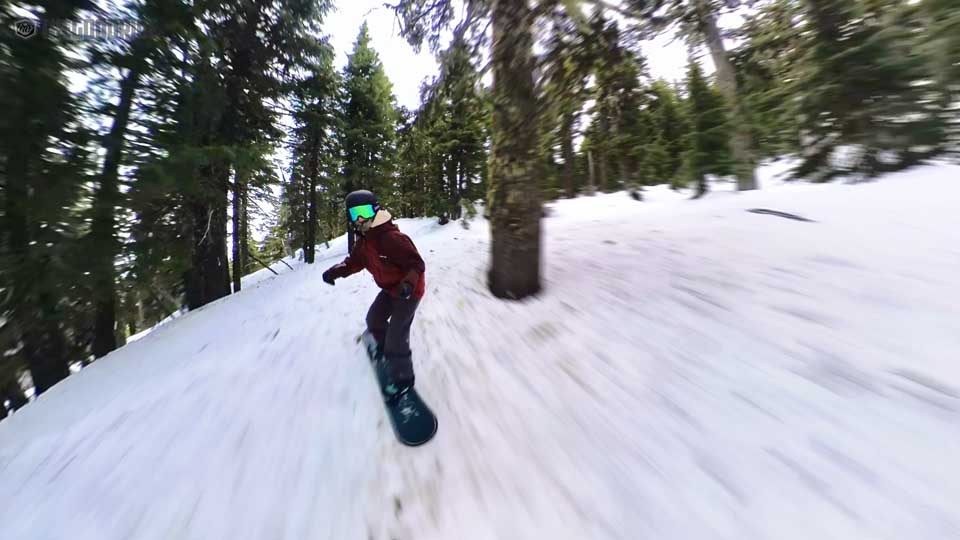
The Counterbalance felt okay in everything from hard uneven to softer uneven snow.
It had a grounded feeling similar to the Cartographer. That immediately made me comfortable on the board.
However, when I became tired or lazy, it could occasionally bounce back and feel jarring. I noticed this most when transitioning between softer and harder sections of snow.
I experienced something similar on the Cartographer.
The damp feeling almost encouraged me to relax too much. When I stopped actively absorbing the terrain, the board occasionally reminded me that I still needed to participate.
The Storyboard was different. That board required me to remain very present throughout the ride, so I didn’t experience the same sensation. However, the Storyboard also left me considerably more exhausted.
Turning/Carving
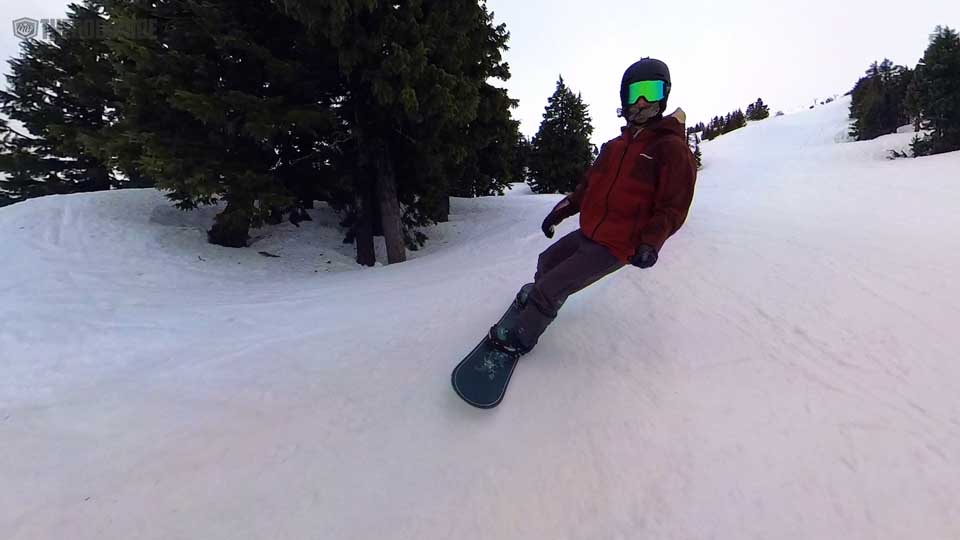
I’m happy to report that the quick, snappy turn initiation I enjoyed on the Storyboard wasn’t lost.
The Counterbalance was extremely fun at higher speeds and responded without requiring a huge amount of effort.
That was one of my primary issues with the Storyboard. It demanded either significant effort or late-season legs to keep it tamed.
The Counterbalance was noticeably easier to control and turn. That’s especially notable because I rode the larger 150 Counterbalance versus the 147 Storyboard.
My biggest limitation was edge engagement. Some turns became chattery instead of locking into a continuous, smooth arc.
That isn’t completely unusual for Burton boards, but it felt unusual here because everything else seemed to click.
Comparing the waist widths of the Storyboard and Counterbalance offered a possible explanation. The wider 150 Counterbalance may have prevented me from consistently getting completely onto the edge.
A smaller size likely would have mitigated some of this variability.
Base Glide
Base glide has sometimes been a point of contention for me with Burton.
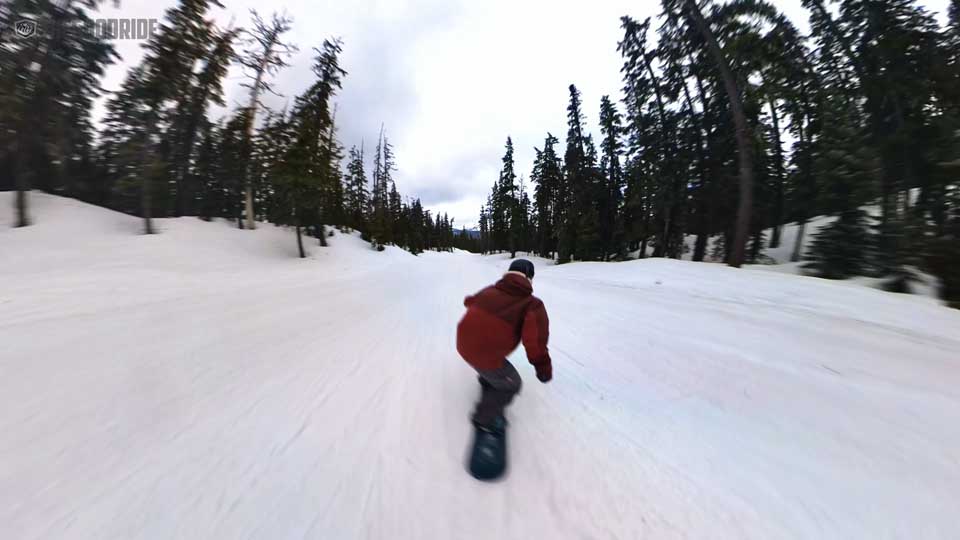
I’m happy to report that the Counterbalance felt okay. It was better than several Burton boards I’ve ridden in the past.
I rode this board directly from the factory without waxing it first. I specifically wanted to see how the factory base performed.
It didn’t feel noticeably slow or chalky like some other boards I’ve tested. That’s a definite improvement.
However, it still benefits from frequent, temperature-specific waxing. That’s especially true with a sintered base.
Powder
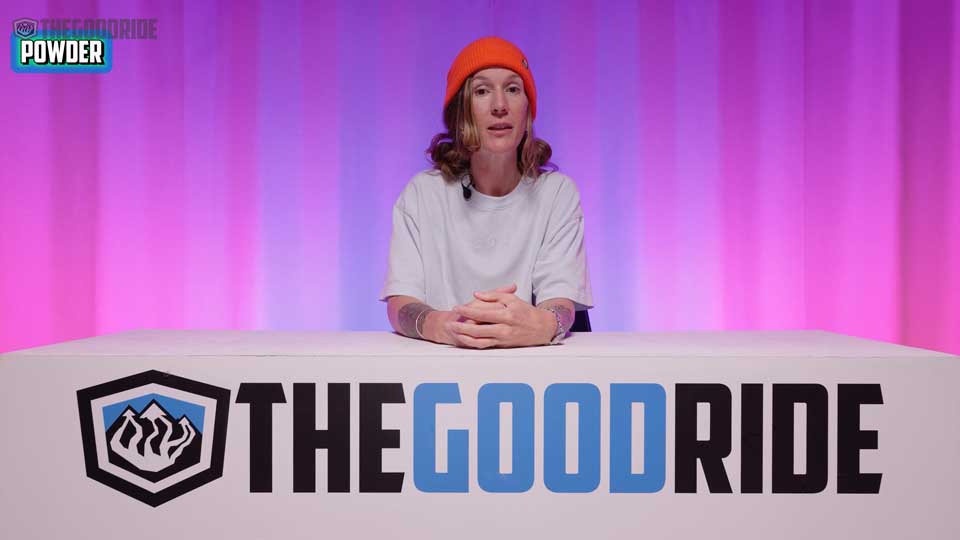
I wasn’t able to ride the Counterbalance in true powder conditions.
However, the taper and ability to significantly set back the board should help in softer snow. The setback does require a fairly wide stance, which may limit that option for some riders.
Based on its design, I think it could handle smaller powder days reasonably well.
This is more of an all-mountain quiver killer. Boards like this tend to be good at most things rather than exceptional at one specific thing.
I wouldn’t choose it as my dedicated deep-powder board. Instead, this is the board I’d grab when I wasn’t sure what conditions the mountain would deliver.
Final Thoughts
I was pretty sad when Burton discontinued the Storyboard. It was one of my favorite Burton boards, and I wasn’t immediately convinced that replacing it with a unisex model was the right direction.
I’ve watched the snowboard industry increasingly move toward unisex boards. I haven’t been completely convinced that shift always benefits women’s riding, even if it makes sense for the industry.
I’m happy to report that the Counterbalance doesn’t do us, ladies, a disservice.
No, it isn’t a women’s-specific snowboard. However, it is a more approachable option for a wider range of riders.
Its size range can accommodate women with significantly different weights, heights, and foot sizes. More importantly, much of what made the Storyboard enjoyable is still here.
The stability, speed, and quick turning experience remain.
It isn’t the same hard-charging women’s board that challenges you to stay on your game. Instead, the Counterbalance is a versatile one-board quiver that a much wider group of riders can enjoy.
The Storyboard may be gone, but the characteristics that made it special haven’t disappeared with it.
Burton Counterbalance Specs
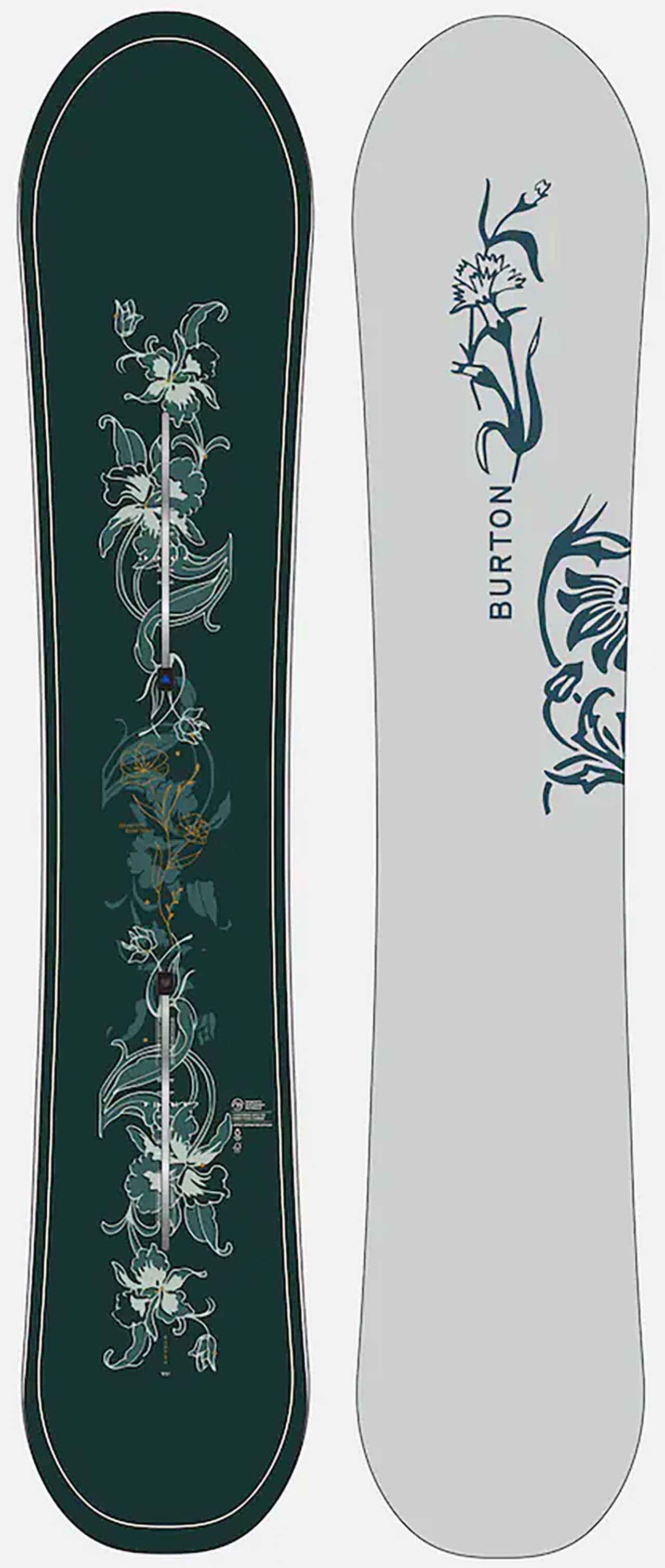
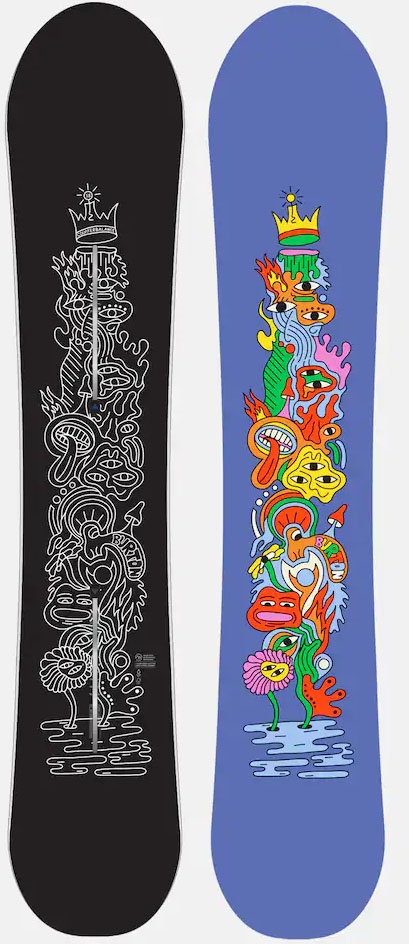
Burton Counterbalance Images
We try to get as many images of the Burton Counterbalance, but forgive us if they're not all there.
2026
Burton Counterbalance User Reviews
Where To Buy
No obligation, but these links support the site.
Evo
Evo
Blauer Boardshop
evo
The House
Burton Counterbalance Camber All Mountain Snowboard - Hallucinate, 150 | The House
Burton Counterbalance Camber All Mountain Snowboard - Hallucinate, 154 | The House
Tactics
The House
Tactics
SnowCountry
PRFO Sports Canada
Evo
Evo
Blauer Boardshop
evo
The House
Burton Counterbalance Camber All Mountain Snowboard - Hallucinate, 150 | The House
Burton Counterbalance Camber All Mountain Snowboard - Hallucinate, 154 | The House
Tactics
SnowCountry
PRFO Sports Canada
Where To Buy
No obligation, but these links support the site.
Evo
Evo
Blauer Boardshop
evo
The House
Burton Counterbalance Camber All Mountain Snowboard - Hallucinate, 150 | The House
Burton Counterbalance Camber All Mountain Snowboard - Hallucinate, 154 | The House