Positives
- Super fun to butter and flex
- Maintains control even at speeds
- Light underfoot
Negatives
- Soft Edge Hold
- Limited Dampness
- Can be overpowered
Summary
Short Summary
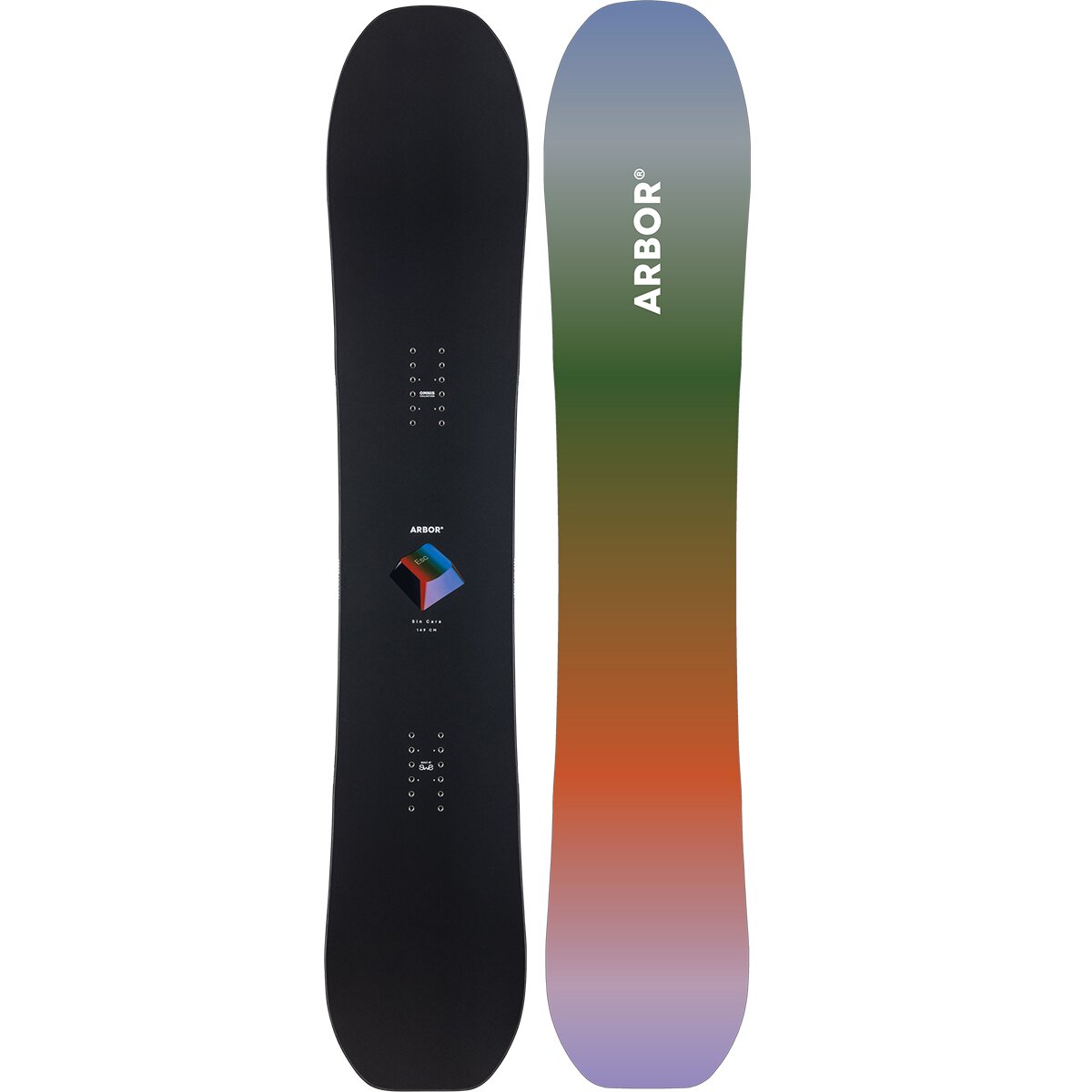
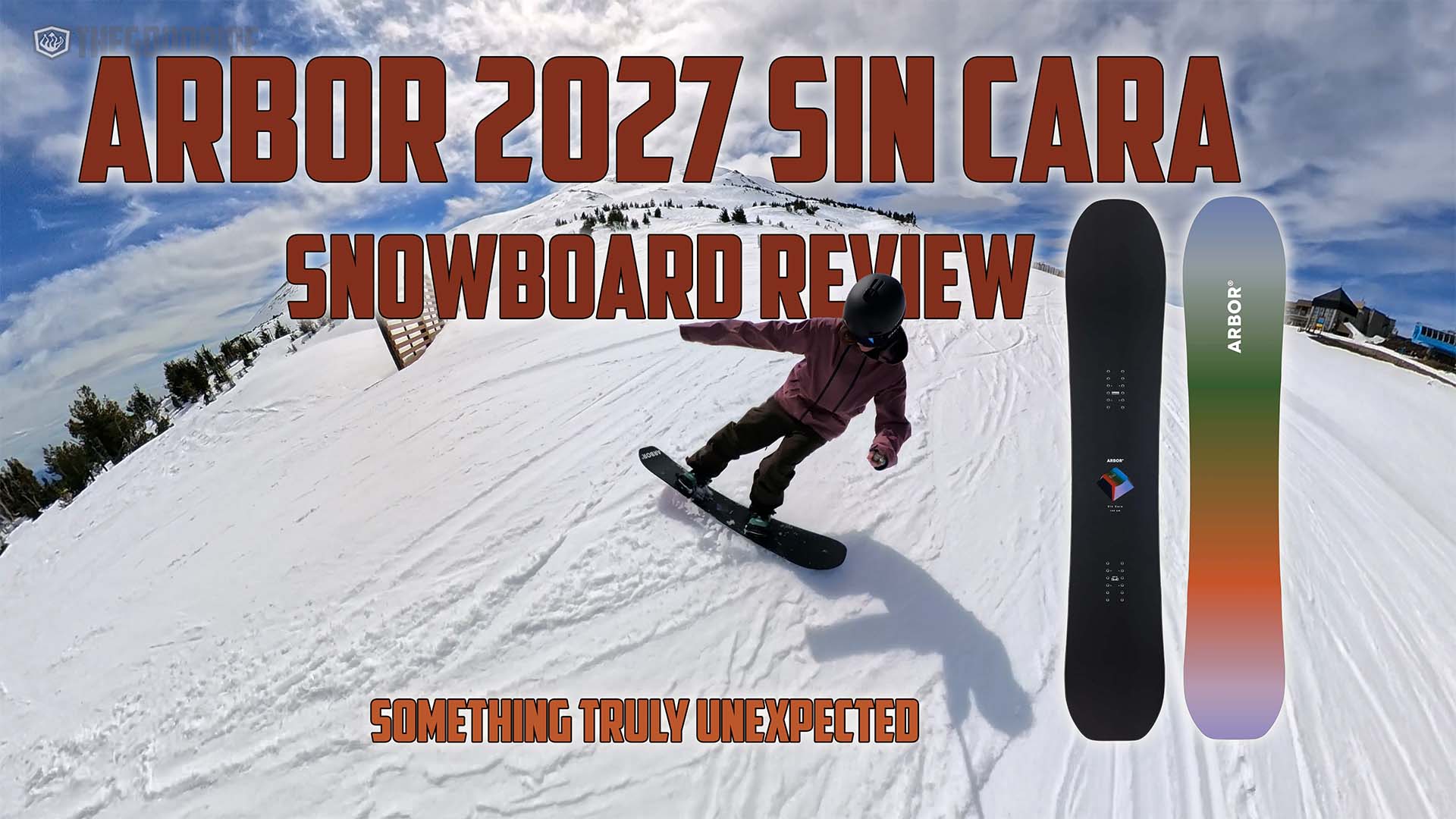
The Arbor Sin Cara is a lightweight-feeling, lively directional snowboard that challenged my expectations of Arbor's construction and ride personality. Despite its directional freeride geometry and nearly full-length camber profile, the Sin Cara was exceptionally easy to manipulate. It offered effortless buttering, smooth edge-to-edge transitions, and accessible pop without feeling dead or insubstantial. What surprised me most was how much performance remained when I started pushing the board harder. The edge hold felt relatively soft, but the Sin Cara maintained a smooth, controlled turning experience and more stability at speed than I expected. I found similarities to the Nitro Ultra in its lightweight, effortless feel and to the Nitro Nova in its lively, approachable personality, although the Sin Cara has a more directional geometry.Where To Buy
No obligation, but these links support the site.
Backcountry

evo

No Results Found
No Results Found
| Riding Style | All Mountain |
| Riding Level | Intermediate - Expert |
| Fits Boot size (US) | Women's, < 8, 8-10 |
| Manufactured in | Dubai-SWS |
| Shape | Tapered Directional |
| Camber Profile | Mostly Camber |
| Stance | Centered |
| Approx. Weight | Feels Light |
| Split | No |


|
|
|
|
|
|
|
|
|
|
|
|
|
|
|
|
|
|
|
|
|
|
|
|
|
| On Snow Feel |

|
| Turn Initiation |

|
| Skidded Turns |

|
| Flex |
|
| Buttering |

|
| Edge Hold |
|
Where To Buy
No obligation, but these links support the site.
Backcountry
evo
No Results Found
No Results Found
Arbor Sin Cara Snowboard Review by Jordan Review by The Good Ride
How It Was Tested:
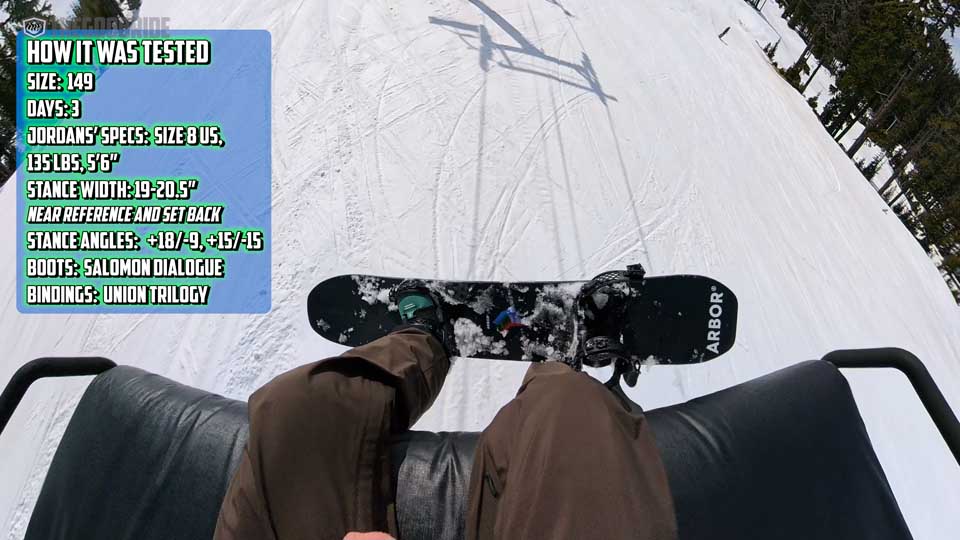
I borrowed the Arbor Sin Cara for an extended demo and sent it back.
Size: 149
Days: 2+
Conditions: Late-season Pacific Northwest conditions, including slush, refrozen slush, ice, and uneven tracked-out snow.
Riders: Jordan (Size 8 Ws, 5’6″, 135–140 lbs).
Boots: Salomon Dialogue
Bindings: Union Trilogy, Medium
Helmet: MOD1
Goggle: LineMiner Pro
Jordan’s Set Up: 19″ Wide. Stance Angles +18/-9. Directional stance.
Ethics Statement
I was not paid to write this review, and it reflects an honest, objective perspective with no brand oversight. If this review helped, we’d appreciate it if you support objective content by:
- Buying Through Our Sponsor, Blauer Board Shop
- Buying through our other Where To Buy Links. We get paid a small commission if you do. Please make sure we are the last click and don’t use a coupon or discount provider. They take our commission if you do.
- Becoming a Patron for early access to reviews well before publication: https://www.patreon.com/thegoodride
- Donating through Venmo: https://venmo.com/TheGoodRide (@TheGoodRide) or PayPal: https://paypal.me/thegoodride
- Following us on Instagram: https://www.instagram.com/thegoodride
- Liking and subscribing on YouTube: https://www.youtube.com/@thegoodridesnow
Sizing
I rode the Arbor Sin Cara in a 149. It is also available in a 146 and 152.
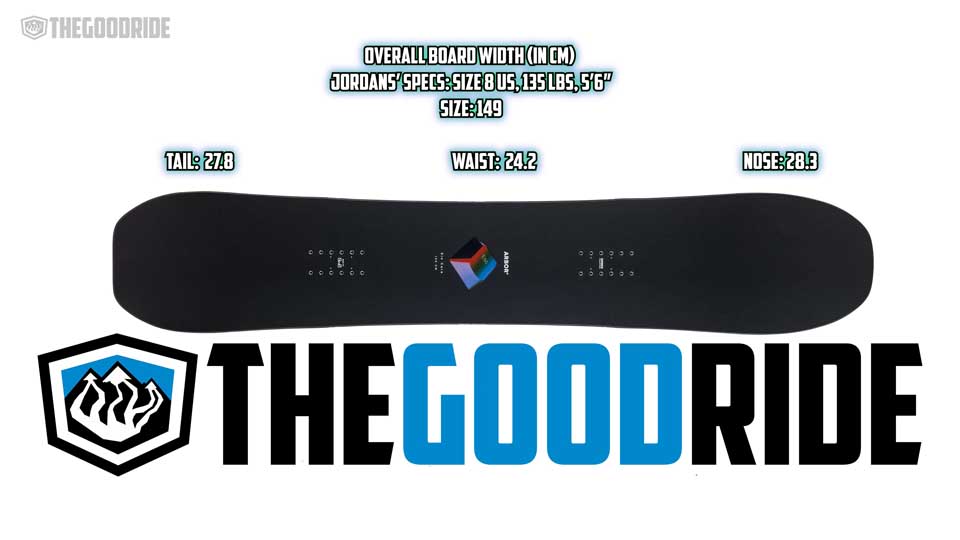
The 149 has a 24.2 cm waist width, which felt appropriate for my women’s size 8 boot, although it was getting close to the upper end of what I would recommend for that width.
If you’re above a women’s size 8, I would take a closer look at the 152, depending on your weight and riding preferences.
The 149 felt like the right size for me, and I didn’t find the board excessively wide or hard to handle.
Durability
The Arbor Sin Cara uses a resin topsheet, 360-degree wrapped steel edges, and a sintered base.
I didn’t have the board long enough to establish a true durability standard, but its construction and condition after testing were encouraging.
There was no noticeable superficial scuffing or delamination, and the edges held up well during the limited time I had the board.
Overall, the Sin Cara showed no significant signs of wear during my testing.
Shape & Setback
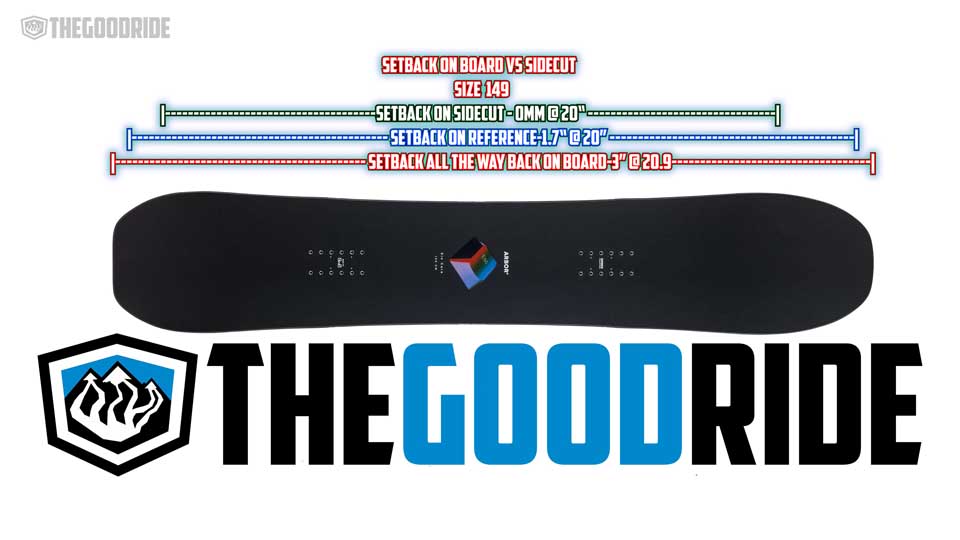
The Sin Cara features a directional freeride shape with a modest 5 mm of taper and a 15 mm setback stance.
Interestingly, the sidecut itself is centered on the board.
Despite its directional geometry, the Sin Cara felt surprisingly centered underfoot. I didn’t experience the strongly directional sensation that I sometimes get from boards with more aggressive taper or setback.
This gave the Sin Cara a more versatile personality than its freeride designation might initially suggest.
Camber/On-Snow Feel
The Sin Cara features an almost full tip-to-tail camber profile, but Arbor uses what it calls Parabolic Camber.
Instead of a single consistent radius, Arbor blends five different radii throughout the camber profile. This reduces some of the catchiness associated with traditional camber and helps ease the board through edge-to-edge transitions.
This is where the Sin Cara really challenged my expectations.
Previous Arbor boards I’ve ridden have often felt structurally muted. Dead, if you will. I expected something similar from the Sin Cara, but that wasn’t what I experienced.
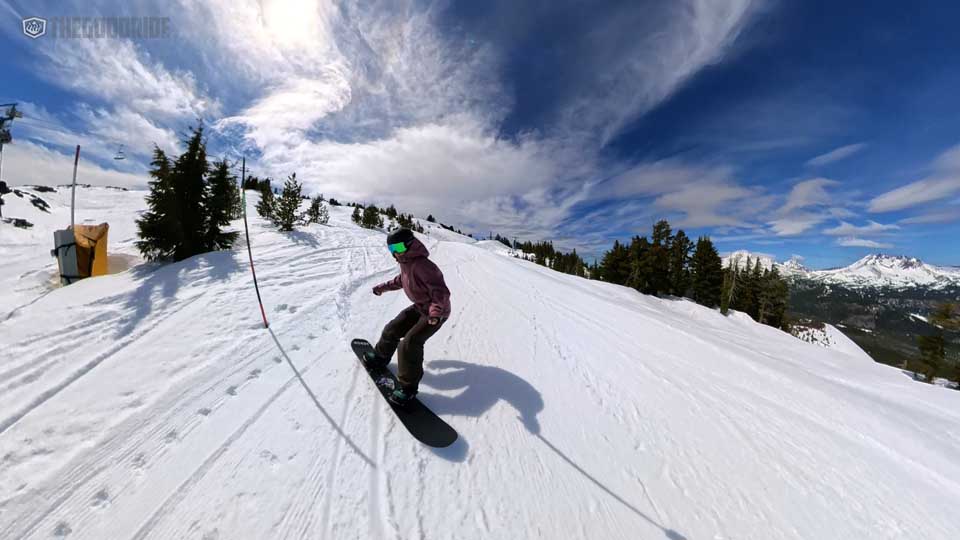
The Sin Cara felt incredibly lively.
It was light underneath my feet and required very little effort to manipulate, but it didn’t feel dead or insubstantial. There was genuine energy in the board.
Despite its camber-dominant profile, the Sin Cara felt surprisingly forgiving and easy to manage.
Recommended Rider Level: Intermediate to Advanced.
The easy flex and smooth transitions make it approachable for intermediate riders, while its camber profile and directional geometry offer enough performance to keep more advanced riders engaged.
Edge Hold
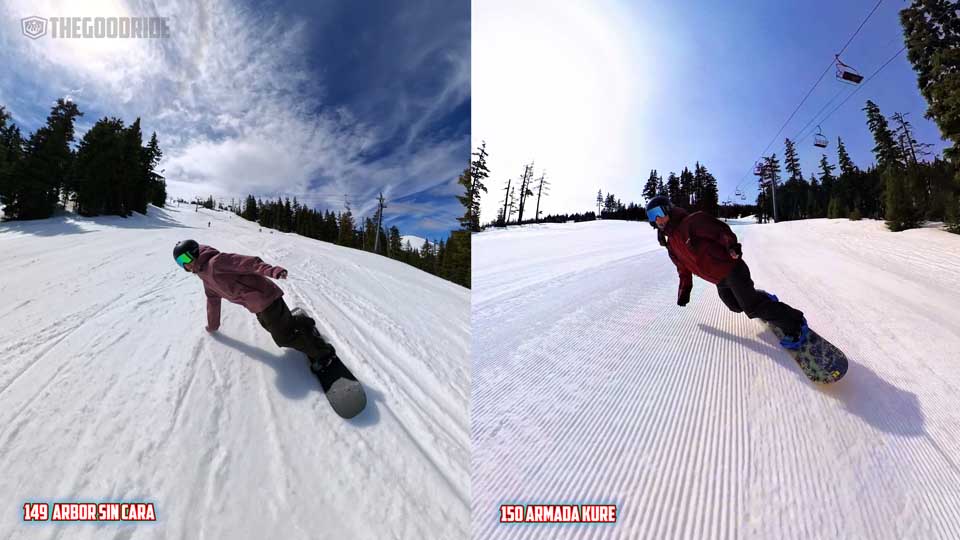
Edge hold was probably the weakest part of the Sin Cara for me.
Arbor uses edge disruption directly underneath the feet to increase contact with the snow, but even with this additional contact, the grip felt relatively soft.
It reminded me somewhat of the Armada Kure, although possibly even softer.
I never experienced that hard, locked-in connection to the snow that I get from boards with more aggressive edge disruption.
However, there’s an important distinction here.
The edge hold felt soft, but the board itself didn’t feel unstable.
I could still carve the Sin Cara and put pressure into my turns without the edge falling out. It simply didn’t provide that strong mechanical connection to the snow that I experience with more aggressive edge technologies.
For riders who prioritize a locked-in grip on firm or icy snow, this may be a limitation.
For riders who prefer smoother, less aggressive edge engagement, the Sin Cara’s softer grip may be part of its appeal.
Flex Personality
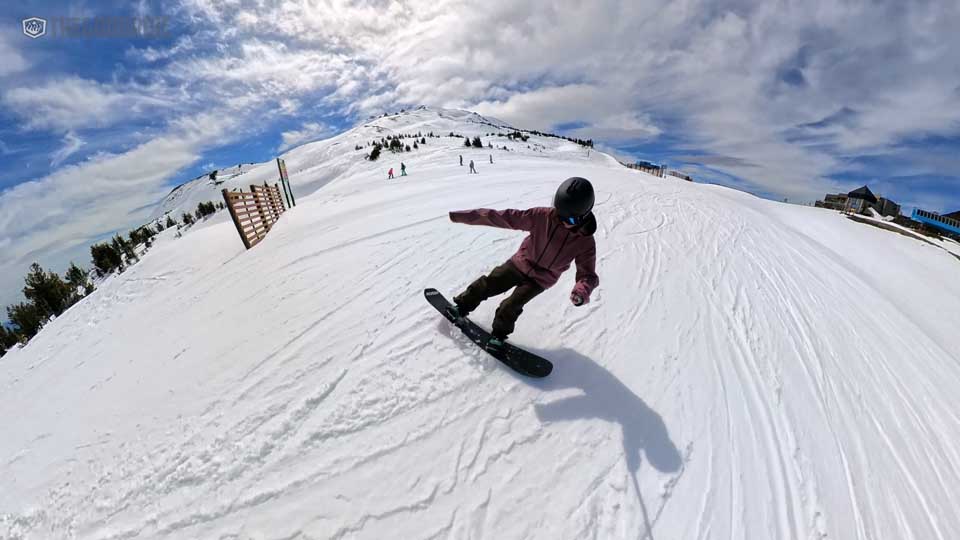
This was probably the most surprising characteristic of the Sin Cara.
Arbor rates the flex around a 5–6 out of 10 and describes it as approachable.
Approachable almost undersells it.
This might be the easiest snowboard I’ve ever ridden for buttering and flat-base tricks.
I could manipulate the board with almost no effort. Butters were easy, ollies were easy, and moving my weight around the board felt incredibly natural.
But it wasn’t just soft.
When I loaded the Sin Cara, there was still rebound waiting on the other side.
That’s important because a snowboard can be easy to flex simply because there isn’t much structural support there.
That’s not what the Sin Cara felt like.
It was exceptionally easy to manipulate, but there was still life and substance underneath my feet.
The combination of effortless flex and responsive rebound gave the Sin Cara a playful personality without making it feel completely unsupported.
Uneven Snow
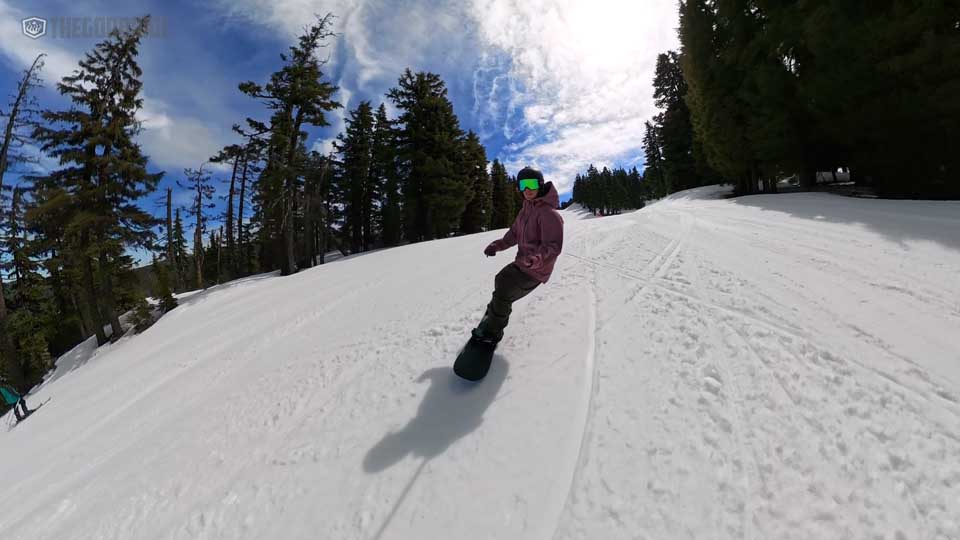
I rode the Sin Cara through both hard and soft uneven snow and noticed some variation in how it handled these conditions.
There was a degree of dampness in the construction that helped reduce chatter between my feet without completely muting the board’s energy.
However, the Sin Cara wasn’t a board that charged through uneven conditions.
Instead, its strength was agility.
I could easily move around obstacles and adjust my line without much effort. The lightweight feel and easy flex made it simple to react to changing terrain.
But when I did hit an obstacle, I felt it.
The Sin Cara didn’t have the damp, powerful feeling of a stiffer snowboard designed to plow through rough conditions.
It was more comfortable navigating around difficult snow than aggressively charging through it.
Park & Switch
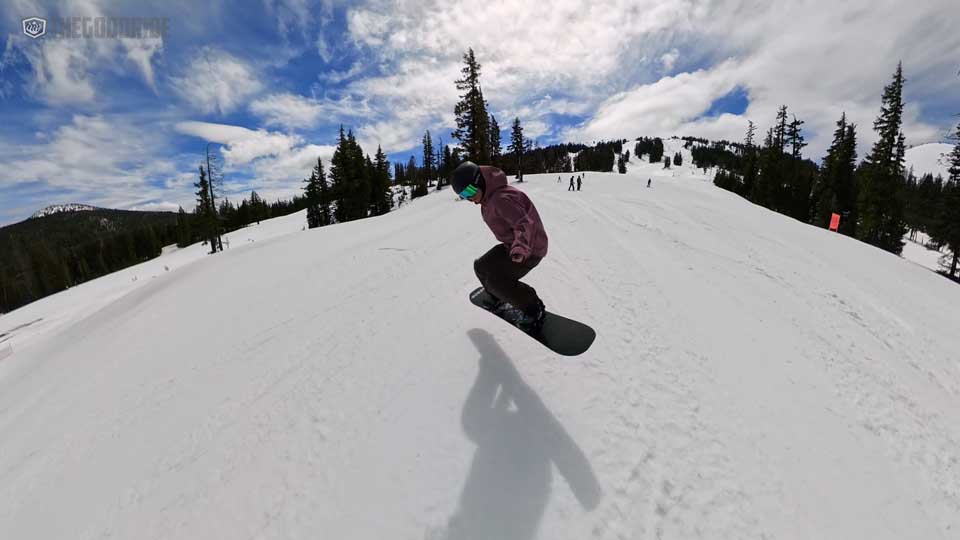
I loved the pop on the Sin Cara.
The lightweight feel and easy flex made getting the board off the ground incredibly easy. I didn’t have to fight the board to load it, and there was enough rebound to give me something back.
The same qualities that made buttering so effortless translated really well into jumping.
However, the Sin Cara didn’t compound energy the way I’ve experienced with some stiffer, more aggressive boards.
Boards like the Nitro Alternator and YES Hel Yes offer a more aggressive response when loaded.
The Sin Cara was different.
It was easy to jump, light to lift, and predictable in its response. I could get what I wanted out of the board without having to put a tremendous amount of energy into it.
For riders who value accessible pop over maximum explosive response, this is a really enjoyable characteristic.
Turning/Carving
Turning was another surprise.
The Sin Cara uses a variable sidecut that reminds me of Nitro’s progressive sidecut designs.
The tip and tail feature an approximately 8.1 m radius, while the center tightens to around 7.2 m.
This isn’t an extreme variation, particularly compared to the more aggressive sidecut geometry found on boards like the Nitro Jewel, but I really enjoyed how it translated to the snow.
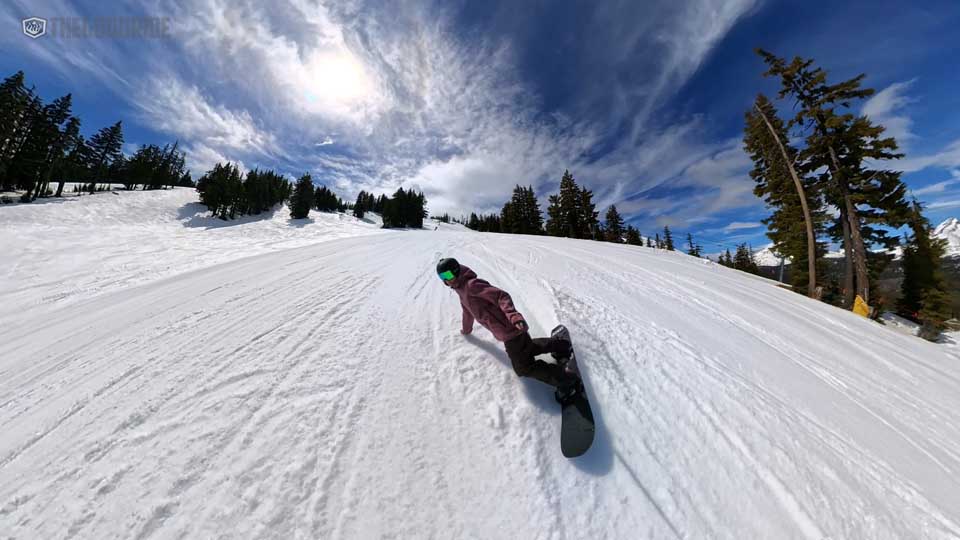
Edge-to-edge transitions were smooth and effortless, while the tighter radius through the center helped tighten the arc of the turn.
The Sin Cara felt quick and agile.
But what surprised me most was what happened when I started pushing harder.
The board was soft, felt light underneath my feet, and didn’t have especially aggressive edge hold.
Everything suggested that I should eventually find a pretty obvious performance ceiling.
But I didn’t find it where I expected to.
I could put pressure into the Sin Cara, carve it, and maintain a smooth, controlled turning experience at higher speeds.
It was incredibly easy when I wanted it to be easy, but it didn’t immediately become overwhelmed when I stopped being nice to it.
That combination of effortless maneuverability and unexpected carving capability was one of my favorite things about the board.
Speed
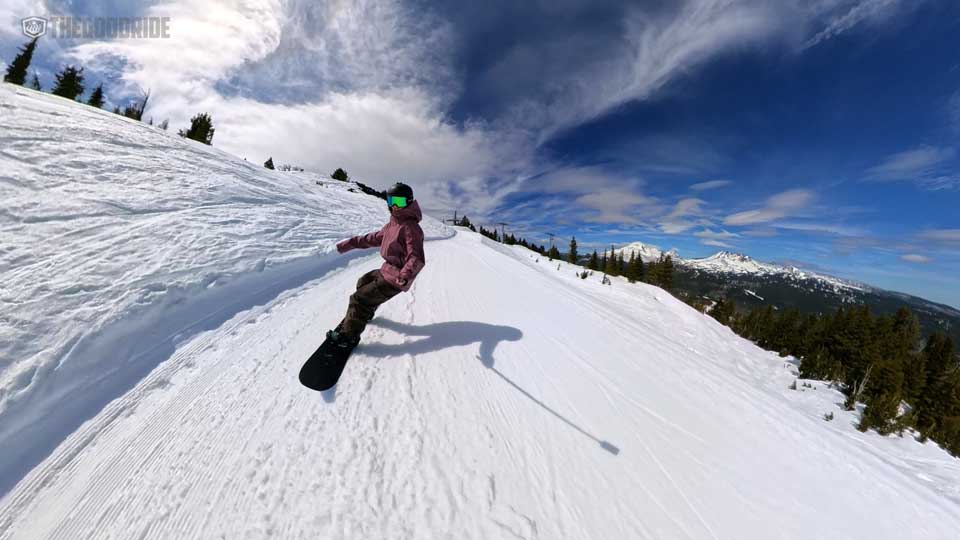
Considering how light and easy the Sin Cara felt everywhere else, I was surprised by how comfortable I was riding it at speed.
I expected its softer flex and relatively gentle edge engagement to become limiting as I started opening up my turns.
Instead, the board maintained enough structure underneath my feet to remain controlled.
I didn’t suddenly lose confidence in the board when I increased my speed.
This doesn’t mean the Sin Cara has the same high-speed composure as a substantially stiffer freeride board, but it performed better than its approachable flex personality initially suggested.
Base Glide
The Sin Cara features a sintered base.
We received the board as-is, and that’s how I rode it.
The base glide performed well during my testing, and I didn’t feel an immediate need to wax it or take it into the shop.
As with any sintered base, regular maintenance and waxing will help maintain its performance over time.
Powder
Unfortunately, my powder testing opportunities during the 2025–2026 season were limited, and I wasn’t able to ride the Sin Cara in meaningful powder conditions.
Because of that, I don’t want to make claims about its actual powder performance.
Mechanically, the Sin Cara has several characteristics that should help with flotation.
Its directional shape, 5 mm of taper, 15 mm setback, and additional nose length should help the board stay above deeper snow.
However, those are predictions based on the board’s geometry, not performance characteristics I was able to verify on snow.
I’ll reserve a definitive powder assessment until I have an opportunity to ride it in those conditions.
Final Thoughts
The Arbor Sin Cara made me reconsider what I expect from an Arbor snowboard.
I went into this review expecting something muted.
Instead, I got one of the livelier boards I’ve ridden this season.
Possibly the easiest snowboard I’ve ever ridden for buttering and flat-base tricks.
But making a snowboard easy to manipulate isn’t necessarily difficult if you’re willing to give up support.
That’s what surprised me about the Sin Cara.
It didn’t give up nearly as much as I expected.
I could play around on it at slower speeds, then start pushing into harder turns without immediately finding the board’s limitations.
The edge hold is still relatively soft, and there are a few areas, particularly powder performance, where I need additional testing before drawing a final conclusion.
But the personality of the Sin Cara is already pretty clear.
The Sin Cara isn’t lively for an Arbor. It’s just lively.
And I didn’t expect that.
Arbor Sin Cara Specs
Arbor Sin Cara Images
We try to get as many images of the Arbor Sin Cara, but forgive us if they're not all there.
Arbor Sin Cara User Reviews
Where To Buy
No obligation, but these links support the site.
Backcountry
evo
Backcountry
evo
No Results Found
No Results Found
Backcountry
evo
No Results Found
No Results Found
Where To Buy
No obligation, but these links support the site.
Backcountry
evo
No Results Found
No Results Found