Positives
- Quick and Agile Turning
- Playful Flex
- Approachable for all skill levels
Negatives
- Edge Hold is limited
- Rides more centered and freestyle
- Not much of a Carver
Summary
The 2027 CAPiTA Equalizer was much more approachable than I expected from a pro model board. It is quick, playful, and easy to maneuver at moderate speeds. The Resort V2 Directional Camber concentrates much of the board’s control between the feet. Reverse camber transitions into flat sections through the tip and tail. This creates a short, centered riding sensation that almost feels like skateboarding on snow. That design makes the Equalizer quick to turn and relatively forgiving for a camber board. However, it also limits its carving, high-speed stability, and performance in rough terrain. Despite its freeride classification, the Equalizer felt much more like a freestyle board to me. It works best for a centered rider who prioritizes agility, playful turns, natural hits, and park riding over aggressive carving.Where To Buy
No obligation, but these links support the site.
Evo
evo

No Results Found
No Results Found
| Riding Style | All Mountain Freestyle |
| Riding Level | Intermediate - Expert |
| Fits Boot size (US) | Women's, < 8, 8-10 |
| Manufactured in | Mothership |
| Shape | Directional Twin |
| Camber Profile | Hybrid Camber |
| Stance | Centered |
| Approx. Weight | Feels Normal |
| Split | No |


|
|
|
|
|
|
|
|
|
|
|
|
|
|
|
|
|
|
|
|
|
|
|
|
|
| On Snow Feel |

|
| Turn Initiation |

|
| Skidded Turns |

|
| Flex |

|
| Buttering |
|
| Edge Hold |
|
Where To Buy
No obligation, but these links support the site.
evo
Blauer Boardshop
No Results Found
No Results Found
2027 Capita Equalizer Snowboard Review by Jordan Review by The Good Ride
How It Was Tested:
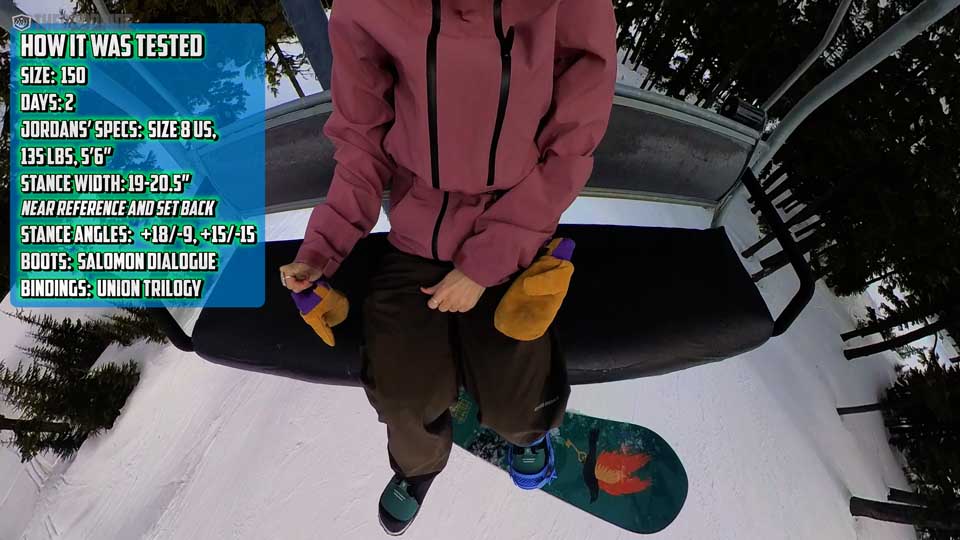
I borrowed the CAPiTA Equalizer for an extended demo and sent it back.
Size: 150
Days: 2
Conditions: Late-season conditions ranging from soft slush to set-up slush and bumped-out uneven terrain.
Riders: Jordan (Size 8 Ws, 5’6”, 135-140lbs).
Boots: Salomon Dialogue
Bindings: Union Trilogy
Helmet: MOD1
Goggles: LineMiner Pro
Jordan’s Set Up: 20” Wide. Stance Angles: +18/-9. Reference stance.
Ethics Statement
I was not paid to write this review, and it reflects an honest, objective perspective with no brand oversight. If this review helped, we’d appreciate it if you support objective content by:
- Buying Through Our Sponsor, Blauer Board Shop
- Buying through our other Where To Buy Links, we get paid a small commission if you do. Please make sure we are the last click and don’t use a coupon or discount provider. They take our commission if you do.
- Become a Patron for early access to reviews well before publication.
- Donate through Venmo or PayPal.
- Follow The Good Ride on Instagram.
- Like and subscribe to The Good Ride on YouTube.
The following boards are similar but not the same:
Yes Basic, Jones Rally Cat, Never Summer Breezy Rider
Sizing
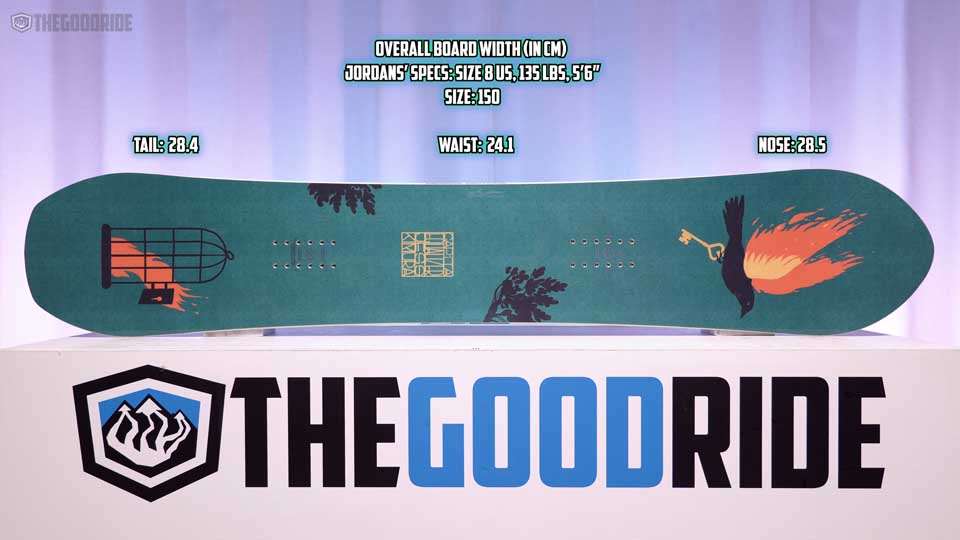
The Equalizer is available from a 142 up to a 154. I tested the 150, which sits comfortably within my normal size range.
I generally prefer boards between 148 and 152. I can sometimes go up to a 154 if the board has a softer flex.
The 150 felt like the right size for me.
It has a 24.1cm waist width, which worked well with my size 8 women’s boots. Riders with size 9 or larger boots may want to consider sizing up for additional width.
Durability/Base Glide
The Equalizer appeared to have good overall construction. This demo board had already traveled to multiple shows late in the season.
Despite that use, the topsheet remained in good condition. I noticed minor wear around the binding area, but it appeared superficial.
Nothing about the wear suggested unusual durability issues during my testing.
The Equalizer uses CAPiTA’s Quantum Drive base.
CAPiTA describes this as a sintruded base, combining characteristics of sintered and extruded construction.
I initially rode the board with its factory wax. I later added temperature-specific wax to compare the performance.
I did not notice a significant difference between the two.
This was not one of the fastest bases I have experienced. However, the glide was satisfactory considering the changing late-season snow.
Shape & Setback
The Equalizer uses a directional twin shape with very little taper. It has only 0.1mm of taper, so the directional characteristics felt subtle.
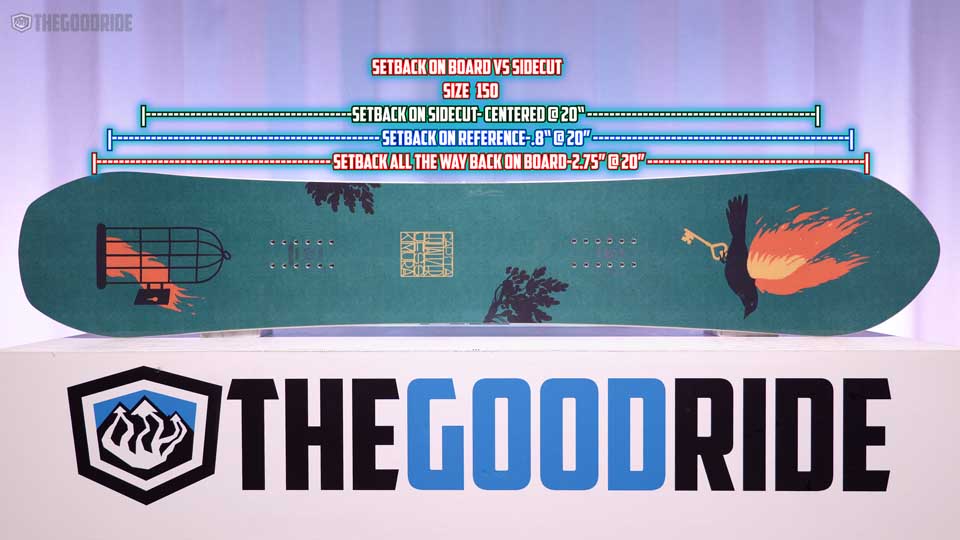
The board is centered on the sidecut but directional through the insert placement.
At reference, the stance is set back 0.8 inches with a 20-inch stance width.
Moving the bindings completely back maintains that 20-inch width while adding substantially more nose. That gives the Equalizer some additional versatility when riding powder.
However, the centered sidecut and minimal taper still limit how directional the overall shape feels.
Camber / On-Snow Feel
The Equalizer uses CAPiTA’s Resort V2 Directional Camber profile.
There is low traditional camber through the center of the board and slightly beyond the inserts. This transitions into reverse camber and then flat sections through the tip and tail.
Mechanically, this concentrates pressure and control near the center of the board. As the board is compressed, the tip and tail become less involved with the snow.
That sensation was immediately noticeable.
When unloading lifts or riding through cat tracks, the Equalizer could almost feel like a rocker board. Loading the center caused the tip and tail to feel noticeably lifted.
The sensation reminded me somewhat of riding a Bataleon. There were no obvious contact points pulling me toward the tip or tail.
Most of the board’s feedback seemed concentrated directly underneath and between my feet.
Given that this is a pro model, I expected a much more aggressive ride. Instead, the Equalizer was surprisingly approachable.
There is still camber, so newer riders should respect the edge engagement. However, the lifted tip and tail make turning easier and reduce some of the catchy feeling associated with traditional camber.
I could see an advanced beginner enjoying this board as an introduction to camber.
Intermediate riders who prefer quick turns and playful movement should also find it accessible.
Advanced riders will probably get the most from it in a freestyle environment. Its agility makes more sense there than during high-speed carving.
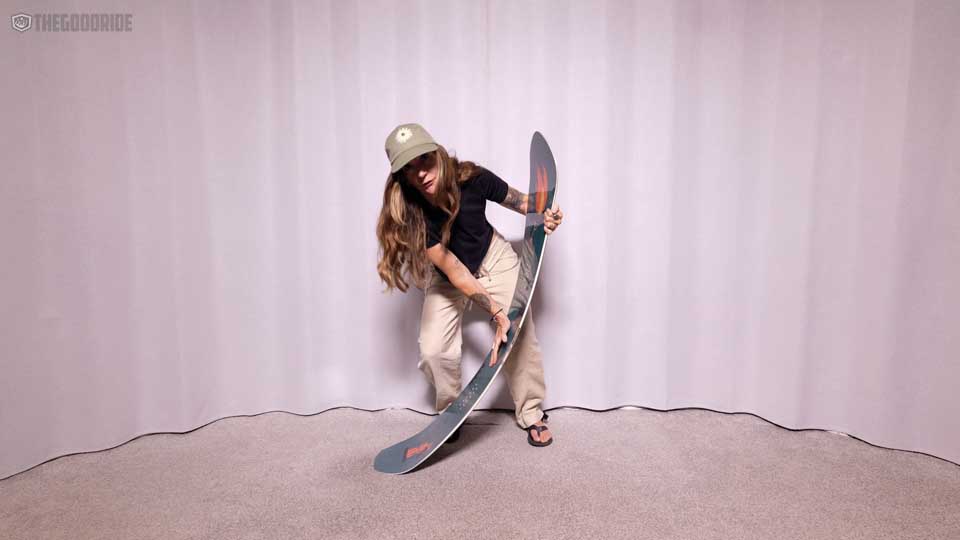
Flex Personality
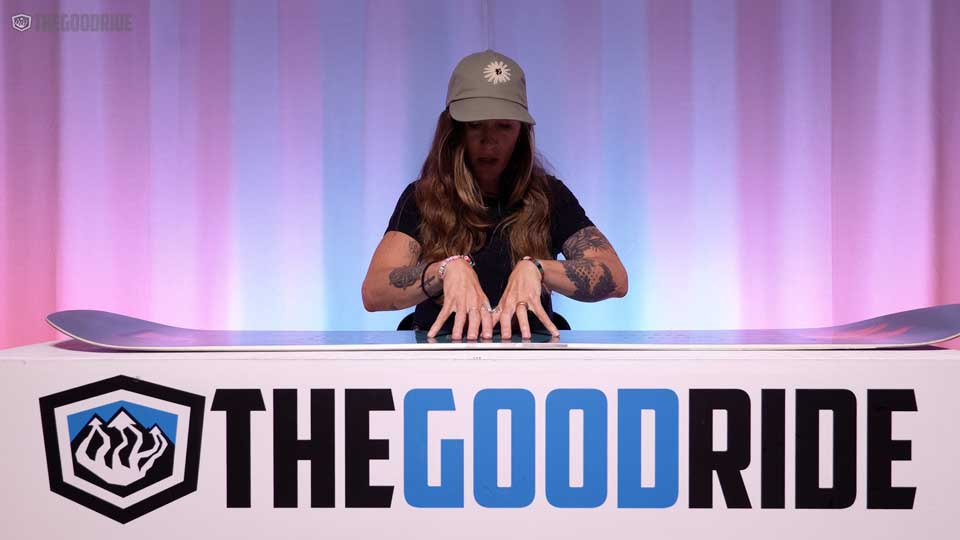
The Equalizer felt mid-stiff through the center when flexing it by hand.
There was noticeable resistance through the cambered section. The tail felt similarly stiff, possibly slightly stiffer than the center.
The nose was noticeably softer.
That softer nose gives way more easily than the tail and contributes to the board’s approachable personality.
The flex becomes more complicated when looking at how the board produces energy.
Compressing the camber between the feet generated some pop. However, transferring that pressure toward the flatter section near the tail caused the energy to disappear quickly.
Instead of continuing to load progressively through the tail, the board seemed to fall away.
That makes the location of rider pressure especially important.
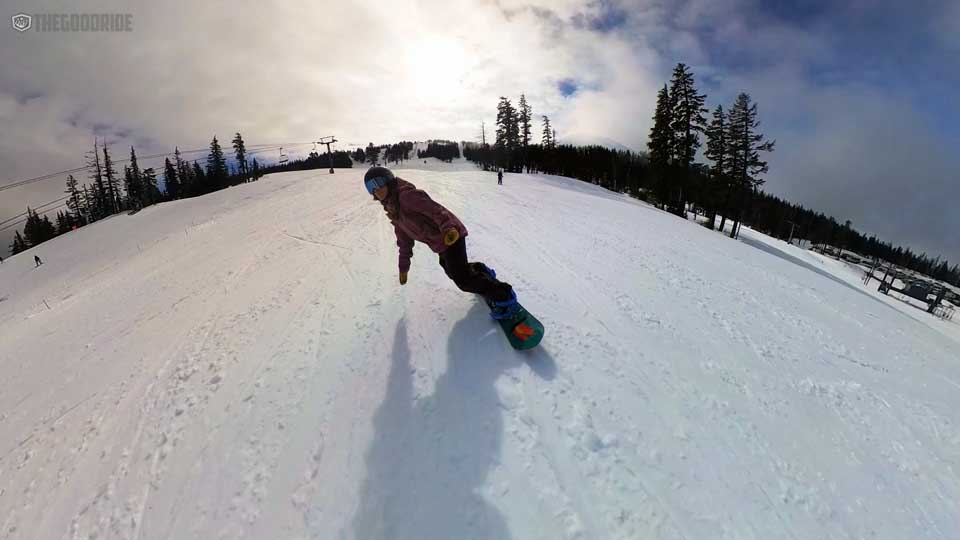
Edge Hold
Edge hold was good in most of the conditions I experienced, despite having no noticeable edge disruption.
However, the usable effective edge felt relatively short.
The locked-in sensation did not feel like it extended through the entire board. Most of the grip seemed concentrated around the cambered section underneath the rider.
Moving my weight forward or backward significantly changed that edge hold.
The Equalizer therefore worked best when I stayed centered and allowed the camber between my feet to maintain pressure against the snow.
This is an important characteristic of the board.
A rider who naturally moves forward and backward through a turn may find the available grip inconsistent. A centered rider should have a much easier time accessing it.
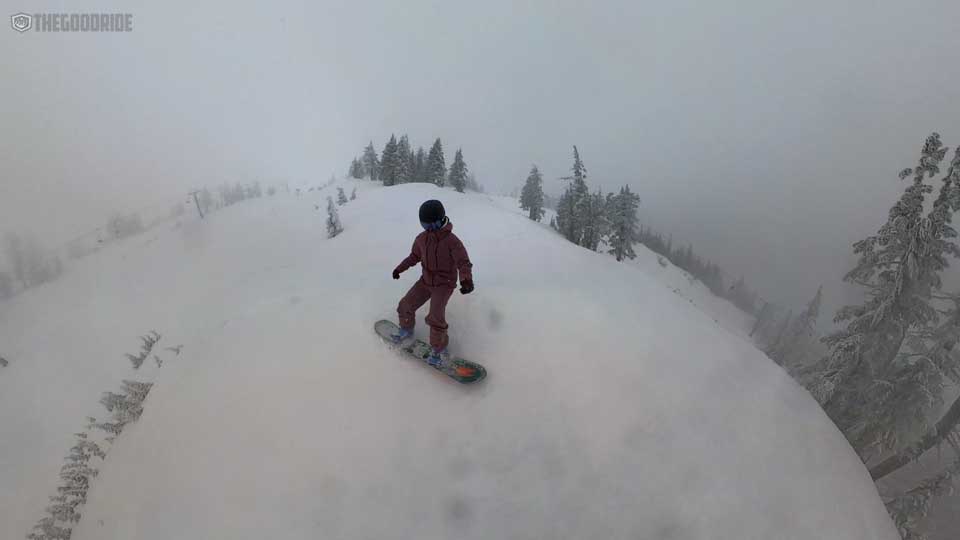
Uneven Snow
Hard, uneven snow was challenging.
The board’s approachable flex gave way when terrain became firmer and more irregular. My body ended up absorbing many of the impacts instead of the board smoothing them out.
The reverse camber through the nose helped lift the board over some obstacles.
However, the tip could also feel floppy.
That reinforced the sensation that most of my usable platform was directly underneath my feet.
Performance improved significantly in softer uneven snow.
When the snow could move underneath the board, the Equalizer’s quick personality became an advantage. I could maneuver around obstacles instead of driving through them.
The softer flex also made it easy to lift the board over terrain I wanted to avoid.
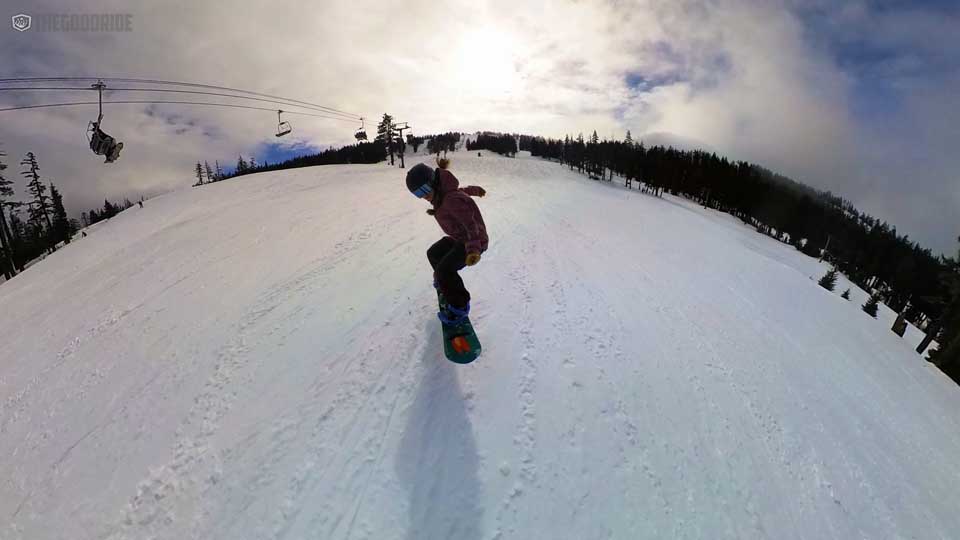
Switch / Park
The Equalizer felt more like a freestyle board than the freeride classification suggests.
It rode very similarly regular and switch. The reverse camber through the tip and tail also made the board easy to butter and move around.
Pop was adequate but required careful pressure management.
The strongest energy came from the camber between my feet. As soon as I transferred pressure behind the rear foot, some of that energy disappeared.
That made traditional tail-driven pop more difficult.
I would get some response from the camber before losing it as my weight traveled toward the tail.
The same characteristic could make the Equalizer an interesting jib board.
There is only a relatively small cambered section to push against. Combined with the lifted tip and tail, that creates a playful and buttery personality.
I think that would translate well to boxes and rails.
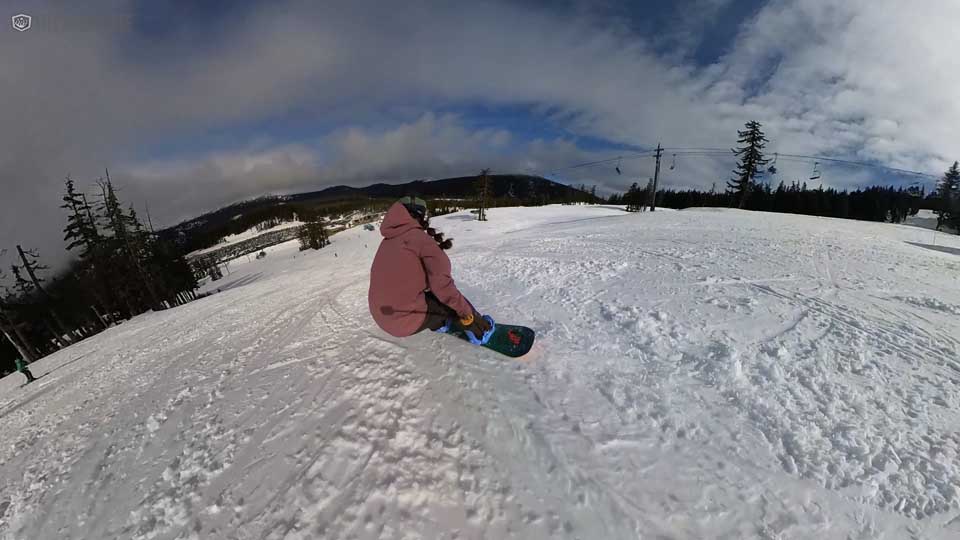
Turning / Carving
The Equalizer uses a 7.6m radial sidecut and has a stated effective edge of 1166mm.
On snow, the usable effective edge felt considerably shorter.
As I flexed through the camber, the tip and tail seemed to lift and disconnect from the snow. This concentrated the turning platform underneath my feet.
The result was an extremely quick turning sensation.
It almost felt like riding a skateboard.
Instead of driving a long edge through the entire turn, I felt like I was pivoting and controlling the board from a much smaller platform.
That makes the Equalizer agile.
It also means the rider needs to remain centered.
There is a relatively small window where the board feels most connected to the snow. Moving outside that window reduces the amount of board available for control.
That became challenging when I tried to carve aggressively.
My normal carving technique involves transitioning pressure from the front toward the back throughout the turn. The Equalizer did not respond particularly well to that movement.
It preferred a centered riding position and quicker, more compact turns.
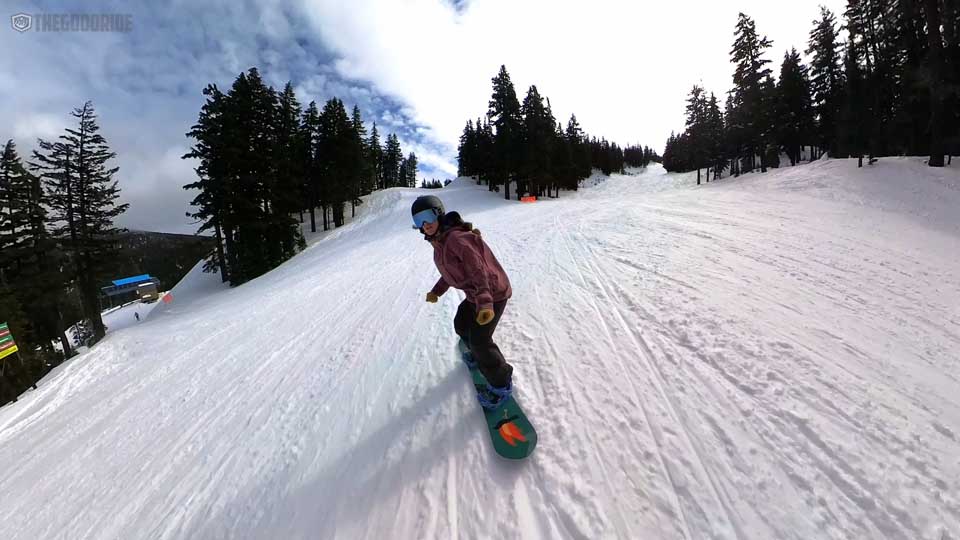
Speed
I like speed, but I am not willing to risk hurting myself just to find a board’s limit.
The Equalizer was capable of going fast.
On several occasions, I straight-lined the board and felt good acceleration. However, those moments were short-lived.
The board’s design made the usable platform feel small at higher speeds.
The lifted nose and tail combined with the centered riding sensation made the board feel somewhat squirrely. In some situations, it could even feel unexpectedly catchy.
That prevented me from becoming comfortable enough to continue pushing the speed.
Moderate speeds on moderately steep terrain suited the Equalizer much better.
At that pace, its quick turning and playful characteristics were much easier to use.
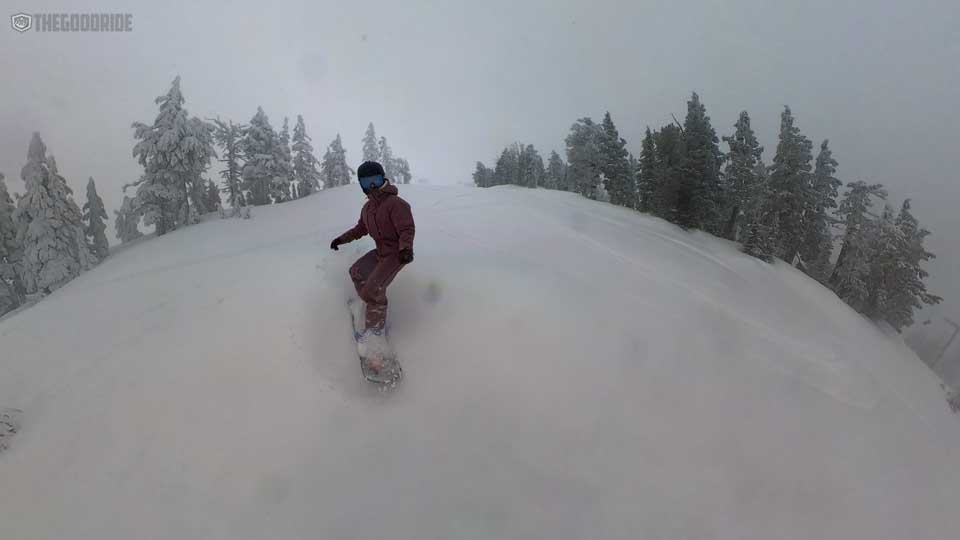
Powder
I did not test the Equalizer in powder, so this is a mechanical prediction based on its shape and profile.
The board has a slight setback stance and substantial reverse camber through the tip and tail. Both should help with float.
Moving the bindings completely back also adds significantly more nose.
However, the Equalizer has very little taper and remains centered through the sidecut. Those characteristics provide less directional assistance than I would expect from a dedicated freeride or powder board.
I think it should perform reasonably well in lower levels of powder, particularly when set all the way back.
Deeper conditions could become more challenging.
Final Thoughts
The CAPiTA Equalizer is an interesting interpretation of a high-performance snowboard.
I expected an aggressive pro model that demanded advanced technique and constant rider input.
My experience was very different.
The Equalizer is quick to turn, playful at moderate speeds, and surprisingly approachable. Camber underneath the rider provides edge control, while the lifted tip and tail reduce some of the catchiness of traditional camber.
It is much more accessible than I expected from a pro model.
However, it caters to a specific riding style.
The centered riding position makes the Equalizer feel almost like skateboarding on snow. It is not a fast, aggressive carving board, and its flex can be overpowered.
The shape also felt more freestyle-oriented than all-mountain freeride. That limits its potential in deeper powder and bigger mountain terrain.
The ideal Equalizer rider stays relatively centered over the board and may prefer a wider, more balanced stance.
That rider should also prioritize quick, agile turns without wanting to stay constantly engaged.
Keep the Equalizer on moderate pitches at moderate speeds with natural hits, or take it into the park.
In those environments, its unusual personality makes much more sense.
2027 Capita Equalizer Specs
2027 Capita Equalizer Images
We try to get as many images of the 2027 Capita Equalizer , but forgive us if they're not all there.
2027 Capita Equalizer User Reviews
Where To Buy
No obligation, but these links support the site.
Evo
evo
Blauer Boardshop
No Results Found
No Results Found
Evo
evo
No Results Found
No Results Found
Where To Buy
No obligation, but these links support the site.
Evo
evo
Blauer Boardshop
No Results Found
No Results Found