About The Good Ride Snowboard Reviews
I’m James Biesty. I started this site a while back to help the average rider determine the best snowboard gear for them. Here is a bit about how I set up our Snowboard reviews and the rating system.
Nothing is better than trying out snowboard gear yourself, but we are here to help if you can’t. Our perspective of how it rides isn’t perfect, but something for you to get an idea of how it rides. I’ve ridden over 800 different model snowboards and over 1,000 if you count the different versions of the same model name. I almost always compare it to similar snowboards on the same day with the same boots, bindings, and stance setup to add consistency to the reviews. No one else in the industry does this on the scale I do and that is why my rating system and reviews are consistent throughout the site.
I often try to get friends to ride them, too, and get their feedback as well as mine.
As technology changes (a lot these days), ratings can change. So don’t be surprised if a board has one rating, but the next time you check the review, it has a different rating even though the board hasn’t changed. Often, its competitors improve, so a board that hasn’t changed can get a lesser rating than what it had before. The snowboard industry isn’t static, so I’m constantly changing reviews on current models to match the changes in the industry.
Remember, this rating system isn’t an exact science but just a general guideline to help you determine what might work best for you.
| HOW IT RIDES | |||||||
| This rating system isn’t about good or bad but about what you prefer. It is not an exact science but just a general guideline. | |||||||
| Camber/ On Snow Feel |
Loose | Turn Initiation | Slow | Flex | Stiff | Edge Hold | Soft Snow |
| Semi-Stable | Med/Slow | Medium/Stiff | Med/Soft Snow | ||||
| Stable | Medium | Medium | Medium Snow | ||||
| Semi-Catchy | Med/Fast | Soft | Hard Snow | ||||
| Locked In | Fast | Noodle | Ice | ||||
| These are rated more from poor to excellent, but the ratings are not exactly scientific. It’s just a general guideline based on our time on the board. | |||||||
| Powder | Excellent | Speed | Excellent | Switch | Excellent | Jibbing | Excellent |
| Great | Great | Great | Great | ||||
| Good | Good | Good | Good | ||||
| Average | Average | Average | Average | ||||
| Poor | Poor | Poor | Poor | ||||
| Carving | Excellent | Uneven Terrain | Excellent | Jumps | Excellent | Pipe | Excellent |
| Great | Great | Great | Great | ||||
| Good | Good | Good | Good | ||||
| Average | Average | Average | Average | ||||
| Poor | Poor | Poor | Poor | ||||
You will see 1/2 snowflake ratings, too, which means they are closer to the better side of their rating.
Powder
How well does the board ride in the fun stuff? This is rated mainly on the board’s ability to float and how much it reduces rear leg burn. So this rating is really important for those who ride in thicker snow, but it gets less important if you ride in light, fluffy snow. We mainly ride these boards in some of the thickest pow out there, so if we say it floats here, it floats everywhere.
Setback On Sidecut vs. Board vs. Set All The Way Back For Pow
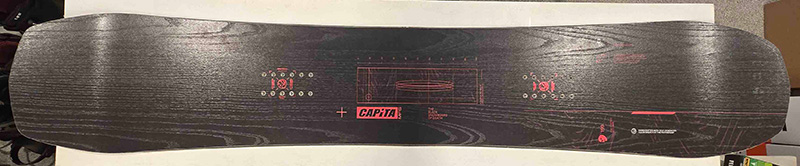
In this description, I’m using the Capita Black Snowboard Of Death
Setback On Sidecut
In the specs you see on the brand’s site, it is set back on Sidecut, which is -0.5″ back from the center of the Sidecut. They publish this, but we don’t measure it. They measure the setback from the center of the sidecut.
Setback on board vs. Sidecut
I often don’t do this measurement but will be trying to do it more as readers have requested me to do it. This is the difference between the setback on the sidecut vs. the setback on board on the reference stance.
You measure it this way.
1. Measure from the center of the top part of the nose to the center of the reference stance marker on the front foot. You measure the center of the reference stance because full-size discs take up 3 inserts, and you measure stance width from the middle of the disc.
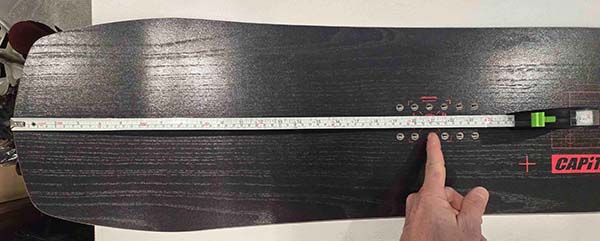
2. Measure from the center of the top part of the tail to the center of the reference stance of the back foot.
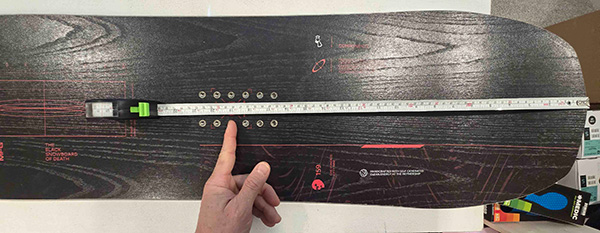
3. Subtract the nose measurement from the tail measurement and Divide by two.
4. Measure the stance width from the second to the last insert on the front foot and the second to the last insert on the back foot, and then you have your stance width.
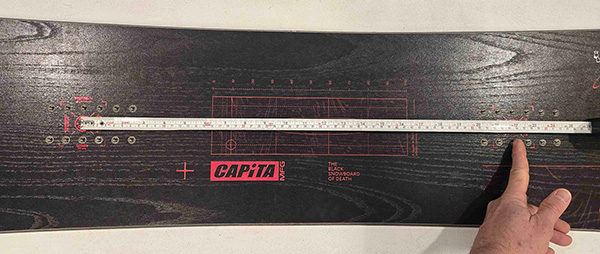
So that is how we say the setback on board is -1″ @ 22″ on Reference.
Setback All The Way Back On Board For Pow.
I often refer to setback on board for powder days; this measures how far you can setback from the center of the board to get easy directional float. I usually have this in the Powder section and it often says setback on board vs. sidecut. I personally love a board’s ability to set back in powder, but those who ride steeper terrain or want more tail for air don’t, so it is very much a personal preference. You measure it this way.
1. Measure from the top of the nose to the second to the last front insert. You measure second to last because full-size discs take up 3 inserts, and you measure stance width from the middle of the disc.
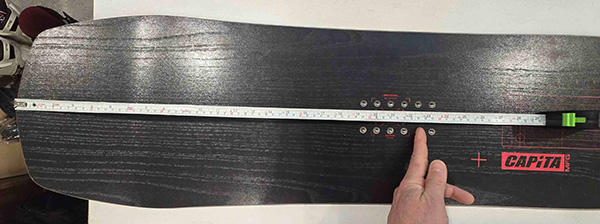
2. Measure from the tip of the tail to the second to the last insert.
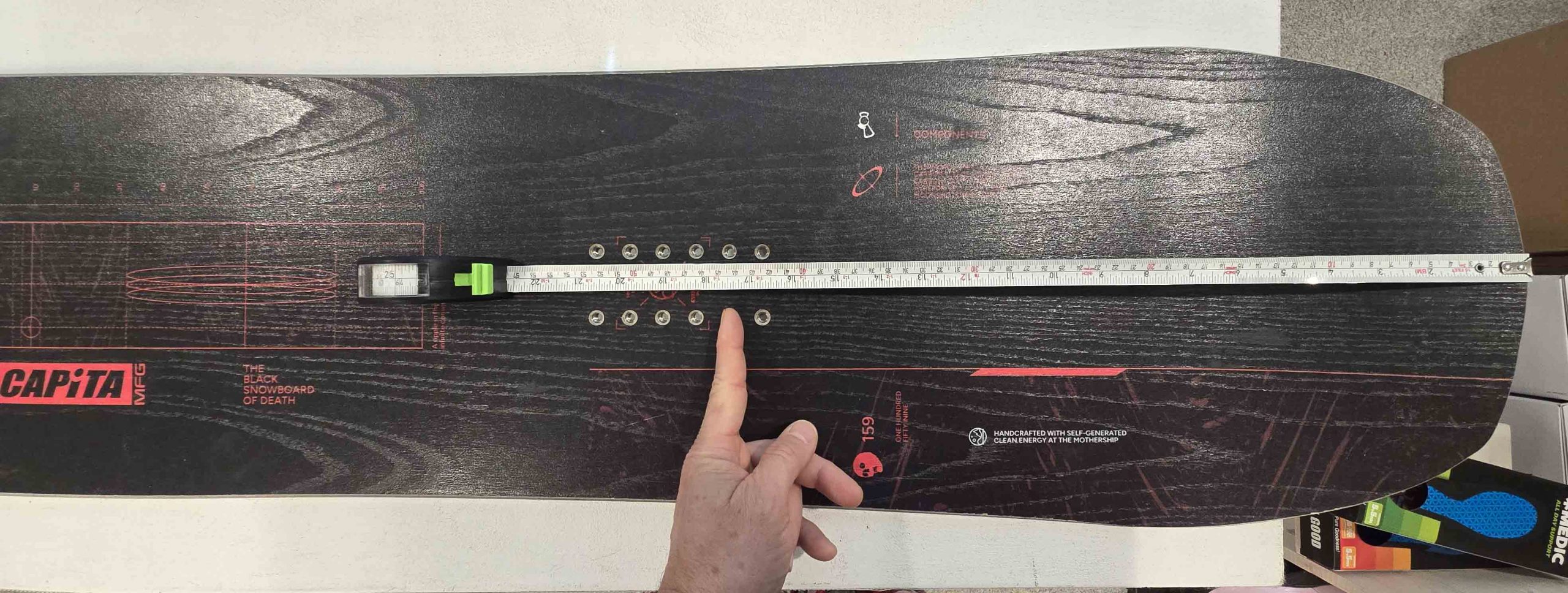
3. Subtract the nose measurement from the tail measurement and Divide by two. You get -2.5″.
4. Measure the stance width from the second to the last insert on the front foot and the second to the last insert on the back foot, and then you have your stance width.
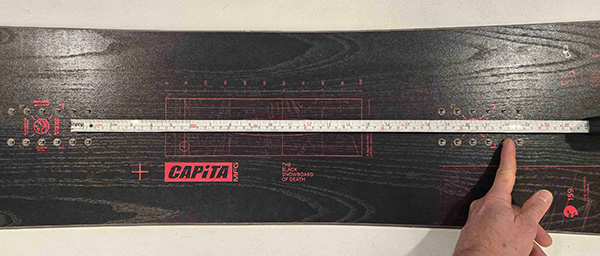
So that is how we say the setback on board is “-2.5″ @ 22” for pow.
Camber/On Snow Feel
This is one of the most telling ratings of how a board will feel underfoot, and it determines the general personality of the board between the feet. We help you determine if it’s a board with some consequence if you fuck up or is it super forgiving or somewhere in between. One rating isn’t better than the other, but it’s more about personal preference.
- Loose means it’s probably the best when it comes to not catching an edge, and making skidded turns is easy. Conversely, it’s not easy to one-foot or flat base. It’s great for beginners or riders who like to spin around a lot or spend most of the day in the park, etc.
- Semi-Stable means it can feel stable on softer snow, but it can start to feel loose between the feet in harder snow. It’s easy to make skidded turns, too. It’s generally great for riders of all levels and can often spin out instead of catching an edge.
- Stable feels stable between the feet at all times in all conditions. It’s almost as easy as semi-stable to make skidded turns. Just like Semi-Stable, it’s often not game over if you mess up, and the edges often don’t catch unless you really fuck up. Generally great for riders of all levels.
- Semi-Locked In means it’s stable but can be catchy in certain situations if you aren’t careful, so it’s usually more for more advanced to expert technical riders. It’s a bit challenging to skid a turn if you find yourself suddenly off your game and trying to regain your composure.
- Locked In means it feels like the board is on a rail and you have to be a strong technical ride who is always on his game. Not easy for someone who doesn’t know how to turn correctly or charges hard but loses control often. If you don’t know how to turn right or screw up a lot it can lead to hard, quick and often nasty falls.
Turn Initiation
This describes how fast your board turns from edge to edge if you are turning it properly and not skidding your turns. One isn’t necessarily better than the other because different people like boards to turn differently. For example, many riders who like to straight line everything generally a board that has slower turn initiation where people who like darting in and out of trees likes faster turn initiation. This rating is based on proper turning and not skidded turns, so some boards rated medium/fast or fast edge to edge might be quite challenging to skid a turn. I’ll try to mention this in the written reviews but also check ability level and if it’s advanced to expert it usually means it’s not easy to skid a turn. Also, check “On Snow Feel,” Anything “Locked In,” or “Semi Locked In,” which means that it’s likely to catch an edge on sloppy skidded turns.
Skidded Turns
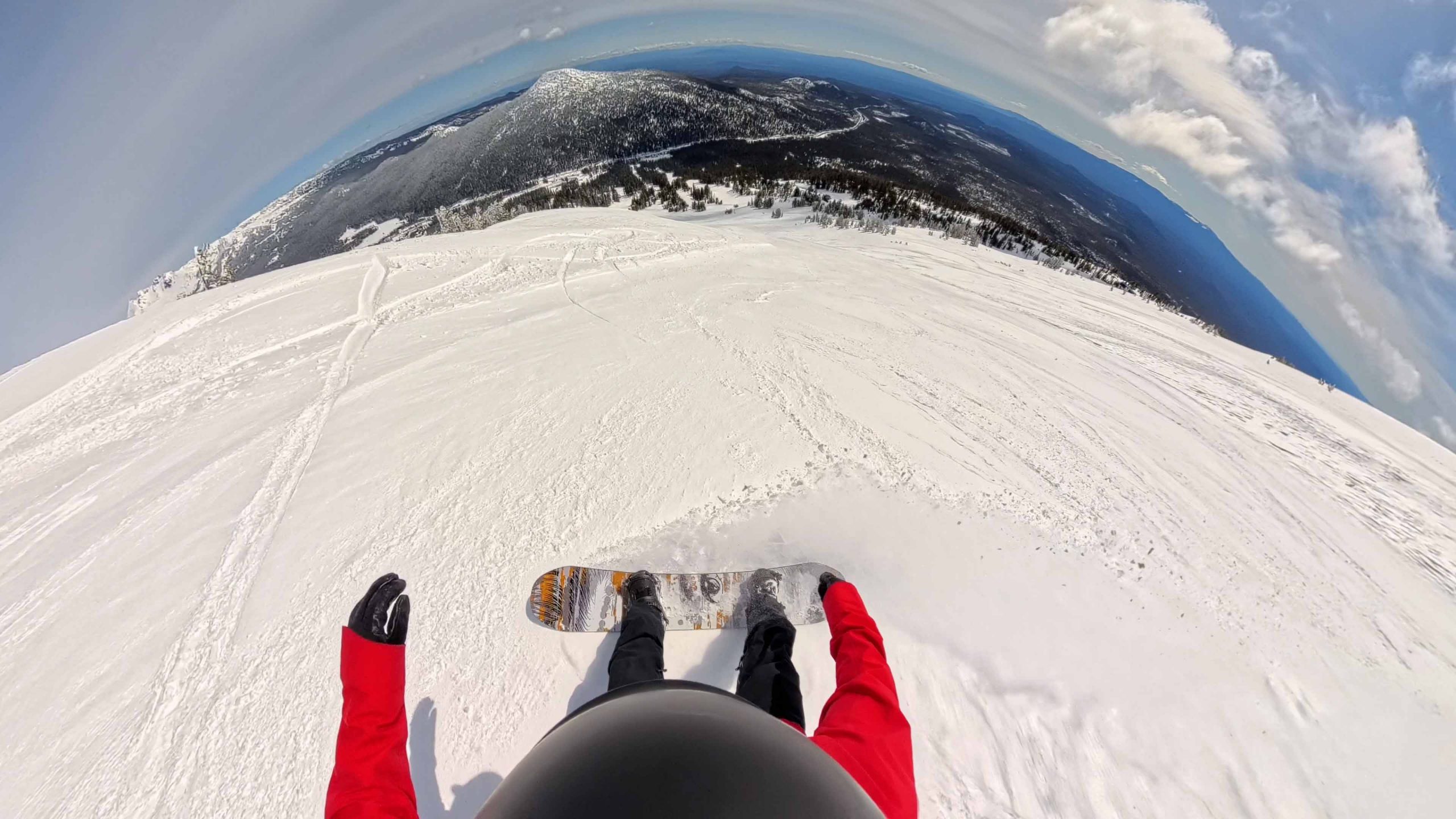
Some call this a smeared turn, and it’s how easily a board slides around and skids out of the snow. This is how many riders turn as they learn, so it’s very important for beginners and intermediates to be able to stop or recover if they get off their game by skidding to a stop but everyone skids a turn. Even advanced to expert riders skid a turn when they stop. It’s another component of how forgiving the ride is. It’s also great for advanced to expert riders to know how the board is going to treat you if you get off your game. Can you skid out easily or will you slam the edge into the snow with your body to follow? Obviously, you can do this with the easiest of boards if you really mess up, but it’s harder to screw up when it skids out easily. We rate this from easy to hard.
Turning Experience
This sums up how the board turns. Is it really turny or does it mainly like to go straight at high speeds (straight line). When I talk about the turning experience, I say it’s:
1. Turny
2. Semi-Turny
3. Balanced
4. Semi-Straight Liner
5. Straight Liner
You will often hear me say or write things like:
Hooky– It’s so turny that it doesn’t like to go straight, and the sidecut’s ends seem to catch.
Narrow S-Turns—These are like stretching out an S from top to bottom, but they’re more of a down-the-line turn. You mainly have to make them on a crowded day. You can make high-speed, long-drawn-out, narrow S-turns that are almost a straight line and quick edge-to-edge Narrow S-turns.
Medium Radius Turns– These are those turns you can make if you have a little room to use a good portion of the groomer. They aren’t super wide turns but aren’t narrow s-turns either.
Across the Groomer Turns—This tight radius moves you from one side of the groomer to the other at a pretty abrupt angle, basically taking a hard left or right.
Circle Carve– When you turn back up the hill, make a perfect circle if all goes well. Even almost a full circle could be considered a circle carve.
Slashing is when you press hard into the tail so it skids a bit and throws a lot of spray up like surfers do when they hit a lip. Often, it’s done on the side of the groomer where something resembles a wave, but you can do it anywhere.
Carving
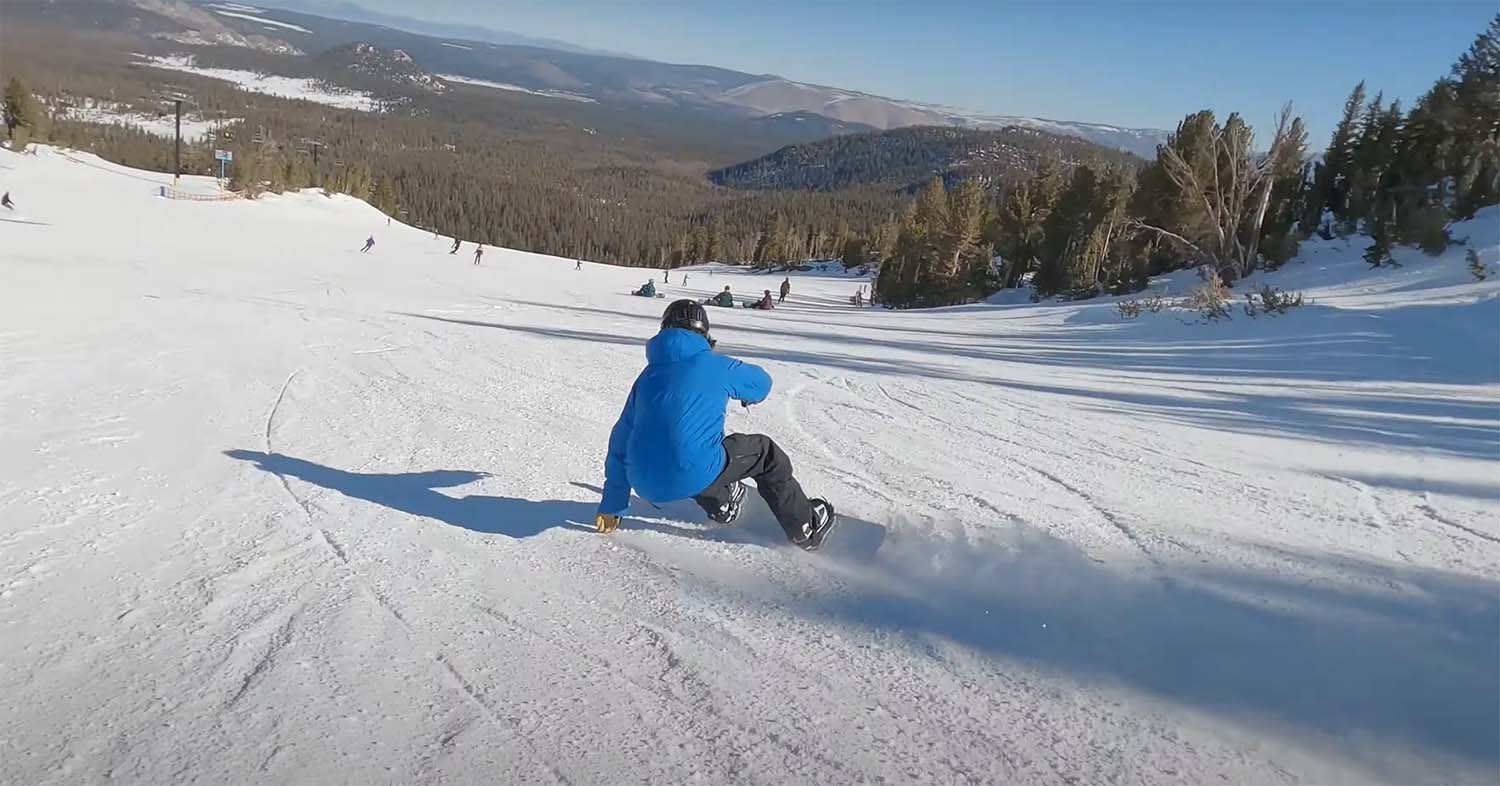
Carving to us is something unique to turning. We see carving as the next level turning. It’s laying hard into a turn to bring your body almost parallel to the snow. The rail is buried in the snow, and most of the base is visible on the turn. Some see carving as just making good turns and leaving a very thin line behind you with every turn. We don’t see it that way. To us, that is just making good technical short-to-wear-radius turns.
***A lot of people think that edge hold is all that matters when it comes to how a board carves, and to us, that’s only part of it. What is more important is how the board holds into the carve and springs out, which is more about the camber, sidecut radius, torsional flex, longitudinal flex of the board, and the edge hold.
Edge Hold
How well does your board hold its edge in snow conditions? The rating here is from “Icy” to “Soft Snow”. A smaller edge hold is better for jibbing, and the ” Icy ” rating is self-explanatory. The only thing to look further into on the “Icy” is sometimes boards that excel in ice can also be a little grabby in softer snow. It’s not always the case, so read the in-depth review on edge hold.
Flex
How does the board bend in the center and tip/tail? Is it easy to butter or press?
Speed
Does the board ride well at high speeds? Is it damp and stable when you pick up speed or does it chatter or feel squirrely like a skateboard with loose trucks? Also, how well does the board hold its speed in the flats?
Uneven Snow
Often, speed and stiff flex come at a price, and this is why I created this category: to help you understand how a board handles less-than-ideal conditions. Oftentimes, speed comes at a price. Think of a super fast board as like a race car. Race cars are usually meant for perfect tracks and have very stiff shocks. If you drive it home from the track, it’s a pretty rough ride. You have seen those too-fast, too-furious cars have a shitty time trying to get over a 4-inch speed bump in a parking lot. Some really stiff, fast boards can be just like this when it comes to bumpy terrain. They are amazing in perfectly groomed snow and fresh powder but take them into some bumpy snow and it feels like the board is trying to punish you. Some people ride only when it’s good, but many don’t have that luxury. Boards that handle Uneven Terrain well are often like the soft-riding SUVs or Cross Over’s you see on the road today. Their lifted frame and soft shocks are awesome with parking lot speed bumps or handling a rough road but suck when it’s time to pick up speed or power through a high-speed turn.
Switch
Does your board ride well with either the nose or tail forward? Can it turn well, and do the tip and tail flex the same on a butter/press?
Jumps
How well does a board ollie hit small, medium, and big jumps? Is it easy to spin, and even more importantly, how does it land?
Jibbing
Can the board handle an extra beating to the base and rails? Will you feel comfortable on rails, boxes, and other features in the park?
Pipe
How comfortable does it feel climbing the pipe walls to get you into the air, and more importantly, how easy is it to come back down? Does it drive well from wall to wall when you are in the flats? Is there sufficient edge hold to feel comfortable in an icy pipe wall?
Approximate Weight
This is the LEAST important category and barely worth mentioning unless it feels light or feels heavy. I will give you my take on how boards feel for their size when I pick them up without bindings and when I ride them up the chair, but here are my reasons for not really getting too technical about the weight.
- I compared a few boards from different companies with similar specs that I classified as “feels normal.” I was surprised at how close they all were in weight and only varied by a few ounces. The weight incrementally increased or decreased when I compared other normal boards that were taller or smaller.
- Weights from the same board also vary. Wood cores do not all weigh the same. Snowboard companies do their best to make them very close, but wood grows and isn’t made. That’s one of the reasons snowboard companies don’t post their weight.
- One other thing to remember: going ultralight usually comes at a price. Ultralight boards often don’t have the durability and dampness of normal or heavy boards. So, if you are looking for a board that might be easy on your knee riding up a chair, it could be worse for your knee coming down the mountain because it’s not as damp.
Snowboarding Ability Levels
This is very important on what kind of board you should choose. Advanced to expert boards don’t usually skid their turns well and that’s what beginner, intermediate riders do a lot. Even advanced to expert riders still skid their turns. So if you see any board that’s rated “Advanced-Expert,” then it means this board is not going to skid turns well, and it’s easier to catch an edge.
Beginner Snowboarders
A beginner is someone who is obviously new to the sport and is taking it all in. Most beginners are still trying to get the fundamentals down of making heel-side and toe-side turns, and they stop on purpose. They skid most or all of their turns. You might know what kind of riding style you want to be from the start or just want to check out everything to see what appeals to you the most. It all starts by learning how to link your turns. Beginner freestyle riders have mastered the above and are now starting to check a thing or two out in the smaller parks.
Intermediate Snowboarders
An intermediate snowboarder is riding well down most beginner to intermediate runs and is now looking to challenge themselves on steeper runs. They skid their turns a lot, so when you look back at your tracks on corduroy, you don’t see a thin line the whole way down, but they are working on making good turns. They’re also ready to check out the small parks for a trick or two. This rider is working to proficiently ride every run on the mountain, ride switch, ride powder, hit the small jib park, make small jumps, and ride the 8-foot or less halfpipe. Most people are trying to figure out what riding styles they like and are trying to get better.
Advanced Snowboarders
Advanced snowboarders are more in tune with what type of rider they are and are developing that style. They’re starting to understand how to make good turns anywhere on the mountain but might still unintentionally make skidded turns. For example, when you look back uphill after a few turns, the lines are pretty thin, and there are only a few skid marks or places where they get wider. They are having fun on powder days without doing cartwheels or getting stuck in the middle of a run. Advanced Freestylers are now riding switch, know how to ollie, butter, and press, can get up and down the pipe wall, can hit most moderate jibs, and can land most small to medium jumps. If they are a freestyler, they are learning to go bigger everywhere and are trying new tricks.
Expert Snowboarders
They aren’t pros but understand the mechanics of every move in their style of riding. Expert Mountain Snowboarders make razor-thin turns, have good form, and completely control their boards when it comes to edge-to-edge transitioning. They only make skidded turns when they want to. They can throw out a hard nipple scratching carve and are competent in any part of the mountain. Freestyle/Park riders ride the switch whenever and wherever it suits them, can get out of the bigger pipes, hit kickers with a bevy of tricks in their arsenal, and jib anything they want. An expert has seen it all and can do almost anything in their riding style.
We strongly suggest taking lessons on the mountain when you are a beginner or intermediate rider. However, you can keep learning from a good instructor, even at the advanced or expert level.